Imperagen: £5M to Revolutionize Enzyme Engineering with AI
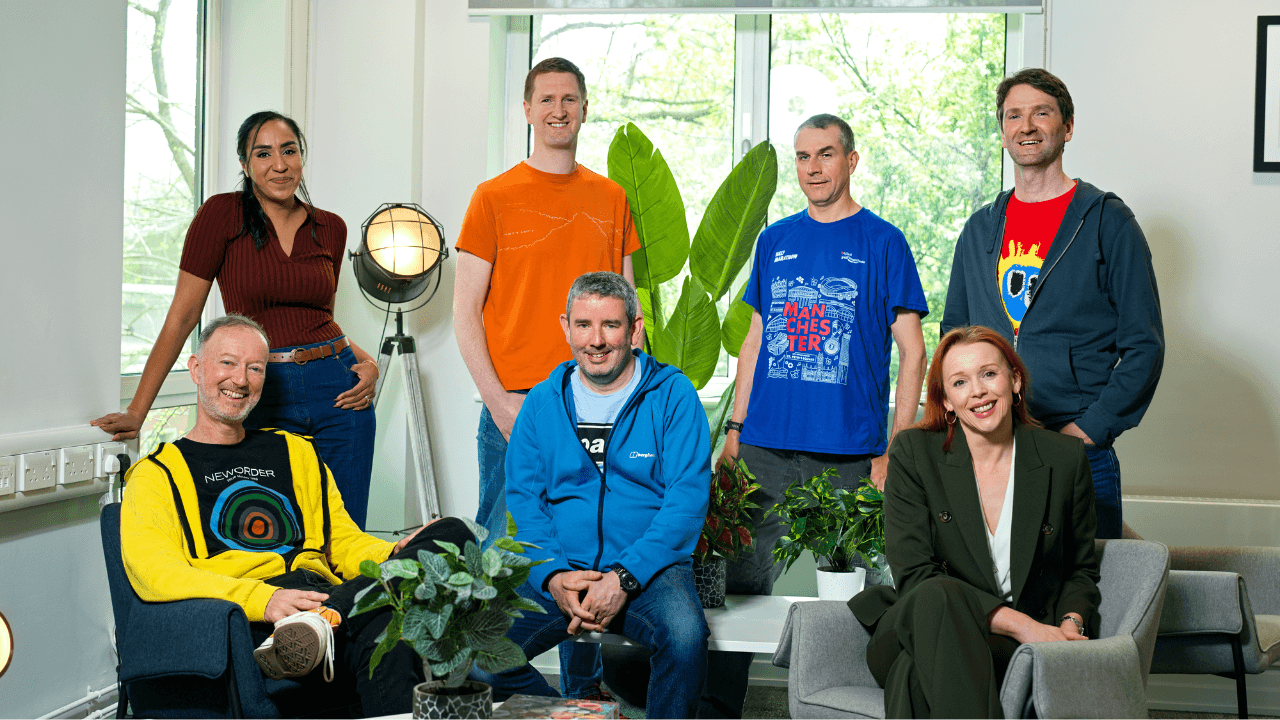
Imperagen, a promising techbio company based in Manchester, has announced the closure of a £5 million seed funding round. The operation, led by PXN Ventures with participation from existing investors IQ Capital and Northern Gritstone, aims to catalyze the development of its innovative platform for AI-driven enzyme engineering. Founded in 2021 by researchers from the Manchester Institute of Biotechnology, Imperagen positions itself at the forefront of optimizing crucial processes for a wide range of industrial sectors.
Enzymes, fundamental biological catalysts, are used to reduce waste, lower energy consumption, and decrease overall production costs in areas ranging from pharmaceutical manufacturing and personal care to sustainable chemical production. However, engineering an enzyme for practical applications is a notoriously complex and expensive process. Traditional approaches rely on manual screening, which is slow and costly, with a limited success rate. Even more recent "zero-shot" methods, while promising smart designs, often fail to meet expectations in real-world conditions.
The Technological Core: Closed-Loop AI Platform
Imperagen's solution stands out due to a proprietary platform that integrates three key stages into a single closed-loop system. Initially, quantum physics is employed to simulate millions of mutation combinations in silico, generating a vast dataset of predicted properties. These outputs then feed problem-specific, not general-purpose, artificial intelligence models, calibrated for the precise enzyme engineering challenge at hand.
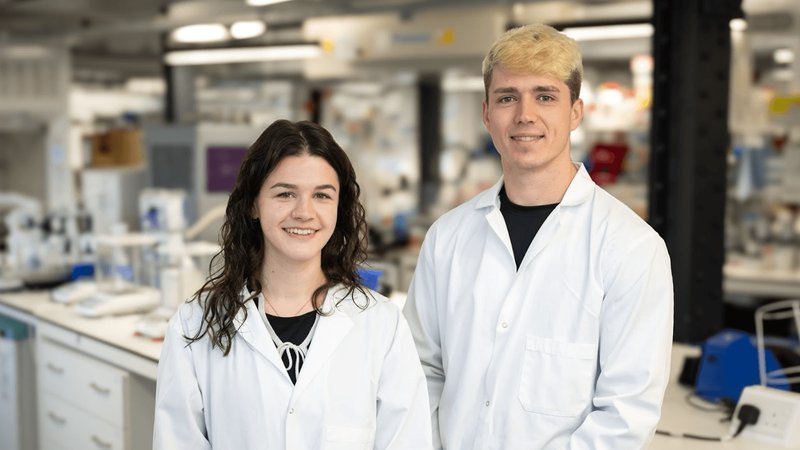
Subsequently, automated robotics come into play to test the most promising predictions in the physical lab. This process produces high-quality experimental data that is fed directly back into the AI model, allowing it to continuously evolve and improve. This feedback loop is the distinctive element of Imperagen's approach: each round of experiments makes the next more targeted, with the system learning from the "wet lab" and refining the search for the highest-performing variants with each iteration. The results are tangible: the platform improved the productivity of two enzymes by 677x and 572x respectively in just five rounds.
Market Context and Strategic Implications
Imperagen serves diverse markets, from pharmaceutical manufacturing and life sciences to sustainable fine chemical production and industrial applications. Its technology is designed to de-risk and streamline product development for customers, accelerating their path to market. Coinciding with the funding round, Guy Levy-Yurista, PhD, joins the company as CEO. With a proven track record in scaling deep tech businesses, Levy-Yurista will bring his strategic vision to lead the next phase of growth.
According to Levy-Yurista, companies that will make a radical difference in the AI-driven future will be "AI-native," lean on real-world data, have genuine impact, and be fundamentally "deep tech." This vision aligns with the needs of many enterprises today evaluating AI solutions. For those considering on-premise deployments, for example, a system's ability to learn from proprietary data and operate in controlled environments, such as those that might be required by highly regulated sectors, represents a critical factor. AI-RADAR offers analytical frameworks on /llm-onpremise to evaluate the trade-offs between self-hosted and cloud solutions, considering aspects like data sovereignty and TCO.
Future Prospects and Impact
The funds raised will be strategically utilized to accelerate the core research and development (R&D) platform, scale wet lab operations, and grow the in-house AI team, both human and agentic. Imperagen will also invest in its go-to-market function to convert growing commercial interest into contracted revenue across its target sectors: pharmaceuticals, life sciences, personal care, sustainable fine chemicals, and industrial biotech.
The recursive, self-improving AI platform approach by Imperagen promises to rewrite chemical reactions, marking a significant step in the future of biocatalysis. This ability to optimize complex processes with precision and speed opens new frontiers for innovation, offering transformative potential for efficiency and sustainability across multiple industries.








💬 Comments (0)
🔒 Log in or register to comment on articles.
No comments yet. Be the first to comment!