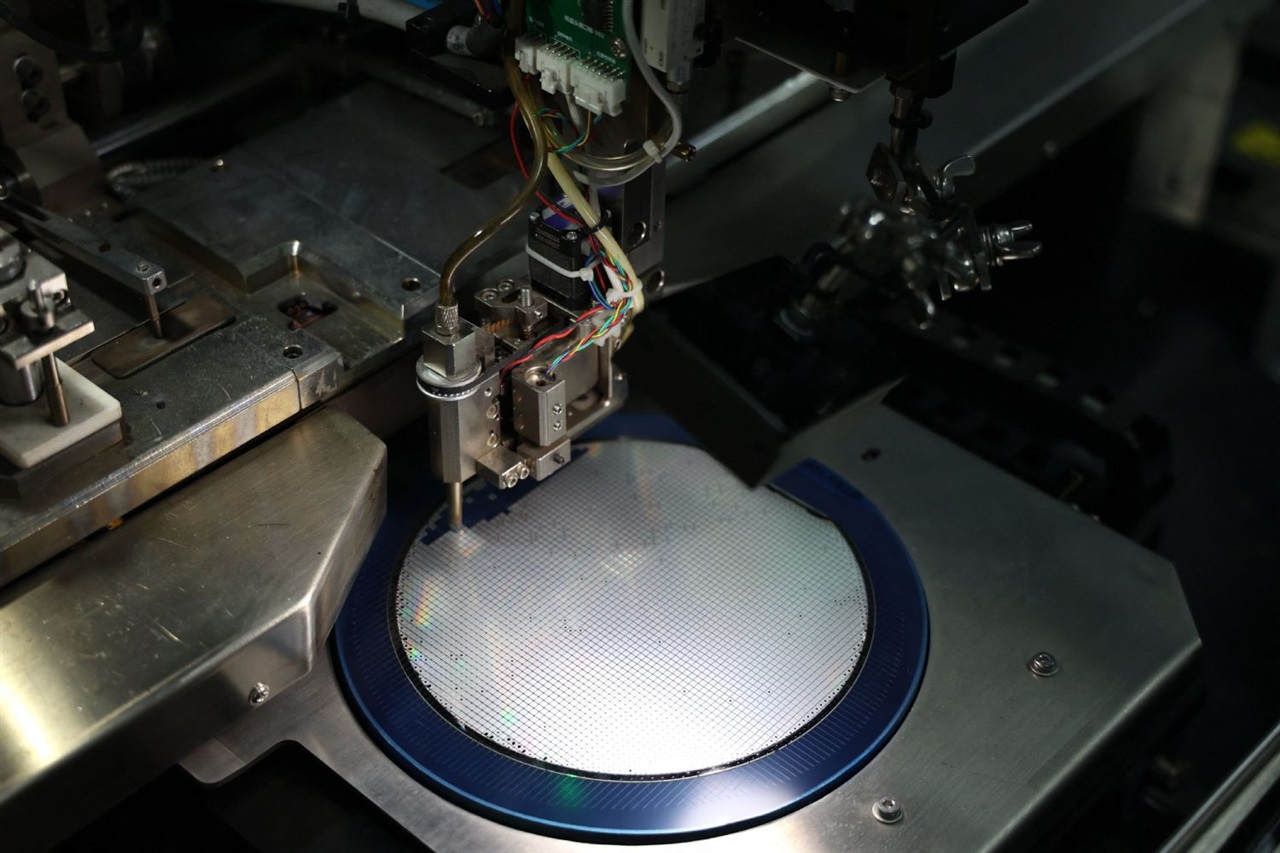
The Indian government has decided to revise its subsidy scheme for domestic semiconductor manufacturing, trimming the public contribution for each project while simultaneously widening the eligibility criteria. It’s a pivot that speaks volumes about the global race to control chip supply chains – and, by extension, the future availability of the hardware on which Large Language Models and inference workloads run.
Until now, incentives were structured to attract a few large fabs, covering up to 50% of costs. The new approach lowers that percentage but opens the door to a broader range of companies, including mid-sized players that could specialise in specific components – advanced packaging, memory, power chips – rather than full-scale foundries. The stated goal is to multiply nodes in the local supply chain, reducing reliance on single sources.
The backdrop is New Delhi’s perennial attempt to displace China as the manufacturing hub for electronics and semiconductors. After years of announcements, India has started securing concrete commitments: Micron is building an assembly and test facility in Gujarat, and there are active discussions with TSMC and Intel. The subsidy shift suggests a more pragmatic strategy: instead of bankrolling a handful of mega-fabs, the government aims to create a diffuse ecosystem where even niche players can find it economical to produce locally.
Why this matters for on-premise AI deployments
The link to the LLM world isn’t immediate, but it runs deep. Almost all GPUs and accelerators used for training and inference – from NVIDIA H100s to custom solutions – are manufactured in foundries concentrated almost entirely in Taiwan and South Korea. Any geopolitical shock to those nodes translates into VRAM shortages and extended delivery times. Diversifying production capacity means creating real alternatives, even for smaller but strategic volumes, such as edge inference chips or domestic processors for self-hosted servers.
For organisations evaluating on-premise deployments, Total Cost of Ownership increasingly includes a ‘supply chain risk’ variable. It’s no longer enough to look at the cost of an A100 or H100 card; one must ask whether that cost will remain stable across the project lifecycle and whether the hardware will actually be obtainable. The Indian move, even without guarantees of success, injects a signal of production base expansion into the system.
Admittedly, timelines are long. A semiconductor fab takes years to become operational, and tweaking an incentive scheme doesn’t create silicon overnight. But it flags a trend: governments are rethinking industrial policy tools to make supply chains more elastic, and that elasticity benefits anyone planning long-term AI infrastructure.
It’s no coincidence that India is acting now. US-China tensions over technology export restrictions have already pushed many companies to seek alternative suppliers. If New Delhi manages to build a credible hub, even if only for advanced packaging and testing, it could carve out a complementary role to Taiwan rather than a substitute one. For a hyperscaler ordering thousands of compute nodes, or for an organisation maintaining its own on-premise inference cluster, having an extra option in the logistics chain is a form of insurance against geopolitical volatility.
The bet, then, is that lower per-project subsidies but more projects overall will yield a more resilient ecosystem. At stake is not just India’s technological sovereignty, but also the stability of the global hardware supply. For anyone today building a business case for a self-hosted AI deployment, these moves are worth watching closely.








💬 Comments (0)
🔒 Log in or register to comment on articles.
No comments yet. Be the first to comment!