Intel Takes Center Stage at Computex 2026: AI Visions
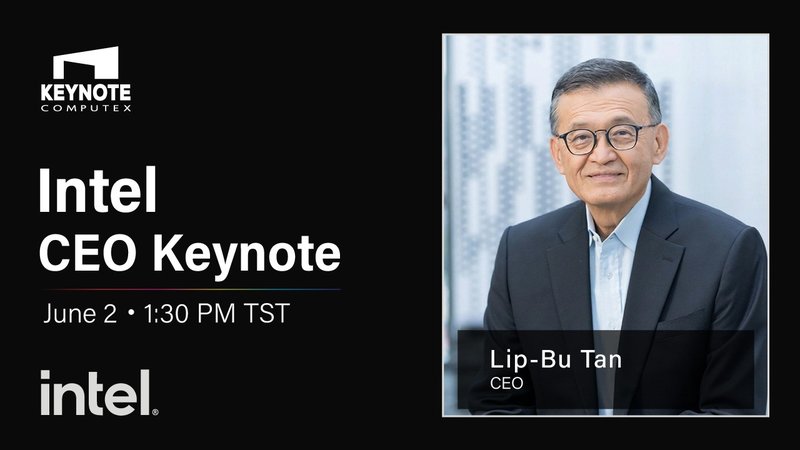
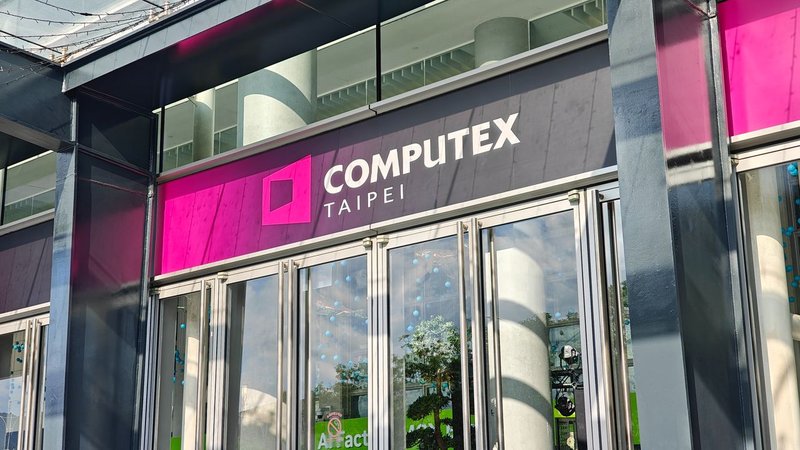
Intel is preparing to deliver a significant keynote at Computex 2026, one of the most important events in the global technology calendar. The event, taking place in Taipei, will feature CEO Lip-Bu Tan on stage on June 1 at 10:30 PM PT to present the company's vision. This participation underscores Intel's commitment to shaping the future of computing, with increasing focus on artificial intelligence solutions.
The tech community, particularly professionals managing complex infrastructures, eagerly awaits the announcements. Computex traditionally serves as a showcase for hardware innovations and market strategies, and expectations are high regarding Intel's positioning in the dynamic AI sector, especially concerning demanding workloads.
Intel's Role in the On-Premise AI Ecosystem
Intel has long played a central role in providing foundational components for data centers and on-premise infrastructures, which are critical for the deployment of Large Language Models (LLM) and other AI applications. Its offerings range from Xeon processors, forming the backbone of many servers, to dedicated AI accelerators, such as the Gaudi family. These products are designed to address the performance, scalability, and Total Cost of Ownership (TCO) challenges that enterprises face when choosing to keep their AI workloads within their own infrastructural boundaries.
The choice of a self-hosted deployment is often driven by data sovereignty requirements, regulatory compliance, or the need to operate in air-gapped environments. In this context, Intel's hardware and software aim to provide the necessary computing capabilities for LLM inference and training, while ensuring the control and security demanded by businesses. Innovations in VRAM, throughput, and interconnects are key aspects that decision-makers carefully evaluate.
Challenges of Local AI Deployment and Value Propositions
Implementing AI solutions on on-premise infrastructures presents a range of technical and operational challenges. Memory management, particularly VRAM for GPUs, is a crucial limiting factor for running large LLMs. Similarly, throughput and latency are performance metrics that directly impact the efficiency and responsiveness of AI applications. Companies must balance these requirements with the costs of hardware acquisition and management, as well as energy consumption.
Intel, through its research and development efforts, seeks to address these complexities by offering solutions that optimize the performance-per-watt ratio and facilitate integration. The availability of frameworks and software pipelines optimized for its silicon is equally important for simplifying model deployment and management. For those evaluating on-premise deployments, AI-RADAR offers analytical frameworks on /llm-onpremise to assess the trade-offs between initial and operational costs and control requirements.
Future Prospects and Market Implications
The Computex 2026 keynote will be an important indicator of Intel's future strategic directions in the AI sector. Businesses are seeking solutions that can support the evolution of Large Language Models, from smaller, quantized models to giants requiring extreme computational resources. The focus will be on how Intel intends to compete and innovate, not only at the chip level but also in offering a robust software ecosystem and tools that facilitate AI adoption in enterprise environments.
The decisions Intel makes and the announcements that will be made will have a significant impact on the AI hardware market and the options available to companies wishing to maintain control over their data and infrastructures. The ability to offer competitive alternatives to cloud solutions, with a focus on TCO and data sovereignty, will be crucial for long-term success in the artificial intelligence landscape.




💬 Comments (0)
🔒 Log in or register to comment on articles.
No comments yet. Be the first to comment!