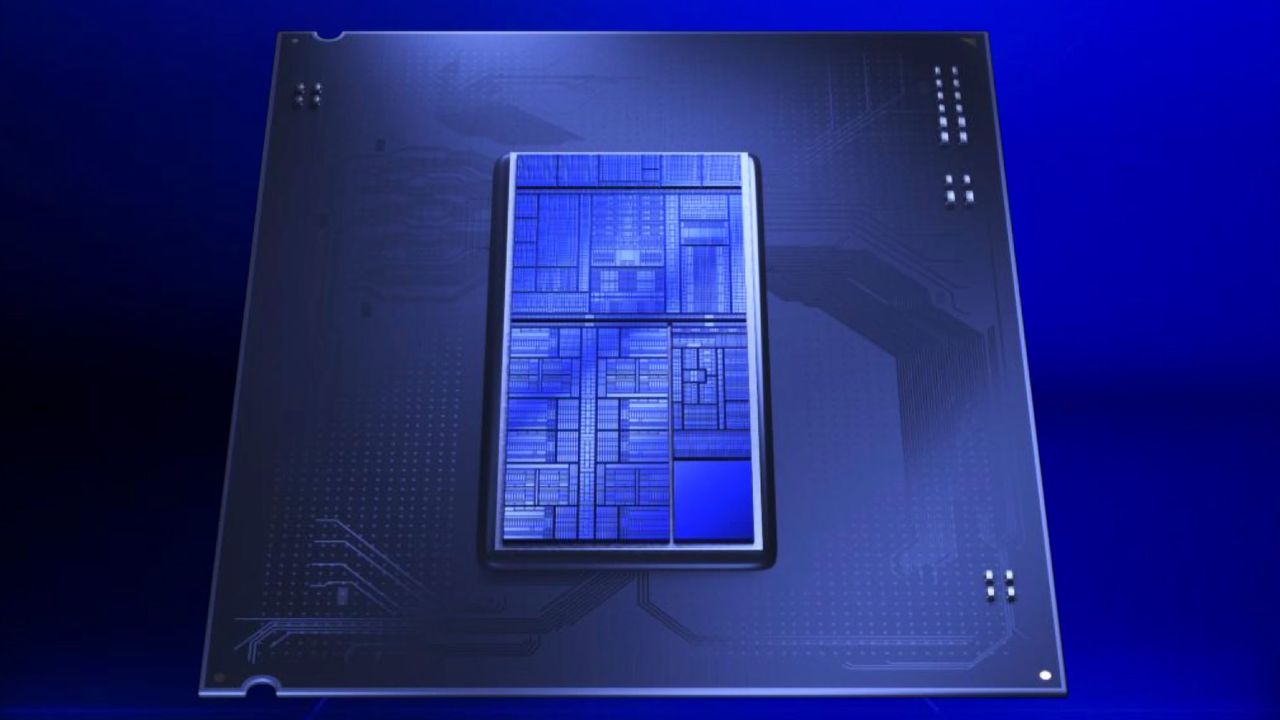
Intel's Nova Lake is beginning to take sharper shape. According to a leak picked up by Tom’s Hardware, the next generation of desktop processors will carry the Core Ultra Series 400 branding and follow a staggered release starting in 2026. The real news, however, is that the top-tier variant — a monstrous 52-core chip — might not see the light of day until the end of 2027. An eternity by consumer computing standards, but one that leaves significant open questions for the on-premise AI world.
Cores and artificial intelligence: a marriage of convenience
While GPUs and dedicated accelerators grab all the attention, high-core-count processors are quietly reclaiming ground in Large Language Model inference. Frameworks like llama.cpp, combined with aggressive quantization techniques (INT8, INT4), already make it possible to run models from 7 to 13 billion parameters on CPUs with dozens of physical threads, without touching a video card. A 52-core desktop chip would change the scale: it would bring parallel processing capacity to small-server levels, making local execution of larger models plausible with acceptable latency, all without the cost and complexity of a multi-GPU setup.
For an organization evaluating an on-premise deployment, CPU computing offers an often-overlooked advantage: cost predictability. Unlike GPUs, CPUs require neither similarly high upfront investments nor disproportionate energy consumption for continuous inference. Moreover, keeping the entire pipeline on one's own servers — with no API calls to cloud services — ensures total control over data residency, an increasingly stringent requirement in regulated industries. This is where Intel's bet on massive core counts fits perfectly, because it promises to lower the barrier to entry for AI workloads that today demand specialized hardware.
Those who closely follow local architectures know that the trade-offs between CPU, GPU, and hybrid solutions are a constant subject of analysis, as explored in AI-RADAR's on-premise resources. The point is not whether a CPU can replace a GPU in every scenario — the gap for training and very large models remains vast — but whether total cost of ownership (TCO) and sovereignty requirements push toward simpler, more replicable solutions. In this light, a 52-core desktop is not just an exciting product for gaming, but a strategic piece to democratize local inference.
The timing factor and the competition
The delay to 2027 for the 52-core chip, however, is hardly good news. It leaves ample room for competitors like AMD, which with Zen 5 and Zen 6 architectures could pre-empt high-core-density solutions, and especially for Apple's systems-on-chip, where integrated Neural Engines are already redefining local inference on consumer devices. Intel risks arriving late to a market where efficiency per watt and the ability to handle AI workloads without GPUs will become the new battlefield. For those building on-premise stacks today, waiting three years often means having to choose already available alternatives, cementing ecosystems that will later be difficult to displace.
Intel's quiet bet on massive core counts only confirms an underlying trend: on-premise AI will not be played solely on specialized accelerators. The CPU, a component many had left for dead in the AI race, is finding a second youth precisely because of inference workloads. And those designing local stacks today would be wise to take note, even without waiting for 2027.




💬 Comments (0)
🔒 Log in or register to comment on articles.
No comments yet. Be the first to comment!