Intel has chosen a delicate moment to relaunch its challenge in advanced packaging. With EMIB-T, an evolution of the Embedded Multi-die Interconnect Bridge, the company is directly targeting TSMC’s accumulated lead with CoWoS (Chip-on-Wafer-on-Substrate) – the technology that has been the secret ingredient in high-end GPUs and AI accelerators for years, starting with Nvidia products.
Those following infrastructure for large language models know that packaging is far from a detail. The most powerful chips on the market – the ones enabling on-premise inference and training of models with hundreds of billions of parameters – owe much to techniques like CoWoS, which allow compute dies, HBM memory, and I/O components to sit side by side on a single substrate, with wide-bandwidth, low-latency interconnects. Without this level of integration, performance collapses and power consumption spikes, making any self-hosted deployment beyond small scale economically unviable.
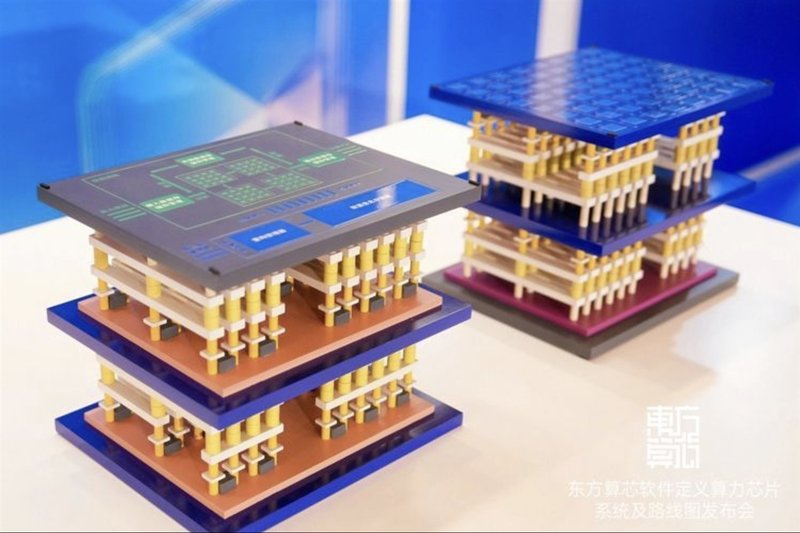
EMIB-T represents Intel’s answer: a silicon bridge that connects different chips within the package, with the stated goal of offering interconnect density and energy efficiency comparable – if not superior – to CoWoS. While TSMC has built a tightly guarded ecosystem around its technology, with clients booking manufacturing capacity months in advance, Intel is trying to position itself as an alternative, leveraging its own production capability and a design that promises greater flexibility in chiplet composition.
The heart of the matter for those managing or planning on-premise LLM infrastructure is the availability of diversified hardware. Today the market is dominated by cards based on TSMC designs, with Nvidia absorbing a huge slice of manufacturing capacity and dictating both prices and lead times. Intel’s entry, should EMIB-T find adoption among chip designers, could translate into a broader accelerator offering and downward pressure on total cost of ownership. Analysts at AI-RADAR watch this dynamic closely: a wider supplier ecosystem is no automatic guarantee of savings, but it introduces competitive forces that historically have favored those building self-hosted solutions.
Then there is the aspect of technological sovereignty. In Europe, where GDPR and data residency regulations push many organizations toward on-premise or hybrid deployments, the ability to source chips designed and assembled outside a single geographical bottleneck is far from secondary. Intel, with its factories also in the West, could become a piece of a more distributed supply chain, mitigating risks tied to geopolitical tensions that already constrain the export of advanced semiconductors.
For now, technical details on EMIB-T remain fragmented, and it’s unclear when we will see the first products based on this technology. But the signal is political and industrial before it is engineering-based: TSMC’s de facto monopoly in next-generation packaging is no longer unchallenged. For those evaluating enterprise-scale LLM hardware, watching this contest means anticipating future power balances among suppliers and preparing for a window of opportunity that could reshape TCO calculations.




💬 Comments (0)
🔒 Log in or register to comment on articles.
No comments yet. Be the first to comment!