Intel's GaN Chiplet Innovation
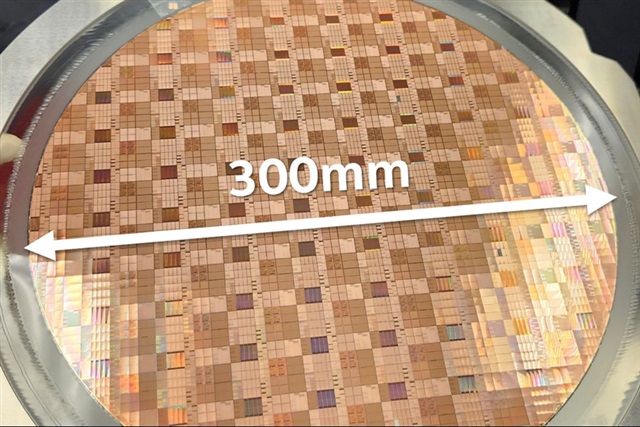
Intel recently announced the development of an ultra-thin gallium nitride (GaN) based chiplet. This innovation represents a fundamental building block in Intel's broader foundry strategy, aimed at producing advanced systems for the artificial intelligence era. The introduction of components like this GaN chiplet highlights the pursuit of solutions that can significantly improve the performance, energy efficiency, and density of hardware systems dedicated to AI workloads.
Gallium nitride is a semiconductor material that offers intrinsic advantages over traditional silicio, particularly for high-power and high-frequency applications. Its ability to operate at higher temperatures and handle greater power densities makes it ideal for critical components in data centers and high-performance computing systems, where efficiency is a determining factor. The chiplet-based approach also allows for greater modularity and flexibility in system design, facilitating the integration of specific functionalities and the optimization of manufacturing processes.
The Role of Chiplets in the AI Ecosystem
Adopting a chiplet architecture is increasingly strategic in the AI hardware landscape. This methodology allows manufacturers to combine different functionalities – such as compute units, memory, and I/O interfaces – into a single package, overcoming the physical and yield limitations of traditional monolithic designs. For AI systems, where the demand for computational power and memory bandwidth is extremely high, chiplets offer a path to scale performance more efficiently and with potentially lower long-term costs.
Intel's choice to integrate GaN into an ultra-thin chiplet format suggests a focus on miniaturization and thermal and energy efficiency. These attributes are crucial for on-premise deployments of LLMs and other AI workloads, where rack space, power consumption, and heat dissipation are primary constraints. A more compact and efficient design can translate into a reduced TCO for companies choosing to keep their AI workloads within their own data centers, while ensuring data sovereignty and control over the infrastructure.
Implications for Intel's Foundry Strategy
Intel's AI-era foundry strategy focuses on providing a wide range of hardware solutions, from processors to specialized chiplets, to support the rapidly evolving artificial intelligence ecosystem. The introduction of an ultra-thin GaN chiplet fits into this context, positioning Intel as a key supplier of cutting-edge technologies for building high-performance AI systems. This approach aims to meet the needs of various sectors, from large enterprises requiring robust infrastructure for training complex models to entities needing efficient solutions for edge inference.
For CTOs and infrastructure architects, the availability of components like these GaN chiplets can influence purchasing and design decisions. The ability to integrate more efficient and dense components means achieving greater computing power per unit of space and energy, a critical factor in evaluating the overall TCO of an AI infrastructure. For those considering on-premise deployments, AI-RADAR offers analytical frameworks on /llm-onpremise to evaluate the trade-offs between performance, costs, and data sovereignty requirements, highlighting how hardware innovation is a fundamental pillar in these choices.
Future Prospects for AI Hardware
The evolution towards chiplets based on advanced materials like GaN is an indicator of the direction the AI hardware industry is taking. The pursuit of greater efficiency, density, and performance is relentless, driven by the increasing complexity of Large Language Models and the need to process ever-larger volumes of data. These developments not only enable new computational capabilities but also make AI deployments more energy-sustainable and more flexible in terms of architecture.
Intel's commitment in this direction, through its foundry strategy, suggests a future where hardware will be increasingly specialized and modular. This will allow companies to build custom AI infrastructures, optimized for their specific workload needs, budget, and operational constraints. The ability to integrate ultra-thin, high-efficiency chiplets like those based on GaN will be a distinguishing factor for solutions aiming to excel in the artificial intelligence era, both in cloud environments and, particularly, in self-hosted and air-gapped ones.








💬 Comments (0)
🔒 Log in or register to comment on articles.
No comments yet. Be the first to comment!