Intel and CPU Evolution: A Leak for Wildcat Lake Refresh
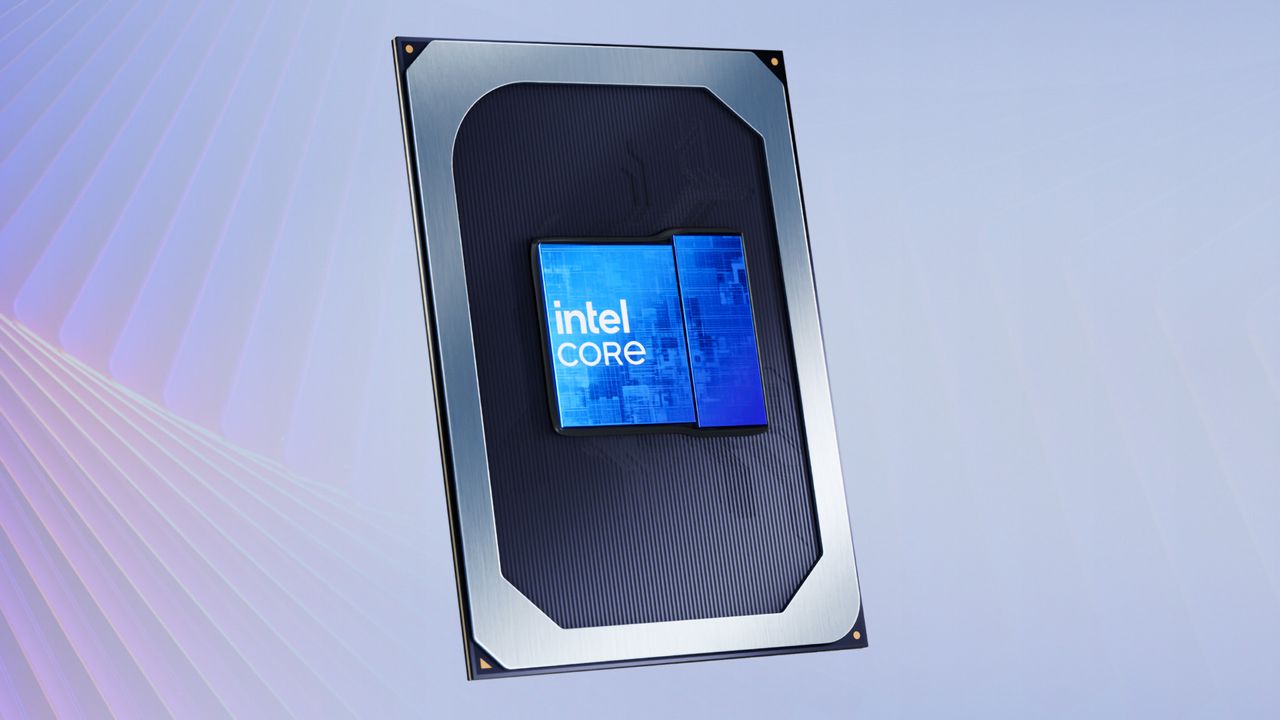
The hardware landscape for artificial intelligence is in constant flux, with increasing attention not only on GPUs but also on CPUs, which continue to play a fundamental role in orchestrating workloads and specific processing phases. A recent leak, not yet officially confirmed by Intel, sheds light on the company's future plans for its processor line. According to the rumors, Intel is preparing a significant update for the "Wildcat Lake Refresh" series, which will be positioned within the broader "Core 400 Series."
This anticipation, if confirmed, suggests a clear direction in CPU architecture development, focused on optimizing performance and energy efficiency. For IT professionals and decision-makers managing complex infrastructures, understanding these evolutions is crucial for planning future deployments and hardware investments, especially in contexts where data control and sovereignty are priorities.
Technical Details of the Hybrid Architecture
The core of the leak concerns the top-end configuration of the "Wildcat Lake Refresh": an 8-core design. The peculiarity lies in their distribution: the chip is expected to integrate 4 P-cores (Performance cores) and 4 LP-E cores (Low Power Efficiency cores). This hybrid architecture, already adopted by Intel in other product lines, aims to balance pure computing power with energy efficiency. P-cores are designed to handle intensive workloads requiring maximum performance, while LP-E cores are optimized for background tasks and less demanding processes, helping to reduce overall power consumption.
The introduction of this 8-core configuration into the "Core 400 Series" for next year (presumably 2025) indicates an Intel strategy aimed at offering scalable solutions that can adapt to various computational needs. For system architects, the choice between high-performance cores and low-efficiency cores can directly influence the TCO (Total Cost of Ownership) of an infrastructure, considering both initial costs and operational costs related to energy consumption.
Implications for On-Premise Deployments
For organizations prioritizing on-premise deployments, CPU selection is a critical factor. A processor with a hybrid architecture like the one hypothesized for "Wildcat Lake Refresh" can offer flexibility. For example, in LLM inference scenarios where GPUs are the primary component, CPUs manage data pre-processing, post-processing, and container orchestration. Having efficient cores can reduce server power consumption when workloads are not at peak, while P-cores can step in for more demanding tasks.
The ability to balance performance and energy consumption is fundamental for self-hosted infrastructures, where operational efficiency directly translates into savings on energy and cooling costs. Managing air-gapped environments or those with stringent data sovereignty requirements demands granular control over every hardware component. The choice of CPUs with precise architectural specifications thus becomes a strategic decision that impacts not only performance but also the economic and environmental sustainability of the deployment. For those evaluating on-premise deployments, analytical frameworks are available on AI-RADAR to assess trade-offs between different hardware configurations and their impact on TCO.
Future Prospects and Final Considerations
Although the information about "Wildcat Lake Refresh" comes from a leak and should be treated with caution, it reflects a broader trend in the semiconductor industry: continuous innovation in CPU architectures to address growing and diverse computational needs. Intel's hybrid approach, with the combination of P-cores and LP-E cores, is an example of how silicon manufacturers are striving to optimize performance per watt, an increasingly critical parameter for modern data centers and large-scale AI deployments.
The anticipation for next year's "Core 400 Series" and its potential updates underscores the importance of monitoring hardware evolution. For CTOs and infrastructure architects, staying updated on the specifications of new processors is essential for making informed decisions that best support corporate AI strategies, while ensuring efficiency, scalability, and compliance with data sovereignty requirements.




💬 Comments (0)
🔒 Log in or register to comment on articles.
No comments yet. Be the first to comment!