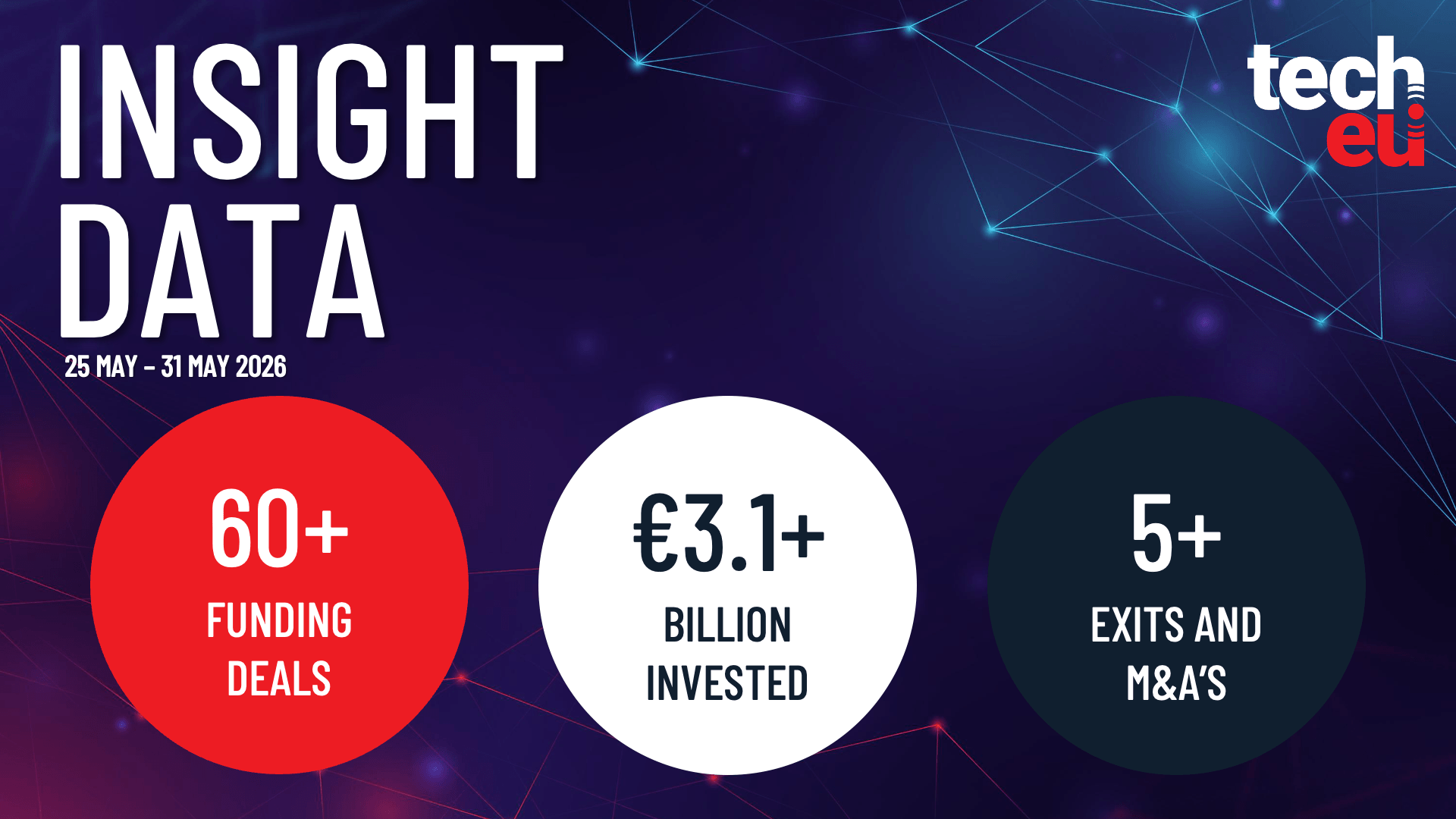
A Wave of Capital for the European Tech Ecosystem
The last week of May marked a period of significant dynamism for the European technology sector, with investments exceeding €3.1 billion. Over 60 funding deals and more than five acquisitions, mergers, and other notable transactions were recorded. This influx of capital underscores investor confidence in the continent's growth and innovation, at a time when digitalization and artificial intelligence are redefining numerous sectors.
The United Kingdom positioned itself as the undisputed leader in terms of investment volumes, attracting approximately €2.6 billion. Following this, Germany recorded funding of €226.5 million, while Ireland closed the week with €94.4 million. These figures highlight a geographical distribution of investments that, while concentrated in certain key areas, shows widespread interest in innovative startups and scale-ups across Europe.
Digital Infrastructure and AI at the Core of Investments
A distinctive element of this week was the enormous interest in digital infrastructure. Pure DC, a company active in this segment, raised $2.7 billion to expand its operations in Europe and the Middle East. This massive investment highlights the growing need for computational and storage capacity, which is fundamental for powering the next generation of applications and services, particularly those based on Large Language Models (LLM) and other artificial intelligence technologies.
Beyond infrastructure, other sectors attracted significant capital. Energy received €218.6 million, fintech €94.4 million, and the semiconductor sector €93.5 million. The latter, in particular, is crucial for the production of advanced silicon, which is indispensable for LLM training and Inference hardware. Companies like Orbital Industries, which secured $50 million for data center infrastructure systems, and Quanscient, which raised €10 million for AI and quantum-native hardware engineering, demonstrate a clear orientation towards building the technological foundations of the future.
Implications for On-Premise Deployment and Data Sovereignty
Investments in digital infrastructure and data centers, such as those allocated to Pure DC and Orbital Industries, are particularly relevant for organizations considering on-premise or hybrid deployment strategies for their AI workloads. The availability of robust and scalable data centers within Europe can reduce reliance on external cloud providers, offering greater control over data sovereignty and regulatory compliance. This is a critical factor for sectors such as finance, healthcare, and public administration, where the protection of sensitive information is a priority.
The choice between on-premise and cloud deployment is not trivial and involves evaluating various trade-offs. While the cloud offers flexibility and immediate scalability, on-premise deployment can ensure a more predictable Total Cost of Ownership (TCO) in the long term, especially for stable and intensive workloads. Furthermore, the ability to operate in air-gapped environments or with strict physical access controls is often an essential security requirement. For those evaluating these options, AI-RADAR offers analytical frameworks on /llm-onpremise to delve into the pros and cons of each approach.
The Future of Innovation and Emerging Challenges
The European tech ecosystem continues to evolve rapidly, with a growing focus on artificial intelligence in various applications. From AI lab startups like Inherent, which raised $50 million, to solutions for AI security and governance like Geordie and RevEng.AI, the market is maturing. Acquisitions, such as Grundium's acquisition of Visiopharm for an AI-powered precision pathology platform, also indicate a trend towards consolidation and the creation of end-to-end solutions.
However, growth brings new challenges. The need for skilled talent, access to capital for later growth stages, and the complexity of regulation are factors that European companies must address. Recent investments, especially those in infrastructure and semiconductors, lay the groundwork for a future where Europe can aspire to greater technological autonomy, reducing dependence on external providers and strengthening its position in the global innovation landscape.





💬 Comments (0)
🔒 Log in or register to comment on articles.
No comments yet. Be the first to comment!