Taiwanese Investments in the US: $50 Billion for the Tech Ecosystem
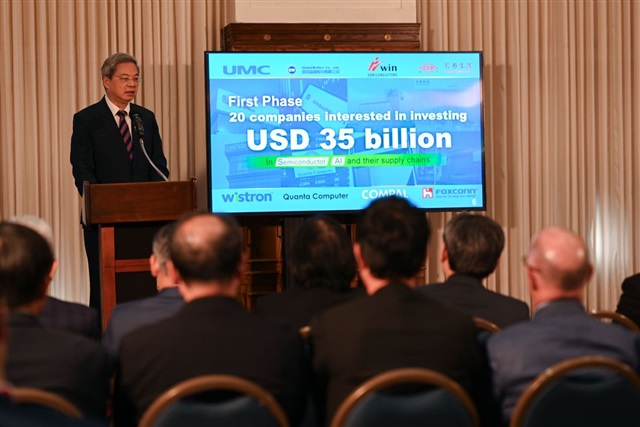
Taiwanese companies' investments in the United States have exceeded forecasts, with the Taipei government allocating a total financing of $50 billion. This strategic move underscores the growing economic and technological interdependence between the two nations, at a time when the global supply chain for high-tech components is under scrutiny. The capital injection not only strengthens Taiwan's presence in the US market but also has significant implications for key sectors such as semiconductors and artificial intelligence.
The decision to increase investments and financing reflects a strategy aimed at diversifying production and research and development capabilities. For the technology sector, and particularly for the advancement of Large Language Models (LLMs), capital availability and supply chain stability are critical factors. These investments can translate into new silicon fabrication plants, R&D centers, and strategic partnerships that, in the long term, will influence the availability and cost of essential hardware for the inference and training of complex AI models.
The Strategic Role of Semiconductors for AI
The beating heart of artificial intelligence innovation lies in the processing power offered by advanced semiconductors. GPUs, with their high VRAM and throughput capabilities, are fundamental for training increasingly larger LLMs and for efficient inference execution. Investments in this sector, such as those announced by the Taiwanese government, are therefore vital to support the global demand for high-performance chips.
The creation of new production infrastructures in the United States, supported by this financing, can help mitigate risks related to the geographical concentration of silicon production. This aspect is particularly relevant for companies evaluating on-premise LLM deployments, where access to specific hardware and supply chain resilience are primary considerations. The ability to obtain latest-generation GPUs, such as A100s or H100s, with their memory and bandwidth specifications, is a determining factor for the TCO and performance of self-hosted AI workloads.
Implications for On-Premise LLM Deployments
For CTOs, DevOps leads, and infrastructure architects considering self-hosted alternatives to cloud solutions for AI/LLM workloads, investment trends in the semiconductor sector have a direct impact. Hardware availability, delivery times, and acquisition costs are all influenced by global investment and production dynamics. A more robust and diversified supply ecosystem can translate into greater stability and predictability for planning bare metal or hybrid infrastructures.
Data sovereignty, regulatory compliance, and the need for air-gapped environments are often the main drivers behind choosing an on-premise deployment. However, these choices heavily depend on the ability to procure and maintain the necessary hardware. Investments like those from Taiwan can contribute to creating a more favorable environment for companies wishing to maintain full control over their data and models, offering stronger options for building local stacks and running LLMs in controlled environments. For those evaluating on-premise deployments, complex trade-offs exist between initial CapEx, long-term operational costs, and flexibility, and analytical frameworks like those offered on /llm-onpremise can help navigate these decisions.
Future Prospects for AI Innovation
The $50 billion financial commitment from the Taiwanese government, supporting its companies' investments in the United States, marks an important step for the future of technological innovation. This capital flow not only stimulates economic growth but also fuels research and development in cutting-edge sectors, with positive repercussions on the global capacity to develop and deploy artificial intelligence solutions.
Supply chain resilience and the availability of advanced computing infrastructure will remain critical factors for the evolution of LLMs and AI applications. Such strategic investments help shape a technological landscape where companies can choose with greater confidence among different deployment options, balancing performance, costs, security, and control. International collaboration and targeted investments are essential to sustain the rapid pace of innovation in the era of artificial intelligence.







💬 Comments (0)
🔒 Log in or register to comment on articles.
No comments yet. Be the first to comment!