
The "Philosophical" Challenge of Modern Semiconductors
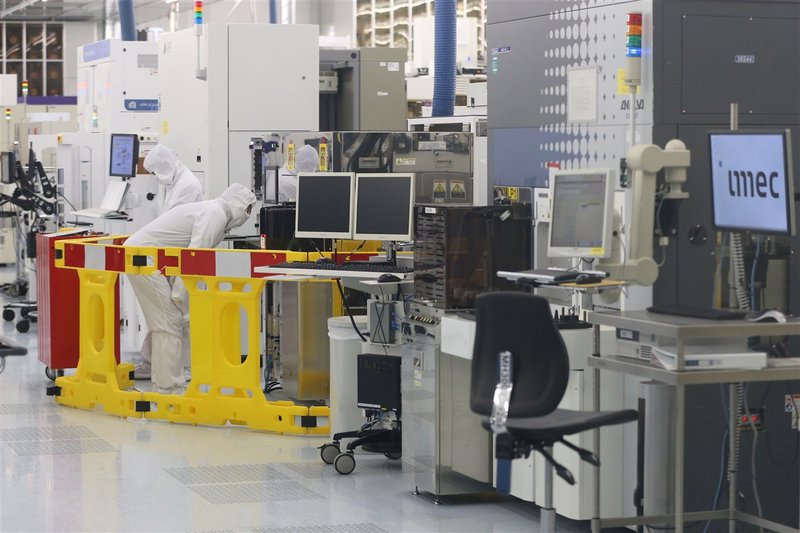
Modern chips present a problem that, in some ways, takes on an almost philosophical dimension: they have become too complex to be "seen" with traditional tools. As technology advances, logic and memory devices are stacked in three-dimensional architectures, and their dimensions shrink to just a few nanometers. This extreme miniaturization renders conventional optical tools, used to inspect each layer during production, incapable of resolving the deeper internal structures.
This is where Invisix, an Eindhoven-based startup spun out of ASML, a leading company in lithography machines, comes in. Invisix recently announced a €20 million funding round, earmarked for developing innovative solutions to overcome these inspection limitations. The goal is to provide semiconductor manufacturers with the ability to "see" inside chips, ensuring the quality and reliability of increasingly sophisticated components.
Beyond the Limits of Traditional Optics
The miniaturization of transistors and the adoption of 3D architectures, such as NAND memories or stacked chiplets, represent an extraordinary engineering achievement, but at the same time pose unprecedented challenges in quality control. Optical tools, by their nature, are limited by the wavelength of light and resolution capabilities. When the structures to be inspected fall below certain thresholds, or when they are hidden by upper layers, light is no longer sufficient to obtain a clear and detailed image.
This inability to detect internal defects or anomalies can have significant repercussions on production yield and the reliability of the final chips. For industries that depend on extreme performance and minimal tolerances, such as artificial intelligence and high-performance computing, meticulous control of every component is indispensable. Manufacturing precision is a critical factor in ensuring that GPUs and other hardware accelerators can operate at their full potential, with the expected stability and longevity.
Implications for On-Premise AI Infrastructure
The development of advanced inspection technologies like those proposed by Invisix has direct and significant implications for those designing and managing on-premise AI infrastructures. The availability of higher-quality chips, with minimal defects and guaranteed performance, is fundamental for building robust and reliable local stacks. Whether it's servers equipped with high-VRAM GPUs for training Large Language Models (LLM) or systems optimized for low-latency inference, the quality of the underlying silicon is an enabling factor.
More reliable hardware translates into less downtime, higher throughput, and better energy efficiency—crucial elements for optimizing the Total Cost of Ownership (TCO) of an on-premise deployment. Furthermore, for companies prioritizing data sovereignty and compliance, the reliability of local hardware reduces dependence on external cloud services, offering more granular control over the entire AI pipeline. For those evaluating on-premise deployments, there are trade-offs that AI-RADAR explores in detail at /llm-onpremise, providing analytical frameworks to assess these strategic decisions.
The Future of Semiconductor Quality Control
The funding secured by Invisix underscores the strategic importance of investing in new inspection methodologies for the semiconductor industry. As chips continue to evolve, with new architectures and materials, the ability to monitor and validate every stage of the manufacturing process will become even more critical. These innovations not only allow keeping pace with Moore's Law but also open the door to new design and integration possibilities, pushing the boundaries of computational performance.
For decision-makers in technology infrastructure, understanding these upstream dynamics in the hardware supply chain is essential. A company's ability to guarantee the quality of its chips directly reflects on the stability and performance of the systems that will then be used for intensive workloads such as artificial intelligence. Invisix positions itself as a key player in this scenario, helping to shape the future of silicon production and, consequently, the evolution of on-premise computing capabilities.




💬 Comments (0)
🔒 Log in or register to comment on articles.
No comments yet. Be the first to comment!