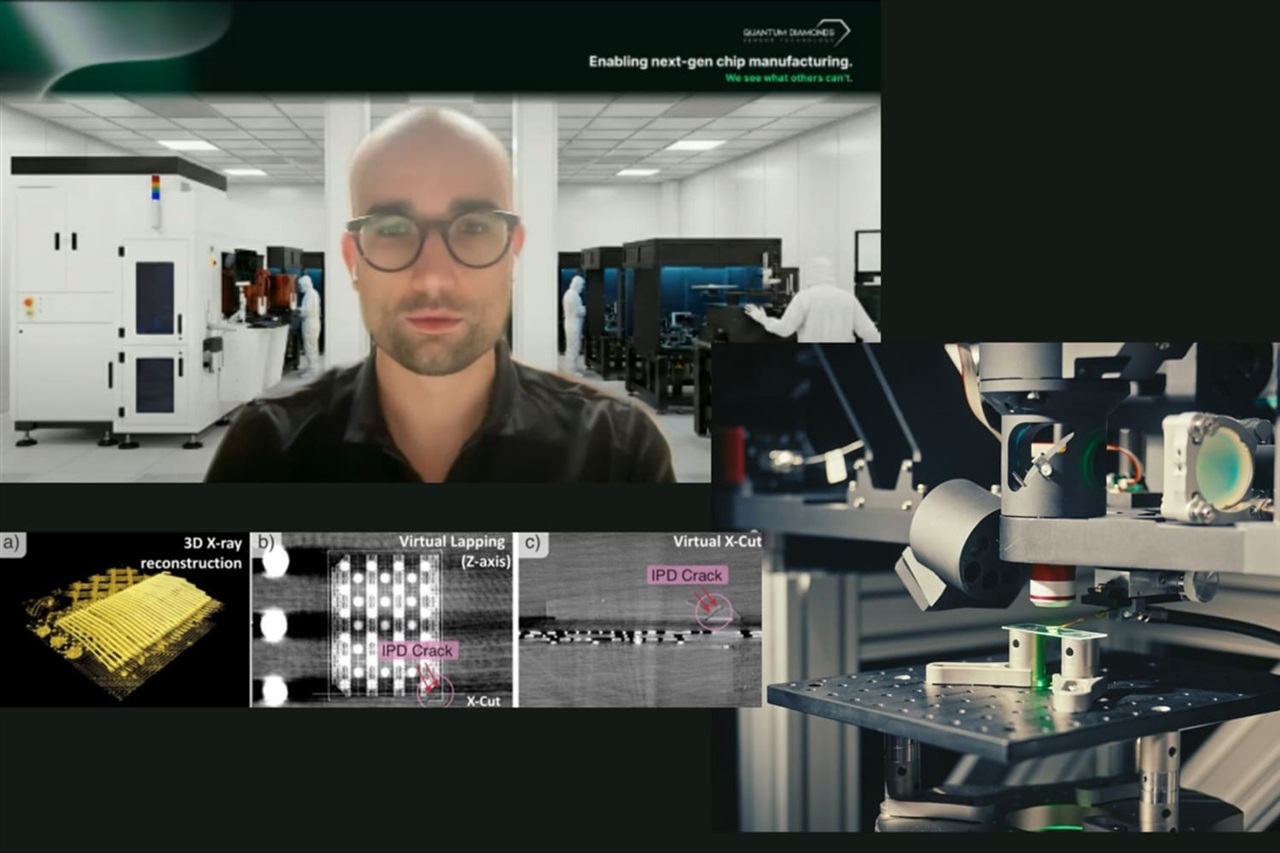
The news comes from an interview QuantumDiamond gave to DIGITIMES: the Europe-based company, backed by EU funds, has developed a semiconductor inspection technique that slashes the time required from six weeks to just two minutes. The method, based on diamond sensors with nitrogen-vacancy (NV) centers, is now being adopted by Taiwanese foundries. For the artificial intelligence ecosystem, and especially for anyone managing on-premise deployments of LLMs, this is more than a laboratory curiosity.
The hidden bottleneck
Every silicon wafer destined to become a GPU or AI accelerator must pass dozens of inspections during fabrication. Nanoscale defects, invisible to traditional optical methods, require lengthy and often destructive procedures. Magnetic inspections based on quantum diamonds exploit the extreme sensitivity of NV centers to map magnetic fields and currents directly on the circuit, spotting anomalies in minutes and without contact. The leap from six weeks to two minutes is no hyperbole: it translates into near-instant feedback for lithographic processes.
Why it matters for on-premise inference
Shortages of latest-generation GPUs have been a constant headache for teams evaluating local stacks for LLMs. Lead times stretch, prices soar, and the total cost of ownership (TCO) becomes hard to justify against the cloud. Such rapid inspection makes it possible to identify and correct process drifts in real time, boosting yield per wafer. More good dice per batch mean higher output volumes for the same installed capacity, which could gradually ease the supply squeeze. This is not fantasy: inspection turnaround is one of the factors that determine how fast foundries can scale a new node, and Taiwan produces the vast majority of advanced chips.
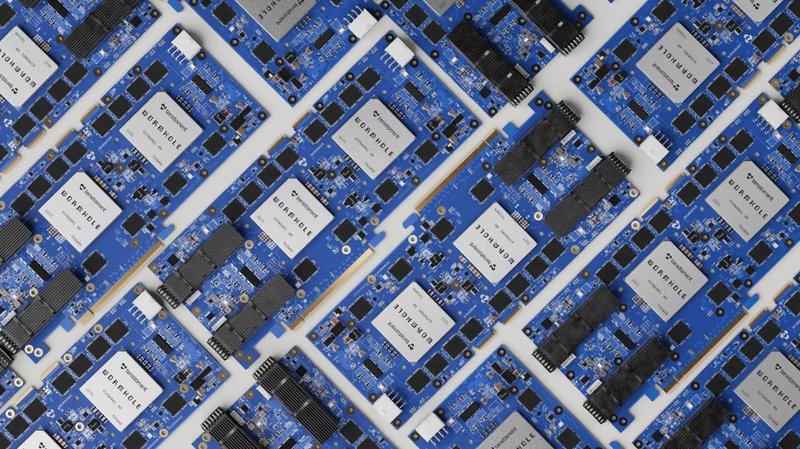
The structural impact goes beyond immediate availability. With shorter feedback loops, manufacturers can experiment with architectural variants—such as wider memory bandwidth or interconnects optimized for inference workloads—without waiting weeks to validate every tweak. This compresses hardware iteration cycles, bringing closer the day when boards designed for self-hosting large models become a commodity.
Who wins and who loses
The primary beneficiaries are the foundries and fabless companies, which see their yield-loss costs drop. Downstream, system integrators and on-premise solution providers can plan more stable supply pipelines. The mega hyperscalers, which have so far absorbed the bulk of available GPUs, may face more distributed demand as enterprises find it economically viable to bring inference in-house. For IT departments that until yesterday postponed the shift to self-hosted LLMs for fear of not finding hardware, QuantumDiamond's technology is a concrete signal: the manufacturing side is investing to remove bottlenecks, and the trajectory points toward greater accessibility.





💬 Comments (0)
🔒 Log in or register to comment on articles.
No comments yet. Be the first to comment!