Itera's Innovation for Hardware Development
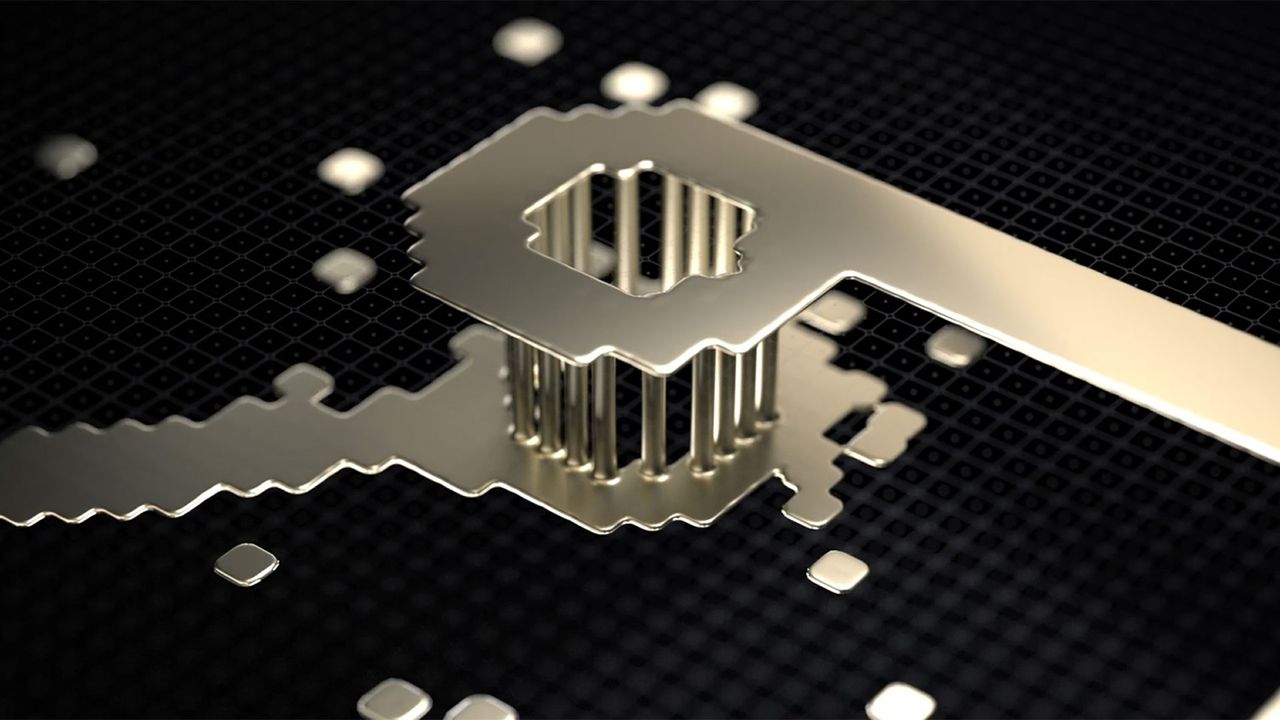
The landscape of hardware development is traditionally characterized by long and complex cycles, especially when it comes to prototyping and testing new architectures. In this context, the startup Itera has unveiled a prototype that promises to revolutionize the sector: the world's first "fluid circuit board." This innovation is based on a patented architecture combining glass and liquid metal, offering a super-fast hardware solution specifically designed for engineers who design printed circuit boards (PCBs).
Itera's promise is ambitious: to accelerate hardware iterations by a thousandfold compared to traditional methods. Such a claim, if confirmed, could radically transform the timeframes and costs associated with creating and refining new electronic devices, a crucial aspect in the era of artificial intelligence and intensive workloads.
Technical Details and Reconfiguration Capabilities
The core of Itera's technology lies in its physical reconfiguration capability. Unlike traditional PCBs, which are fixed once printed and require the production of a new board for every significant modification, Itera's prototype can be physically "rewired" in less than a minute. This is made possible by the use of liquid metal within microfluidic channels etched into glass, which can be rearranged to alter the circuit's connectivity.
This inherent flexibility represents a huge advantage for engineers. The ability to quickly test different configurations, correct errors, or explore new circuit topologies without having to wait for the fabrication of a new PCB drastically reduces downtime and prototyping costs. It is a solution that shifts the paradigm from "fixed" to "dynamic" development, opening new frontiers for hardware experimentation.
Implications for Innovation and TCO
The acceleration of hardware iterations by a thousandfold, as stated by Itera, would have profound implications for the entire technological ecosystem. In the LLM and AI sector, where hardware plays a fundamental role in Inference and training, the ability to rapidly prototype and test new silicon architectures or specialized boards could translate into a significant competitive advantage. Companies developing self-hosted AI solutions, for example, could greatly benefit from this agility, being able to customize and optimize hardware in record time to meet specific data sovereignty or performance requirements.
From a Total Cost of Ownership (TCO) perspective, such a drastic reduction in development and prototyping times could lead to considerable savings. Less time spent in design and production cycles means fewer resources employed and faster achievement of the Deployment phase. For those evaluating on-premise deployments and building dedicated AI infrastructures, tools like the one proposed by Itera could lower the entry barrier for creating custom hardware, making internal innovation more accessible.
Future Prospects and Challenges Ahead
While Itera's prototype is still in its early stages, its potential is undeniable. The transition from a laboratory prototype to a commercially viable solution will require addressing several challenges, including production scalability, the durability of liquid metal and glass in real operating environments, and the standardization of "rewiring" processes. However, the idea of a circuit board that adapts and evolves with the same speed as software is a powerful concept.
This technology could pave the way for a new generation of programmable and reconfigurable hardware, not just at a logical but also at a physical level. For companies investing in dedicated AI infrastructures and seeking maximum control and optimization, a solution like Itera's could represent a fundamental step towards greater agility and innovation, reducing dependence on external hardware production cycles and accelerating time-to-market for cutting-edge AI solutions.




💬 Comments (0)
🔒 Log in or register to comment on articles.
No comments yet. Be the first to comment!