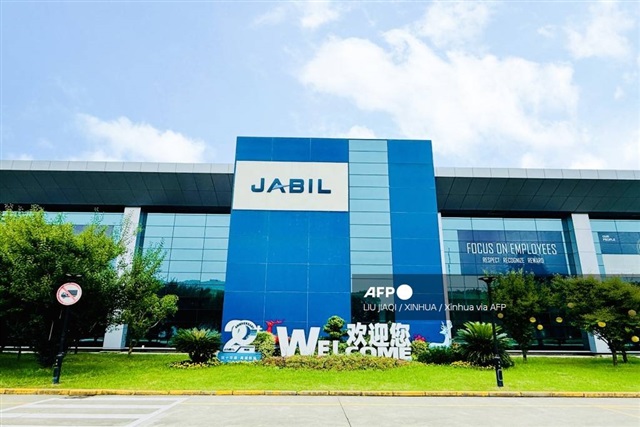
Jabil has opened a new automated logistics hub in Penang, Malaysia, with the stated goal of supporting global supply chains. The news, slim on details, comes at a time when the movement of components for the AI world – acquisition boards, PCBs, networking modules, server assembly materials – is watched as closely as semiconductor output. Penang is no background extra: it’s a global hardware artery, home to facilities that produce for Nvidia, AMD, and an ecosystem of companies feeding on-premise inference.
Jabil’s automated node signals something more than a mere industrial expansion. It tells us that logistics for electronic components is becoming as critical as manufacturing itself. In a market where GPUs still travel vast routes – from Taiwan or Malaysia to Western data centers – any distribution bottleneck translates into delays that impact deployment costs for those who want to run LLMs locally, away from the cloud. It’s no coincidence that Jabil, a contractor providing design and manufacturing services also to training solution suppliers, invested in a hub that uses automation and likely predictive analytics to streamline material flows.
The relevance for on-premise AI is less indirect than it appears. Anyone buying hardware for self-hosting models – be it a dual-GPU workstation or a rack of inference nodes – depends on a supply chain that isn’t just foundries and testing, but also packaging, distributed quality control, and just-in-time delivery of subcomponents. A weak link in that chain, as we saw during the pandemic, can stretch procurement timelines from months to quarters. The Penang hub, if it works as designed, adds an efficiency buffer right in a region that produces chassis, connectors, and networking appliances essential for many bare-metal systems.
There’s also a geographic concentration aspect worth weighing. Strengthening logistics in Penang means further rooting the ability to move AI components in Southeast Asia, benefiting those with consolidated purchasing volumes in the region and potentially posing risks for those betting on supplier diversification. For companies evaluating the TCO of an on-premise deployment, the logistical proximity of an automated hub can become a silent competitive edge: less warehousing in Europe or North America, fewer intermediate stockpiles. Yet, delegating supply chain fluidity to a single hub, however technologically advanced, raises long-term resilience questions that any distributed architecture should consider.
The news contains no numbers, benchmarks, or technical specs. But that very absence makes the picture compelling: Jabil isn’t selling a new server; it’s tuning a cog that presses on delivery times for the components powering the AI factory. When an electronics logistics provider invests in an automated hub at a critical junction like Penang, it’s because customers – network equipment manufacturers, server assembly firms, optical module distributors – have raised their voices. AI, in its relentless absorption of hardware resources, is recalibrating logistics priorities as well.







💬 Comments (0)
🔒 Log in or register to comment on articles.
No comments yet. Be the first to comment!