
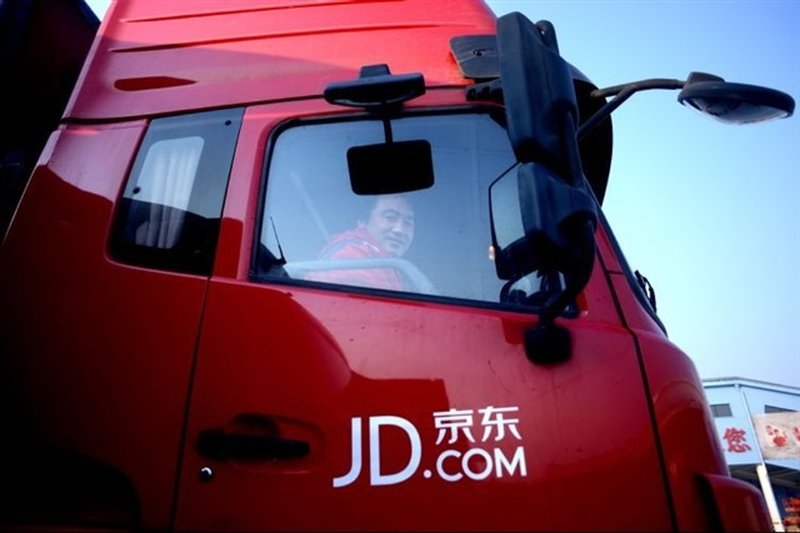
When a logistics giant like JD.com breaks ground on a new robotics hub, it's not just building a warehouse. It's laying down hardware, networking and compute power for an ecosystem where data stays home, models run locally, and decisions happen on the machine itself. That's the message coming from Guangzhou's Huangpu district, where construction has just started on the company's first RoboBase, designed to power a closed-loop robotics ecosystem.
JD.com's chosen formula – a complete circuit in which training, inference and operational data collection happen entirely within the corporate perimeter – is far more than a logistical choice. It's an architecture that rewrites the rules of cloud dependency, shifting processing to where low latency, supply chain privacy and full data control matter. In an automated warehouse, a sorting robot can't wait for a remote server's response; it needs computer vision or reinforcement learning models running on edge nodes, delivering inference in milliseconds. But the real prize is sovereignty: in sectors like logistics, where information on goods flows is sensitive, keeping data on-premise isn't a whim, but an operational and often regulatory requirement.
The Guangzhou RoboBase embodies this vision. Unlike a simple automated warehouse, the project envisions a hub where robots not only operate but are trained, fine-tuned and updated in a local computing environment. This eliminates recurring data transfer costs to the cloud and reduces reliance on broadband connectivity, shifting TCO from an inflated OpEx model to a more predictable CapEx investment. That's no small detail: for the enterprise, cost predictability is often what tips the balance toward self-hosted solutions.
Structurally, JD.com's move confirms a trend we've been tracking in the AI-RADAR space: the migration of workloads from centralized data centers to distributed, privately owned infrastructure. If until recently production AI almost inevitably flowed through hyperscalers, today the landscape is fragmenting. Industrial robotics, with its latency and security constraints, is proving a perfect testbed for on-premise and hybrid deployment models, where local inference capability becomes a competitive edge.
There is a flip side, though: running such an ecosystem demands significant in-house skills, from container orchestration to GPU maintenance to data pipeline monitoring. Not every company is ready to shoulder this knowledge investment, which opens opportunities for platforms and frameworks designed to simplify on-premise AI deployment.
The RoboBase is no isolated announcement. It points in a clear direction: those serious about intelligent automation prefer not to entrust their most precious raw material – data – to third parties, and choose to keep the machine learning loop indoors. Guangzhou is just the beginning of a computational geography that will see a proliferation of local, specialized, verticalized compute nodes.




💬 Comments (0)
🔒 Log in or register to comment on articles.
No comments yet. Be the first to comment!