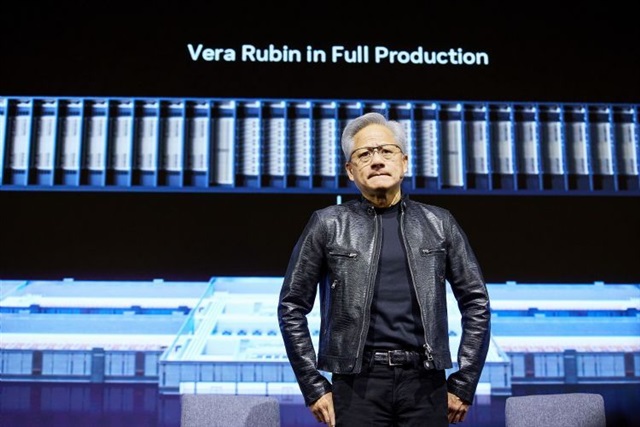
Nvidia CEO Jensen Huang has stepped into the fray against a proposed ban on Chinese open-source LLMs, joined by a chorus of Silicon Valley voices. The news, reported by DIGITIMES, signals a united front among companies that see open source as an indispensable pillar of the AI ecosystem, especially when inference and fine-tuning run on self-hosted hardware, outside the reach of cloud providers.
The opposition is not superficial. For years, Chinese labs have released models with open weights, often optimized to run on Nvidia consumer and data-center GPUs. These models become foundational building blocks for anyone building on-premise pipelines: they avoid vendor lock-in, allow LLMs to be adapted to proprietary data, and keep data residency within one’s own physical boundaries. A US ban would break this algorithmic supply chain, forcing enterprises to choose between less competitive alternatives or abandoning self-hosting altogether.
From a hardware perspective, Huang’s position is crystal clear. Nvidia sells GPUs to anyone running LLMs, regardless of the code’s nationality. But there’s more: the push toward on-premise deployment is currently one of the main drivers of accelerator demand. Blocking access to the most widespread open-source models means slowing down the entire workstation and server market for local inference, a rapidly expanding segment that cares little about a model’s geography and everything about its efficiency and the ability to perform quantization without third-party dependencies.
Beyond geopolitics: the impact on on-premise AI infrastructure
The tension between national security and technological openness is nothing new, but here it strikes a raw nerve: data sovereignty. Organizations adopting self-hosted LLMs often do so to comply with regulations like GDPR or to protect sensitive information. If model availability sways with political winds, the entire economic and technical rationale for self-hosting wobbles. This isn’t about defending a specific model, but about preserving the freedom to choose the software building block best suited to one’s stack, without a decree making it illegal.
The debate also questions the real effectiveness of bans. Once released, the weights of an open-source LLM are a digital artifact almost impossible to confine. A formal prohibition risks spawning underground markets or forks, undermining the very traceability that governments seek to enforce. For companies investing in on-premise infrastructure, this scenario introduces a new risk factor: dependence on models that might become “clandestine” overnight, with knock-on effects on audits, compliance, and updates.
The Silicon Valley backlash, with Huang at the forefront, is thus not simple corporate defense. It signals that the AI game is played not just on model capability or GPU speed, but on control of the infrastructure that powers them. For anyone evaluating a local LLM deployment, the choice of model is already a structural decision, no longer just a technical one.







💬 Comments (0)
🔒 Log in or register to comment on articles.
No comments yet. Be the first to comment!