
Introduction
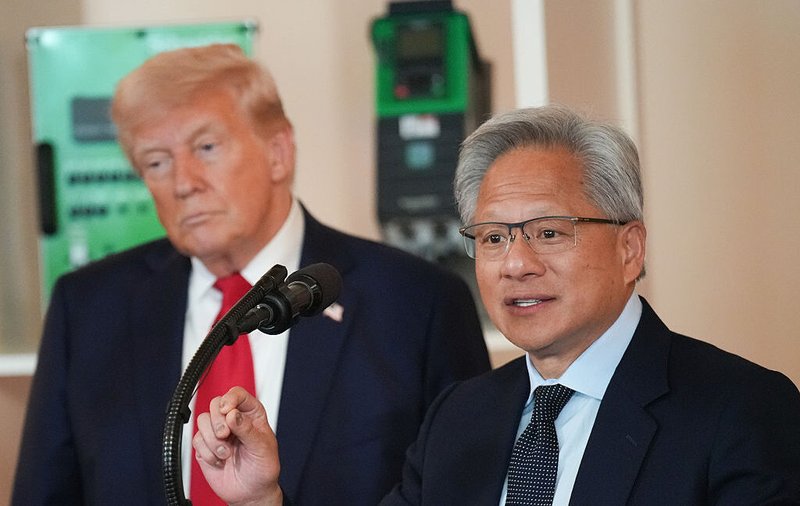
Jensen Huang, CEO of NVIDIA, recently visited Taiwan, a crucial hub for the semiconductor industry. During his visit, Huang made a significant statement, calling "Vera Rubin" the "biggest product ramp in computer history." This assertion, although lacking specific product details in the source, underscores the strategic importance NVIDIA places on its upcoming hardware innovations and their potential impact on the global technological landscape.
Huang's visit and statement come at a time of intense competition and rapid evolution in the artificial intelligence sector, where the demand for advanced computing capabilities is constantly growing. The CEO's words suggest that "Vera Rubin" will not just be an evolution, but a true revolution, set to redefine performance and scalability standards for AI applications.
The Importance of New Hardware Architectures
The artificial intelligence sector, particularly Large Language Models (LLMs), is intrinsically linked to the availability of increasingly powerful and efficient hardware. Advanced architectures, like those NVIDIA has historically developed, are fundamental for managing complex workloads, both during training and Inference phases. A "product ramp" of such magnitude implies not only innovations at the individual chip level but likely also significant improvements in interconnectivity, VRAM, and overall Throughput capabilities.
For companies operating with LLMs, the availability of new generations of silicon translates into opportunities to accelerate development, reduce latency, and increase Token processing capacity. This is particularly true for deployments requiring extreme performance and scalability, where every hardware improvement can have a direct impact on operational efficiency and costs.
Implications for On-Premise Deployments
The promise of such a significant "product ramp" has particular resonance for organizations prioritizing self-hosted or hybrid AI deployments. For CTOs, DevOps leads, and infrastructure architects, hardware selection is a decisive factor for Total Cost of Ownership (TCO), data sovereignty, and compliance. New architectures like "Vera Rubin" could offer substantial advantages, enabling the execution of larger and more complex models with greater efficiency on Bare metal infrastructures.
An increase in hardware capabilities can reduce the need for external cloud services, ensuring greater control over data and processes. However, adopting next-generation hardware also requires careful infrastructure planning, including advanced cooling systems, adequate power, and high-speed networks. Evaluating the trade-offs between CapEx for new GPU purchases and OpEx for energy and maintenance becomes even more critical. For those evaluating on-premise deployments, AI-RADAR offers analytical frameworks on /llm-onpremise to assess these trade-offs in a structured manner.
Future Prospects and Challenges
Jensen Huang's statement positions "Vera Rubin" as a potential game-changer, not only for NVIDIA but for the entire tech industry. Silicon innovation is the engine that pushes the boundaries of what is possible with artificial intelligence, enabling new applications and improving existing ones. The AI hardware race is a key factor in the global competition for technological leadership.
Companies will need to carefully analyze the specifications and performance of this new offering to understand how it can integrate into their existing and future AI pipelines. The challenge will be to balance the adoption of cutting-edge technologies with the need to maintain operational stability and optimize costs, while ensuring data security and sovereignty in a continuously evolving technological landscape.






💬 Comments (0)
🔒 Log in or register to comment on articles.
No comments yet. Be the first to comment!