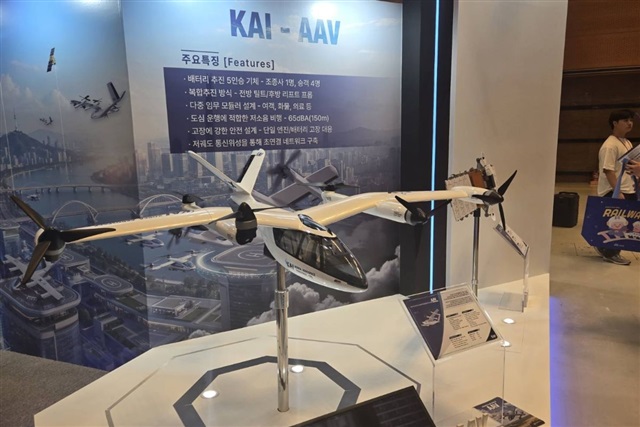
When two giants like Korea Aerospace Industries and Hyundai Motor Group join forces to close South Korea’s “aircraft body gap” in Advanced Air Mobility (AAM), the mainstream narrative focuses on composite materials, certifications, and supply chains. But the real stake is elsewhere, and it revolves around AI sovereignty.
Designing AAM vehicles – passenger drones, air taxis, autonomous systems – involves training predictive models on aerodynamics, simulating thousands of flight scenarios in real time, and optimizing production with generative design techniques. Each of these workloads generates and consumes data whose confidentiality is vital: blueprints, structural tests, flight control algorithms. Moving them to public clouds, even just for training, poses a geostrategic risk that few governments and no national champion are willing to tolerate.
Indeed, the partnership’s context does not explicitly declare deployment choices, but the nature of the problem dictates them. Regulated sectors like military and civil aerospace have long operated under air-gapped networks – isolated environments where models live and are refined on resident hardware. AAM will be no exception; it will, in fact, accelerate the demand for high-reliability GPU clusters installed in proprietary data centers.
Who benefits from this dynamic? Enterprise on-premise solution providers, from NVIDIA with its A100 and H100 cards certified for industrial environments, to system integrators combining NVMe storage and InfiniBand networking for continuous fine-tuning workloads. But also South Korea’s manufacturing ecosystem, which could push for custom architectures based on domestic semiconductors, strengthening a supply chain stretching from Samsung and SK Hynix chips to locally assembled servers.
Conversely, global cloud providers lose momentum as they struggle to convince strategic firms to outsource sensitive data, despite promised encryption levels and compliance. The paradox is striking: while onboard software evolves toward LLMs to interpret voice commands and manage emergencies, the training of those same models remains grounded, in liquid-cooled rooms with physical access control.
The KAI-Hyundai case is therefore a powerful structural signal. It’s not just about building a fuselage; it’s about building trust that the entire design chain is free from external interference. Along this trajectory, investment decisions in computing will tilt ever more toward purchasing dedicated hardware (CapEx) over renting cloud GPUs (OpEx), with TCO becoming secondary to the strategic imperative of control.
For anyone evaluating deployment architectures today, the implications are clear: vertical hardware-software integration is no longer an ideological choice but a competitive necessity. And while the sky of air mobility remains to be conquered, the real battle for technological supremacy is fought in silicon, on the ground, inside server racks that never share a line with the outside world.






💬 Comments (0)
🔒 Log in or register to comment on articles.
No comments yet. Be the first to comment!