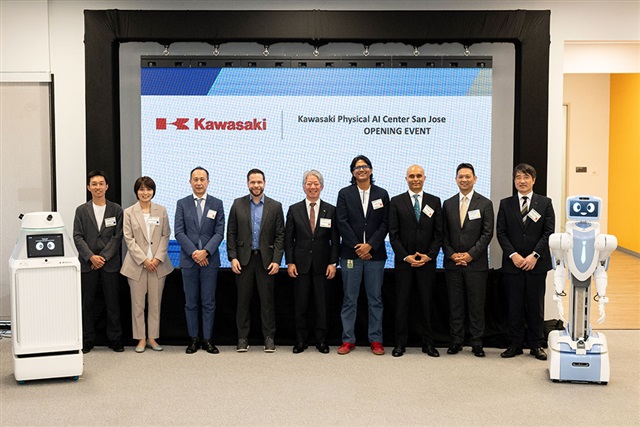
Kawasaki Bets on AI with New Silicon Valley Center
Kawasaki, the renowned industrial giant, has announced the opening of a new artificial intelligence center in the famous Silicon Valley. This strategic move highlights the company's intention to accelerate the development and integration of AI solutions into its operations and products. The choice to establish a physical presence in one of the global epicenters of technological innovation underscores the importance attributed to research and development in this field.
The creation of a dedicated physical AI center allows Kawasaki to have direct control over its infrastructures and projects. This approach differs from purely cloud-based models, offering potential advantages in terms of hardware customization, data security, and performance optimization for specific workloads. The investment in a dedicated facility reflects a long-term vision of AI as a fundamental pillar for growth and innovation.
Strengthening the Partnership with Nvidia
The opening of the AI center in Silicon Valley is accompanied by a strengthening of ties between Kawasaki and Nvidia. Nvidia is a dominant player in the artificial intelligence landscape, particularly regarding the development of Graphics Processing Units (GPUs) and software platforms like CUDA, which are essential for training and Inference of Large Language Models (LLMs) and other complex AI models.
A deepened collaboration with Nvidia could translate into privileged access to cutting-edge technologies, specialized expertise, and advanced computing resources. For Kawasaki, this means being able to leverage Nvidia's GPU capabilities to accelerate the research, development, and Deployment of innovative AI applications, from industrial robotics solutions to advanced automation. Such a partnership is crucial for remaining competitive in a rapidly evolving sector.
Implications for On-Premise Development and Data Sovereignty
Kawasaki's decision to invest in a physical AI center in Silicon Valley offers interesting insights for companies evaluating on-premise Deployment strategies for their AI workloads. A physical center allows for granular control over hardware, enabling customized configurations and optimization for specific training or Inference needs. This is particularly relevant for organizations handling sensitive data or operating in sectors with stringent compliance and data sovereignty requirements, where air-gapped or self-hosted solutions are preferred.
While the initial investment (CapEx) for bare metal infrastructure can be significant, a long-term Total Cost of Ownership (TCO) analysis may reveal advantages over the recurring operational costs (OpEx) of cloud solutions, especially for intensive and predictable workloads. The ability to keep data and models within one's own infrastructural boundaries offers greater security and reduces dependence on external providers.
Future Prospects and the AI Ecosystem
The opening of this AI center by Kawasaki is not just an investment in artificial intelligence, but also a signal of the growing trend among industrial companies to deeply integrate AI into their core strategies. A presence in Silicon Valley positions Kawasaki at the heart of a dynamic ecosystem, facilitating talent attraction, knowledge exchange, and the exploration of new collaboration opportunities.
This type of physical investment reflects an awareness that, for certain critical AI applications, direct control over infrastructure and proximity to technological partners are decisive factors. As AI continues to evolve, the ability to rapidly develop, test, and release new solutions will become an increasingly marked competitive advantage. Kawasaki's center is a concrete example of how companies are shaping the future of AI through strategic investments and targeted partnerships.





💬 Comments (0)
🔒 Log in or register to comment on articles.
No comments yet. Be the first to comment!