Accelerating AI Infrastructure: Kentec's Vision
The artificial intelligence landscape is constantly evolving, with an increasing demand for infrastructure capable of supporting complex workloads, from Large Language Models (LLMs) to the training and inference of advanced models. In this context, Kentec has stated its objective to significantly shorten the deployment times for AI-dedicated data centers. This ambition fits into a market where rapid implementation can translate into a substantial competitive advantage, especially for organizations choosing self-hosted solutions for data sovereignty reasons or to optimize Total Cost of Ownership (TCO).
The construction and activation of an AI data center represent a complex undertaking, going far beyond the simple installation of servers. It requires meticulous planning for the procurement of specific hardware, such as high-performance GPUs with ample VRAM, advanced cooling systems, and low-latency network infrastructure. Kentec's commitment suggests a focus on optimizing these processes, aiming to simplify the phases that traditionally slow down the production readiness of new computational capabilities for AI.
Challenges of On-Premise AI Data Center Deployment
Deploying AI infrastructure, particularly in on-premise or air-gapped scenarios, presents a series of inherent challenges that contribute to extended realization times. The hardware procurement phase, for example, can be prolonged due to the limited availability of latest-generation GPUs, such as the NVIDIA H100 or AMD Instinct MI300X series, which are essential for large-scale LLM training and inference. Added to this is the complexity of hardware-software integration, which requires the installation and configuration of optimized software stacks, from drivers to machine learning libraries, up to orchestration frameworks like Kubernetes.
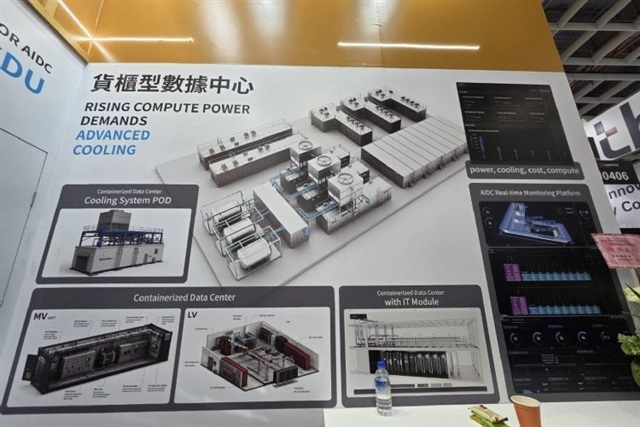
Beyond hardware and software, physical infrastructure plays a crucial role. AI data centers require power density and cooling solutions (often liquid-based) far superior to those of traditional data centers, to manage the heat generated by hundreds or thousands of GPUs. The design and implementation of these systems, along with the management of high-speed network interconnects (e.g., InfiniBand or 400GbE Ethernet), are steps that demand time and specialized expertise. Kentec's goal is presumably to streamline these processes, offering solutions or methodologies that reduce typical bottlenecks.
Strategies for Faster Deployment
To address the complexities and extended timelines of AI data center deployment, the industry is exploring various strategies. One such approach is the adoption of modular and prefabricated architectures, which allow for the rapid assembly of pre-validated computational capacity blocks. These solutions can include pre-configured racks with servers, GPUs, cooling, and power systems already integrated, reducing the need for complex on-site operations. Another strategy involves optimizing software provisioning and configuration pipelines, using automation tools for deploying operating systems, drivers, and AI stacks (such as vLLM or TGI for inference).
Furthermore, attention is shifting towards standardization and simplification of hardware and software interfaces to facilitate integration and reduce errors. This includes the development of infrastructure management solutions that offer centralized visibility and control, allowing DevOps teams and infrastructure architects to monitor and scale resources more efficiently. Kentec's approach could therefore focus on one or more of these aspects, providing significant added value to those seeking to rapidly implement their AI capabilities.
Implications for Tech Decision Makers
For CTOs, DevOps leads, and infrastructure architects, the promise of faster AI data center deployment is highly relevant. The ability to bring new computational resources online quickly means accelerating the development and release of AI-powered products and services, while maintaining control over data and operational costs. However, it is crucial to carefully evaluate the trade-offs: speed must not compromise the reliability, scalability, or security of the infrastructure.
Solutions aimed at reducing deployment times must be analyzed in terms of flexibility, compatibility with existing technology stacks, and long-term TCO. For those evaluating on-premise deployments, AI-RADAR offers analytical frameworks on /llm-onpremise to assess the trade-offs between implementation speed, initial and operational costs, and data sovereignty requirements. Kentec's initiative highlights a market trend towards more agile and integrated solutions, essential for fully capitalizing on the potential of artificial intelligence in an increasingly competitive business environment.








💬 Comments (0)
🔒 Log in or register to comment on articles.
No comments yet. Be the first to comment!