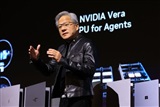
Agentic Computing: A Vision for the Future
Jensen Huang, CEO of Nvidia, recently articulated a bold perspective on the future of computing, identifying the rise of “agentic computing” as a catalyst for profound transformation. According to Huang, this new paradigm is set to redefine the operation of critical infrastructures like data centers, in addition to significantly impacting distributed devices such as PCs, robots, and vehicles. His vision suggests an evolution towards more autonomous and intelligent systems, capable of making decisions and interacting with the surrounding world in unprecedented ways.
This concept fits within the broader context of advancements in artificial intelligence, particularly Large Language Models (LLM) and multimodal models. Agentic computing, in fact, is based on the idea of software agents capable of planning, executing actions, and learning from results, often using LLMs as a “brain” for understanding and generating responses. This approach promises to unlock new capabilities in sectors ranging from automated IT operations management to autonomous driving and advanced robotics.
The Role of Autonomous Agents in the Tech Ecosystem
Agentic computing represents a qualitative leap from traditional programming models. Instead of following predefined instructions, autonomous agents are designed to pursue complex goals, adapting to changing conditions and solving problems dynamically. This requires not only advanced processing capabilities but also a robust software architecture that allows agents to perceive the environment, reason, act, and reflect on their own actions.
The implications for the technological ecosystem are vast. In data centers, agents could optimize resource allocation, autonomously manage workloads, and even self-heal in case of failures. In PCs, they could transform user interaction, offering proactive and contextually aware personal assistants. For robots and vehicles, agentic computing is fundamental to achieving true autonomy, enabling them to navigate complex environments, make real-time decisions, and collaborate with other agents or humans.
Impact on Infrastructure and On-Premise Deployment
The widespread adoption of agentic computing will necessitate an extremely powerful and flexible computational infrastructure. Data centers, both on-premise and cloud-based, will need to evolve to support intensive AI workloads, characterized by high VRAM, throughput, and low latency requirements. For companies prioritizing data sovereignty and direct control over infrastructure, the on-premise deployment of local AI stacks will become even more strategic. This approach allows sensitive data to remain within corporate boundaries, complying with regulations like GDPR and ensuring air-gapped environments for critical applications.
Evaluating the Total Cost of Ownership (TCO) for these infrastructures will be crucial. Decisions between self-hosted solutions and cloud services will depend on factors such as initial costs (CapEx) versus operational costs (OpEx), energy consumption, and the need for hardware customization, such as specific GPUs for inference or training. AI-RADAR, for instance, offers analytical frameworks on /llm-onpremise to help organizations evaluate these complex trade-offs, considering concrete hardware specifications and performance needs. Edge computing, with devices like PCs and vehicles, will also require hardware solutions optimized for local inference, balancing computational power and energy consumption.
Prospects and Challenges for Adoption
Jensen Huang's vision paints an exciting future, but the large-scale implementation of agentic computing presents significant challenges. The complexity in designing and managing multi-agent systems, the need to ensure the security and reliability of autonomous decisions, and the enormous energy demands of AI infrastructures are just some of the issues companies will have to address.
However, the transformative potential is immense. Agentic computing could lead to unprecedented levels of automation and operational intelligence, optimizing processes, reducing costs, and unlocking new business opportunities in almost every sector. Companies that invest in understanding and adopting this technology, both at the software and hardware infrastructure levels, will be positioned to drive innovation in the coming decade.






💬 Comments (0)
🔒 Log in or register to comment on articles.
No comments yet. Be the first to comment!