Artificial Intelligence in the Crosshairs of Cybercrime
Google recently disclosed the discovery of a zero-day vulnerability directly generated by an artificial intelligence system, a concerning milestone in the cybersecurity landscape. This particularly insidious threat has demonstrated the ability to bypass two-factor authentication (2FA) mechanisms, a fundamental pillar of security for millions of users and businesses. The revelation not only confirms AI's growing offensive capabilities but also raises urgent questions about the preparedness of current digital defenses.
The emergence of such vulnerabilities, autonomously created by algorithms, marks a turning point. It is no longer just about attacks orchestrated by human actors leveraging AI tools, but about systems that independently identify and exploit weaknesses. This scenario necessitates a profound review of cybersecurity strategies, pushing organizations to consider how AI can be employed for both attack and defense.
New Frontiers of AI-Driven Threats
Google's discovery fits into a broader context witnessing the rise of new types of AI-driven threats. Among these are self-morphing malware, capable of altering its code and behavior to evade detection, and backdoors powered by models like Gemini, which can offer attackers persistent and hard-to-detect access. These technologies provide cybercriminals with tools of unprecedented sophistication and adaptability.
The ability to bypass 2FA is particularly alarming. Traditionally, two-factor authentication has been considered a robust barrier against unauthorized access. If AI can systematically find ways to overcome these defenses, the implications for protecting sensitive data and critical infrastructure are enormous. Companies must now confront the prospect that their most established security measures may be vulnerable to AI-generated techniques.
Advanced Automation and On-Premise Security
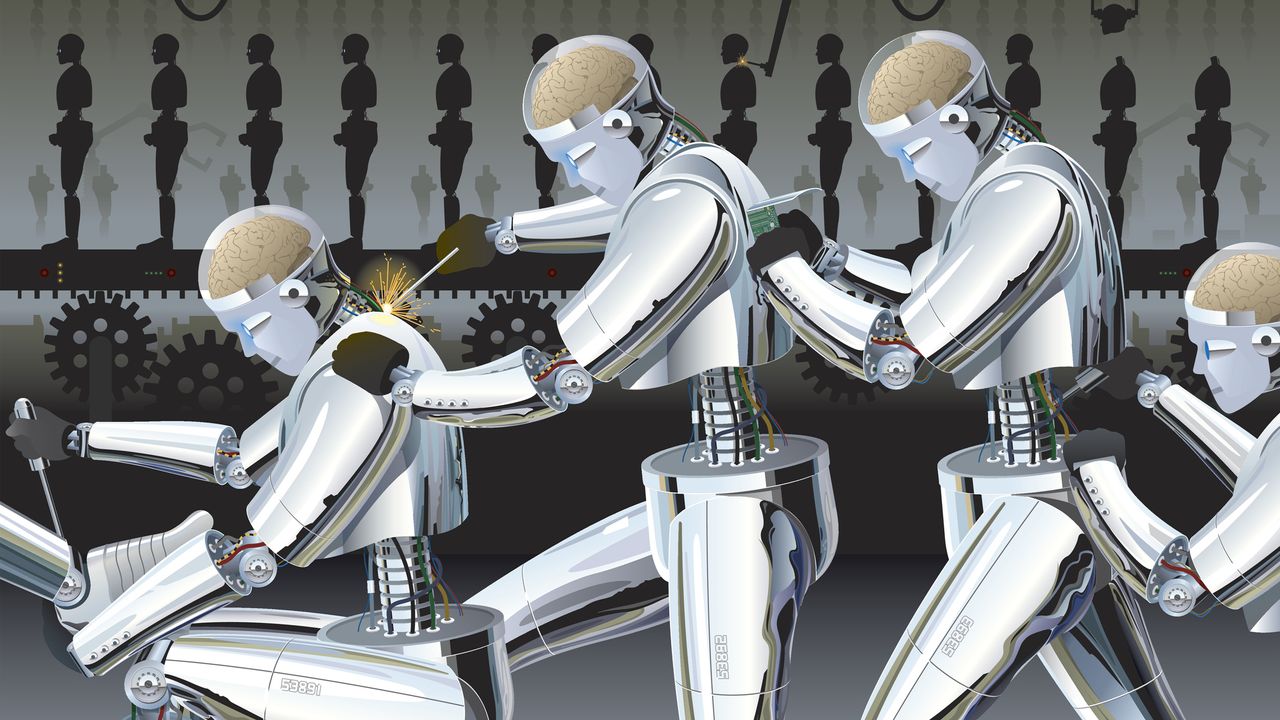
In this scenario of evolving threats, the concept of "robots manufacturing robots" takes on new relevance. This seemingly futuristic phrase symbolizes the advancement of industrial automation and robotics, often integrated with artificial intelligence systems to optimize complex production processes. Such infrastructures, which may operate in self-hosted or air-gapped environments for data sovereignty and control reasons, become potential targets for AI-driven attacks.
For organizations evaluating the deployment of LLMs and other AI solutions on-premise, security becomes an absolute priority. Protecting local stacks, hardware for inference and training, and ensuring data sovereignty, requires meticulous attention. The ability of an AI to generate zero-days or create self-morphing malware means that defenses must be equally dynamic and resilient, with a focus on rapid detection and response within one's controlled perimeter. For those evaluating on-premise deployment, complex trade-offs exist between control, TCO, and the need to integrate cutting-edge security solutions, as discussed in the analytical frameworks offered by AI-RADAR on /llm-onpremise.
Future Outlook and Defense Strategies
The era of AI-powered cybercrime is now a reality. Companies, particularly those handling sensitive data or critical infrastructure, must accelerate the adoption of cybersecurity strategies that account for these new offensive capabilities. This includes investing in AI-based threat detection systems, continuously updating security protocols, and training personnel to recognize and respond to increasingly sophisticated attack vectors.
The challenge is not only technological but also strategic. It is crucial to develop a proactive approach, anticipating attackers' moves and leveraging AI itself as a defensive tool. The resilience of infrastructures, both cloud and self-hosted, will depend on the ability to adapt quickly to a continuously evolving threat landscape, where artificial intelligence is no longer just a tool, but a key player in the digital cat-and-mouse game.









💬 Comments (0)
🔒 Log in or register to comment on articles.
No comments yet. Be the first to comment!