When an organization decides to bring LLM inference or fine-tuning in-house, one of the most opaque cost items is often memory. Not just GPU VRAM, but system memory that bridges storage and compute. Now a concrete signal comes from the market: AI-driven demand is draining memory supplies, and the shortage will stretch at least to 2027.
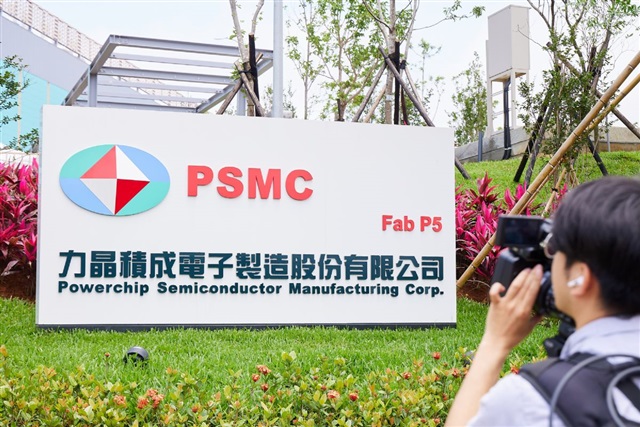
Powerchip Semiconductor Manufacturing Corporation (PSMC), one of the suppliers feeding this market, has just raised its margin forecast for the second quarter of 2026 to 28% — an upward revision that speaks to a demand imbalance so stark it gives vendors unusual pricing power.
This deserves attention from anyone planning on-premise deployments. Because if memory is scarce, the cost of entire clusters can balloon, or lead times can stretch to the point of delaying projects. It's not just about HBM for top-tier GPUs; the pressure ripples across the entire supply chain, including DDR, in a market where cyclical demand has long stressed producers.
It's worth reading this episode as a structural symptom. AI is not an ordinary workload: its appetite for memory bandwidth and capacity grows with model size and context window length. While quantization techniques and more frugal architectures are advancing, companies racing to train or serve LLMs keep pushing volumes. In this scenario, the memory shortage becomes at least as constraining as GPU availability. And memory makers like PSMC reap the benefits of an upstream value shift.
For those with data sovereignty requirements — banks, healthcare, public administration — who must stay on-premise, the message is clear: roadmaps must account for bottlenecks lasting years, not quarters. The window to procure at acceptable conditions could narrow. Total Cost of Ownership (TCO) analysis tools that factor in not only hardware but waiting times and opportunity cost become critical.
The picture remains fluid. On one hand, new memory fabrication plants are under construction, but ramping up takes time. On the other, software-side efficiency (from model pruning to optimized serving) can ease the pressure. Yet supply-side adjustment is slow and expensive, while AI demand shows no sign of cooling.
PSMC’s margin hike is a single data point, but its meaning is broader: the AI race is redrawing the profit geography of the semiconductor industry, shifting value from logic foundries to memory ones. For those designing compute infrastructure, it’s a reminder that autonomy also hinges on the ability to secure foundational building blocks.







💬 Comments (0)
🔒 Log in or register to comment on articles.
No comments yet. Be the first to comment!