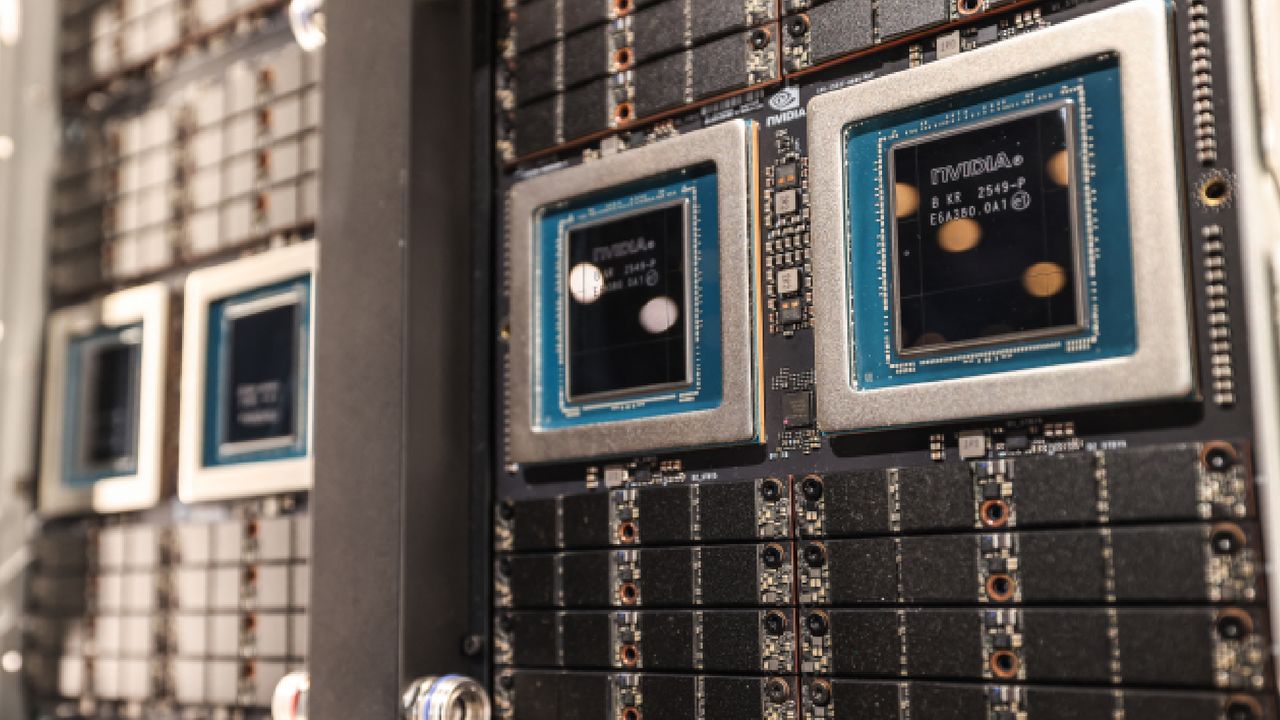
AI Reshapes Data Center CPU Demand: The Critical CPU-GPU Ratio
The advancement of artificial intelligence agents is triggering an unexpected surge in demand for data center CPUs. While attention often focuses on GPUs, considered the primary engine for training and inference of Large Language Models (LLMs), the increased demand for central processors signals a significant shift in the architectures required to support modern AI workloads.
This phenomenon highlights how the balance between CPUs and GPUs has become a decisive factor for the efficiency and scalability of AI infrastructures. For hyperscalers, operating at massive scale, optimizing this ratio is not just a matter of performance but also of economic and operational sustainability.
The Evolving Role of CPUs in the AI Era
Contrary to a common perception that relegates CPUs to a secondary role in AI, these processors are fundamental for multiple aspects of machine learning pipelines. GPUs excel at intensive parallel computation, but CPUs handle crucial tasks such as data preparation, pre-processing and post-processing, workload orchestration, memory management, and I/O operations.
An infrastructure with an unbalanced CPU-GPU ratio can lead to significant bottlenecks. For example, if CPUs cannot feed data to GPUs at the required speed, the powerful graphics units will remain idle, drastically reducing overall throughput and increasing latency. This makes optimizing the ratio an imperative to maximize investment in AI hardware.
Implications for Hyperscalers and On-Premise Deployments
For hyperscalers, managing thousands of servers and petabytes of data requires careful planning of hardware architecture. The Total Cost of Ownership (TCO) is strongly influenced not only by the initial cost of components but also by energy consumption and operational costs. An optimized CPU-GPU ratio can reduce overall energy consumption, improving the efficiency and sustainability of operations.
In on-premise or air-gapped deployment contexts, where data sovereignty and control over infrastructure are priorities, the ability to precisely configure the CPU-GPU ratio becomes even more critical. Companies opting for self-hosted solutions can customize the hardware stack to exactly match their specific AI workloads, avoiding the over-provisioning or under-provisioning typical of some general-purpose cloud offerings. For those evaluating on-premise deployments, AI-RADAR offers analytical frameworks on /llm-onpremise to assess trade-offs between performance, cost, and control.
Future Outlook and Optimization Strategies
The continuous evolution of LLMs and AI agents suggests that the importance of the CPU-GPU ratio will only grow. New generations of models, with ever-wider context windows and complex memory requirements, will demand an even closer and more balanced interaction between CPUs and GPUs.
Optimization strategies include not only hardware selection but also the adoption of efficient software frameworks and intelligent schedulers capable of optimally distributing workloads among available resources. Understanding and managing this ratio is therefore a key competence for CTOs, DevOps leads, and infrastructure architects aiming to build resilient, high-performing, and economically advantageous AI platforms.






💬 Comments (0)
🔒 Log in or register to comment on articles.
No comments yet. Be the first to comment!