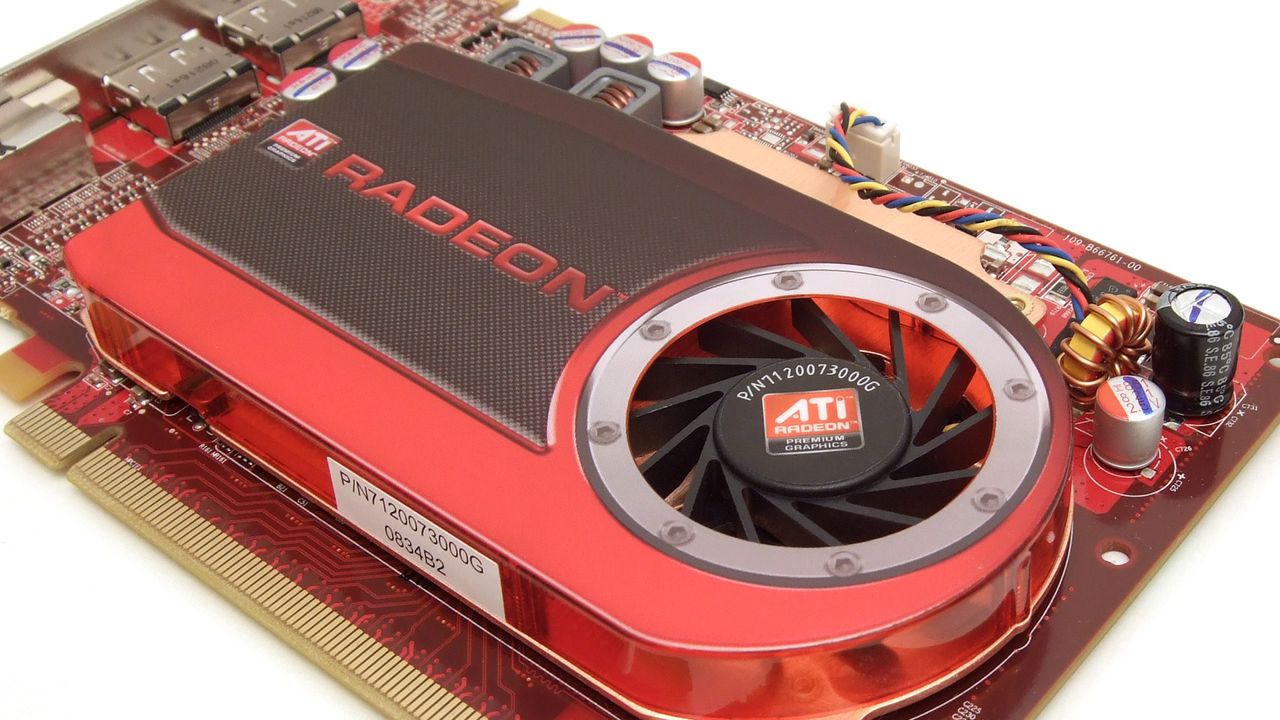
AI Revitalizes Legacy AMD GPUs: R600 Driver Renewed with Copilot
In today's technological landscape, where innovation constantly pushes towards ever more powerful hardware, a counter-trend is emerging that values the longevity and sustainability of existing resources. Linux developers are demonstrating how artificial intelligence can play a key role in this process, particularly in keeping alive hardware components that would otherwise be destined for obsolescence. The focus has been on drivers for older AMD GPUs, an initiative that promises to significantly extend the useful life of these graphics cards.
Employing AI-assisted development tools, such as GitHub Copilot, has made it possible to tackle one of the most complex challenges in software maintenance: cleaning up and optimizing legacy code. Specifically, the R600 driver, essential for the operation of AMD GPU series ranging from HD 2000 to HD 6000, has undergone a major overhaul. This intervention not only improves the stability and performance of these cards on Linux systems but also offers a new perspective on the efficiency with which older hardware infrastructures can be managed and updated.
The Role of AI in Open Source Driver Development
Maintaining and updating hardware drivers, especially for components no longer officially supported by manufacturers, represents a significant burden for open-source communities. The code can be complex, poorly documented, and written in various styles, making human intervention difficult. This is where tools like GitHub Copilot show their potential. By analyzing vast datasets of code, these AI assistants can suggest refactoring, identify error patterns, or propose optimizations that accelerate the development process and improve code quality.
In the case of the R600 driver, AI facilitated the identification of redundant or inefficient code sections, allowing developers to focus on deeper structural changes. This does not mean that AI replaces human work, but rather that it acts as a powerful co-pilot, increasing productivity and reducing the time needed to complete complex tasks. The result is a cleaner, more robust driver, capable of unlocking new functionalities or improving existing ones on hardware that many would have already discarded.
Implications for On-Premise Deployments and TCO
For CTOs, DevOps leads, and infrastructure architects evaluating on-premise deployments, this initiative has significant implications. Extending the useful life of existing hardware can have a direct impact on the Total Cost of Ownership (TCO). Instead of constantly investing in new GPUs for every need, the ability to reuse or repurpose older hardware for specific workloads – which do not require the computational power of the latest generation GPUs for LLMs or intensive training – can generate considerable savings.
While HD 2000-6000 series GPUs are not suitable for complex Large Language Models inference or large-scale model training, they can still find use in less demanding scenarios, such as graphics acceleration for user interfaces, low-resolution image or video processing, or as development and testing platforms for less intensive projects. This flexibility is crucial for organizations seeking to optimize their hardware resources while maintaining high control over data sovereignty and the operational environment, typical of self-hosted or air-gapped deployments.
Future Prospects for Legacy Hardware and AI-Assisted Development
The R600 driver example is emblematic of a broader trend: AI is not just a tool for creating new technologies, but also for preserving and optimizing existing ones. This approach to technological sustainability is particularly relevant in an era where the production of new hardware has a significant environmental impact. The ability to extend the lifecycle of electronic components helps reduce electronic waste and maximize the value of initial investments.
For companies operating with hybrid or entirely on-premise infrastructures, the possibility of keeping a heterogeneous fleet of machines updated and functional, even with older components, offers greater resilience and more gradual scalability options. The integration of AI tools into software development, therefore, is not just a matter of efficiency for programmers, but a strategy that can profoundly influence deployment decisions and long-term TCO management for AI infrastructures and beyond. This demonstrates how innovation can also manifest in the recovery and valorization of existing assets, rather than solely in the pursuit of the new.





💬 Comments (0)
🔒 Log in or register to comment on articles.
No comments yet. Be the first to comment!