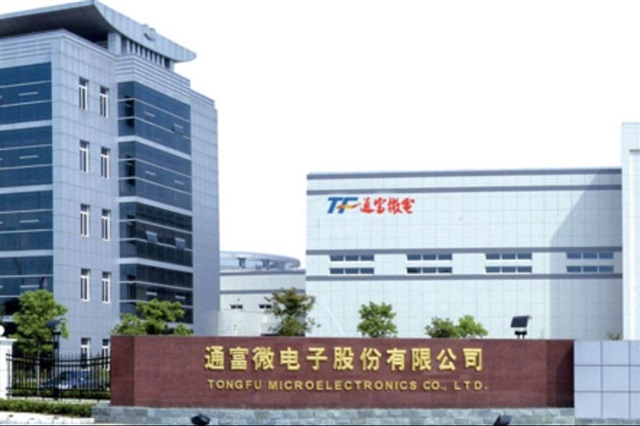
The AI race is already reshaping the semiconductor industry's bottom line. Tongfu Microelectronics, a major Chinese player in chip packaging and testing, has raised its first-half profit forecast, citing demand driven precisely by AI and memory. This is more than a financial footnote: it's a litmus test for an overheated market where every link in the supply chain is repositioning itself.
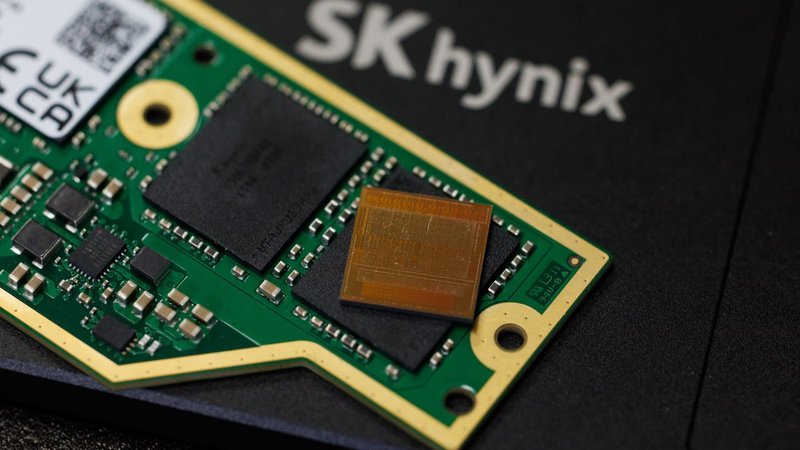
For organizations evaluating on-premise deployment of Large Language Models (LLMs), Tongfu's numbers matter more than they might appear. Memory, particularly high-bandwidth memory (HBM) and specialized DRAM, is the real bottleneck in large-scale inference. Without enough VRAM, even the most efficient model is useless. When chip companies like Tongfu see their margins explode, it signals intense upstream pressure.
The supply squeeze
The AI boom has triggered fierce competition for production capacity. Tongfu doesn't make wafers, but its role in advanced packaging—essential for stacking memory and logic in AI chips—makes it a precise thermometer. If the company foresees a profit leap, it's because customers, from fabless firms to data centers, are pre-booking capacity far in advance, often at premium prices. This translates into longer lead times and rising costs for organizations wanting to build on-premise infrastructure to keep data under control.
It's not just about GPUs. Generative AI consumes obscene amounts of memory to store model parameters and handle ever-larger context windows. An on-prem cluster without adequate high-speed memory is like an engine without fuel. Tongfu's signal suggests this fuel is becoming pricier and scarcer.
Winners and losers
In the short term, semiconductor suppliers and companies with long-term supply agreements are the winners. Hyperscalers can absorb cost increases, but for entities betting on self-hosted setups for sovereignty or GDPR compliance, the picture gets more complicated. The Total Cost of Ownership (TCO) of a local installation rises, along with the risk of being overtaken by the next model generation before the investment is amortized.
Yet there's a flip side. The demand surge is also fueling supply diversification: new memory vendors, alternative packaging approaches, and compression technologies like quantization are being pushed harder. For the on-premise ecosystem, this could eventually mean a broader range of hardware options and the ability to right-size resources more granularly, instead of relying on a single vendor.
A matter of sovereignty
Tongfu's situation also has a geopolitical dimension. It's a Chinese company indirectly benefiting from US tech export restrictions, as China's domestic AI market must find alternative paths. This dual track—on one side the global rush for accelerators, on the other regional fragmentation—makes control of the supply chain even more strategic. For a European organization, assessing an on-premise deployment means asking how much it will depend on components subject to cross-border vetoes.
Tongfu's profit warning, in short, is far more than a financial figure. It's evidence that AI infrastructure isn't scalable on demand. As models grow more capable, the material substrate to run them in-house becomes a contested asset. Those thinking about adopting LLMs locally need to start reasoning about supply chains, not just prompts and accuracy.








💬 Comments (0)
🔒 Log in or register to comment on articles.
No comments yet. Be the first to comment!