
The Rise of HBM in the AI Landscape
The first quarter of 2026 marked a significant turning point for ASML, the Dutch giant and key player in providing lithography systems for semiconductor manufacturing. For the first time, the company's revenue derived from memory chip production surpassed that generated by logic chips. This shift is an eloquent indicator of the growing influence of artificial intelligence, particularly the explosive demand for High Bandwidth Memory (HBM), an essential component for modern AI computing architectures.
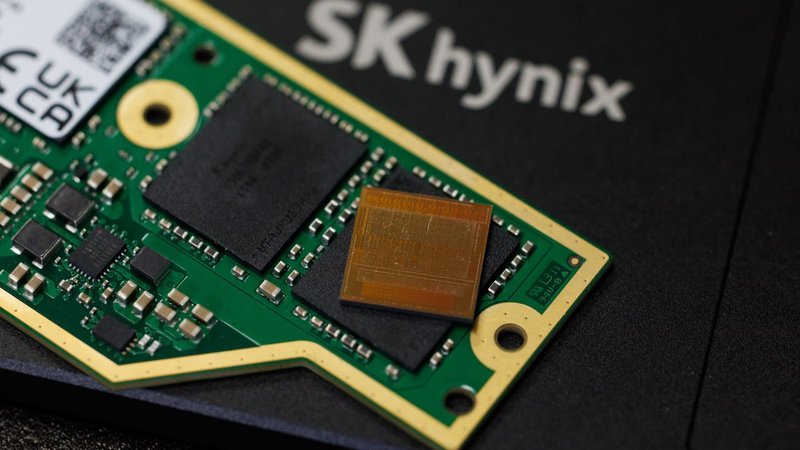
HBM has become a critical factor for the performance of Large Language Models (LLMs) and other complex AI workloads. Its vertically stacked architecture allows for significantly higher memory bandwidth compared to traditional GDDR memories, reducing bottlenecks and accelerating the processing of enormous datasets. This trend not only redefines the priorities of chip manufacturers but also has profound implications for companies planning or managing AI infrastructures, especially in on-premise deployment contexts.
The Crucial Role of HBM in AI Infrastructure
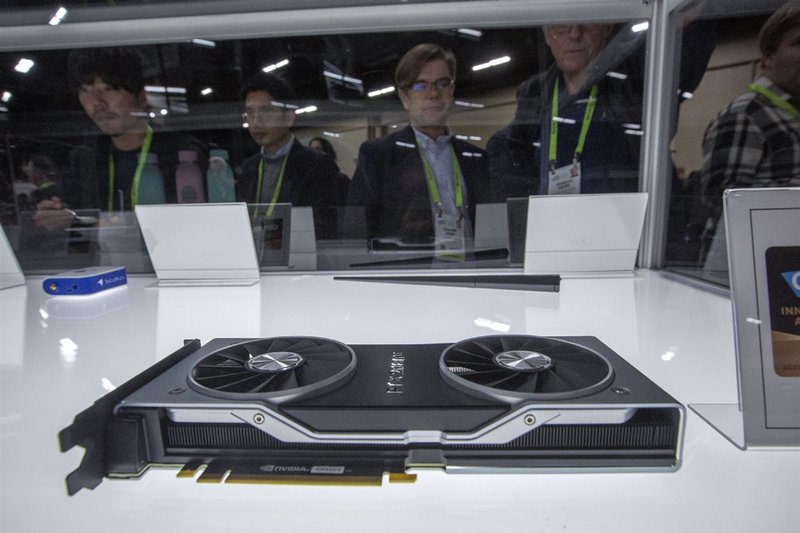
The ability to rapidly process large volumes of data is fundamental for training and inference of LLMs. Latest-generation GPUs, such as the H100 or MI300 series, heavily rely on HBM to provide the necessary bandwidth to feed their computational cores. Without high-speed memory, even the most powerful processors would be limited by the speed at which they can access data. This is particularly true for models with billions of parameters, where loading the model itself and processing tokens require abundant VRAM and high throughput.
For organizations choosing a self-hosted approach for their AI workloads, the availability and cost of HBM-equipped GPUs become a central element of their infrastructural strategy. The choice between different VRAM configurations and HBM types (e.g., HBM2e, HBM3) can have a direct impact on achievable performance, manageable batch size, and ultimately the overall TCO of the infrastructure. The increasing demand for HBM, as highlighted by ASML's data, suggests that access to these technologies will remain a key competitive factor.
Implications for On-Premise Deployment and TCO
The surge in HBM demand and the consequent shift in ASML's revenues have direct repercussions for on-premise deployment strategies. Companies aiming to maintain data sovereignty and full control over their AI infrastructure must navigate a hardware market where HBM-equipped GPUs are increasingly sought after and potentially more expensive. This can influence CapEx and OpEx decisions, making long-term planning even more complex.
Evaluating the trade-offs between the initial investment in on-premise hardware and the long-term operational costs of the cloud becomes crucial. While the cloud offers flexibility and immediate scalability, self-hosted solutions can ensure a lower TCO over longer time horizons, especially for stable and predictable workloads. The availability of advanced silicio, particularly HBM, is a determining factor in this equation, influencing not only direct costs but also delivery times and the ability to scale infrastructure according to needs. For those evaluating on-premise deployments, AI-RADAR offers analytical frameworks on /llm-onpremise to assess these trade-offs.
Future Outlook and Supply Chain Challenges
The trend observed in ASML's data is not an isolated phenomenon but reflects a structural transformation in the semiconductor industry, driven by the AI imperative. Continuous innovation in LLMs and the expansion of their applications will require increasingly faster and larger memories. This poses significant challenges to the global supply chain, which must rapidly adapt to meet constantly growing demand.
Companies will need to closely monitor the evolution of the HBM market and the strategies of major GPU suppliers to anticipate future availability and costs. The ability to secure cutting-edge hardware will be a competitive differentiator. In this scenario, understanding concrete hardware specifications, such as available VRAM and memory bandwidth, becomes essential for making informed decisions about AI deployments, ensuring that the infrastructure is adequate for current and future model requirements.







💬 Comments (0)
🔒 Log in or register to comment on articles.
No comments yet. Be the first to comment!