
AI as a Core Workforce Infrastructure
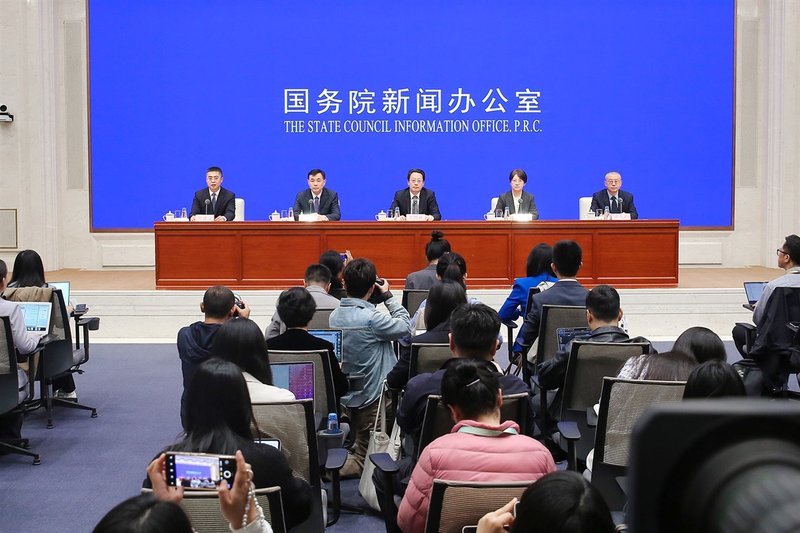
China's Ministry of Education has officially launched a national action plan that integrates artificial intelligence into every stage of the country's education system, from primary school to university. This ambitious project also includes AI in teacher qualification exams and certification requirements, with the goal of establishing a comprehensive AI literacy infrastructure by 2030.
While framed as an educational reform, the plan functions, in practice, as a strategic industrial policy. The Chinese government's work reports have explicitly stated this vision: the country's 15th Five-Year Plan, covering 2026-2030, aims to consolidate a leading position in AI industry applications. The education plan represents the supply-side response, acknowledging that an AI economy cannot be built without a workforce familiar with the technology from school.
The Global Race for AI Literacy
China is not the first country to embark on this path. Several nations have already taken action, some with such speed that they encountered initial difficulties. The UAE, for instance, introduced artificial intelligence as a mandatory subject in all public schools, from kindergarten through Grade 12, starting in the 2025-2026 academic year. The curriculum, delivered by approximately 1,000 specially trained teachers, covers AI fundamentals, data and algorithms, ethical considerations, and real-world applications. For the 2026-2027 year, the Ministry of Education formalized the subject under the new title of “Artificial Intelligence and Technology.”
India is proceeding with large-scale implementation. AI and Computational Thinking will enter all schools from Grade 3 onwards, beginning in the 2026-2027 academic year, aligned with the country's National Education Policy 2020. Teacher training, through the government's NISHTHA program, is integrated into the implementation plan from the start, a structural decision reflecting lessons learned from other countries' missteps. Singapore has taken a more targeted path, integrating AI modules into primary-level computer science courses and committing to offering AI training for teachers at all levels by 2026. This approach reflects Singapore's broader stance: precision over breadth, ensuring depth of competency rather than superficial coverage. South Korea's trajectory, however, warrants close examination as a warning: the government invested the equivalent of US$850 million in an AI textbook initiative that collapsed within four months of its launch.
Economic Implications and the Skills Gap
The ASEAN Foundation's “AI Ready ASEAN” research, presented in Manila in February 2026, evaluated the readiness of the region's education systems for AI across three dimensions: personal readiness, institutional readiness, and ethical readiness. Southeast Asia's education systems are at deeply uneven stages of AI readiness, and the gap between countries is widening due to unevenly accelerating investments.
This gap directly translates into a talent supply problem that every enterprise operating in the region already recognizes. The “e-Conomy SEA 2025” report by Google, Temasek, and Bain & Company found that over US$2.3 billion was invested in more than 680 AI startups in Southeast Asia in the twelve months to mid-2025, accounting for over 30% of all private funding in the region. Furthermore, 79% of surveyed workers stated they had learned to use AI, with 43% using it both personally and professionally. Companies deploying AI are not hiring only data scientists and engineers; they need people at every operational level who can work with AI systems, interpret outputs, and make decisions informed by them. The workforce for this is built in schools. Governments that treat AI literacy as a long-term curriculum question, not an immediate infrastructure priority, will find the talent pipeline problem arriving faster than anticipated. For those evaluating on-premise LLM deployments, the availability of skilled personnel is a critical factor impacting TCO and long-term sustainability.
Malaysia's Position and Future Outlook
Malaysia is absent from this list of proactive countries. The nation exports approximately 13% of the world's semiconductors, holds half of all planned data center capacity in Southeast Asia, and its Prime Minister has committed RM2 billion to a sovereign AI cloud. There is no announced timeline for AI to enter teacher certification requirements, as China has just done. While initiatives from the Malaysia Digital Economy Corporation and at university levels exist, a national-level structural reform for building AI literacy from primary school upwards has not yet materialized as policy.
This situation is not unusual; most countries are still grappling with the question. However, Malaysia's investment profile, its National Semiconductor Strategy, and its stated goal of moving up the AI value chain mean the implications of mishandling the workforce pipeline are higher than for countries with smaller industrial commitments. It is not possible to build a high-value technology economy and then rely on importing human capital to run it. China's 2030 target is concrete, the underlying infrastructure investment is substantial—the core AI sector reportedly surpassed 1.2 trillion yuan in 2025—and the plan integrates teacher training with curriculum reform, not treating them as separate problems. This structural coherence distinguishes it from South Korea's costly miscalculation. The harder challenge in China, as researchers have noted, is equity. Rural teachers face structural incentives that work against deep AI integration; their postings are managed centrally, and transfers are frequent, leaving little incentive to invest in AI practice at a school they may not stay in. Student data privacy is another live concern, with documented rates of data leakage in primary and secondary schools. Every country on this list will face problems. Those that navigate them better will find the competitive advantage that policy announcements promise. The window to build AI-literate workforces at scale is not open indefinitely. Countries that treat curriculum reform as infrastructure spending, not educational aspiration, tend to close that window before others realize it was open.






💬 Comments (0)
🔒 Log in or register to comment on articles.
No comments yet. Be the first to comment!