
The Emergence of a New Threat: Anti-Tech Extremism
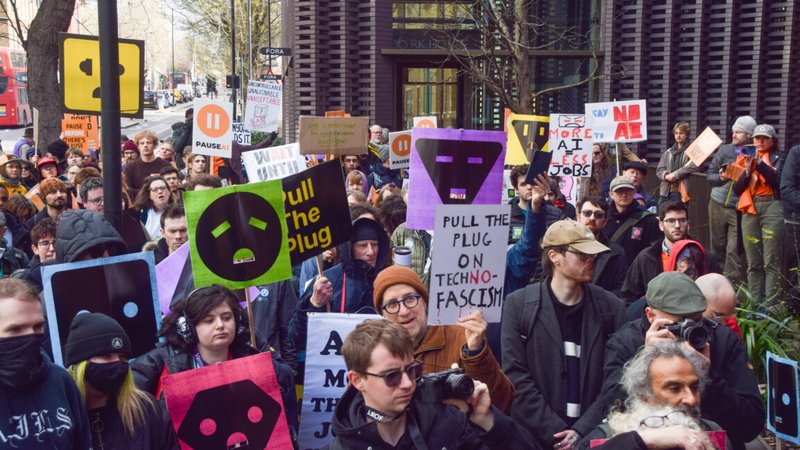
US federal authorities have raised a significant alarm regarding an emerging category of threat: anti-tech extremism. This concern, revealed by documents obtained by WIRED, comes amid a climate of growing public discontent with artificial intelligence and the infrastructures that support it, such as data centers. The phenomenon reflects a broader tension between technological progress and its perceived social and economic implications.
The warning from law enforcement underscores how popular resentment can translate into new forms of security risks. For decision-makers in the tech sector, particularly those evaluating the deployment of on-premise AI solutions, understanding these social dynamics is crucial. Public perception can indeed influence not only the acceptance of new technologies but also the feasibility and security of necessary physical infrastructures.
The Roots of Discontent: AI and Data Centers Under Scrutiny
The growing "AI hatred" mentioned by authorities is rooted in several widespread concerns among the American population. One of the most pressing relates to the fear that artificial intelligence could displace jobs, generating economic and social uncertainty. This sentiment is amplified by media and popular narratives that often emphasize the more disruptive aspects of AI, rather than its potential benefits.
In parallel, the expansion of data centers, essential infrastructures for training and Inference of LLMs, is generating local resistance. Their presence is often associated with issues such as energy consumption, environmental impact, and land use, in addition to concerns related to data privacy and sovereignty. These local tensions can hinder expansion and deployment plans, both for large cloud companies and organizations opting for self-hosted solutions.
Implications for On-Premise Deployment and Data Sovereignty
While law enforcement's warning focuses on a broader security threat, its implications extend to the world of technology deployment. Growing hostility towards AI and data centers can influence local and national policies, making the approval and implementation of new infrastructures more complex. For companies considering an on-premise deployment for reasons of data sovereignty, compliance, or TCO, this context adds another layer of complexity to planning.
The choice to keep AI workloads in self-hosted or air-gapped environments is often driven by the need for rigorous control over data and security. However, if anti-tech sentiment were to intensify, even the construction or expansion of physical facilities for AI could face greater resistance. This scenario highlights the importance of a clear communication strategy and proactive community engagement to mitigate concerns and build trust.
Future Prospects and the Need for a Holistic Approach
Addressing the emergence of anti-tech extremism requires a multifaceted approach that goes beyond purely technical considerations. Companies and policymakers must collaborate to educate the public on the real benefits and risks of AI, promoting responsible and transparent development. Managing concerns related to job loss and the environmental impact of data centers will be crucial to preventing the escalation of this phenomenon.
For CTOs and infrastructure architects, this context underscores the importance of considering not only hardware specifications, such as GPU VRAM or Throughput, but also the social and regulatory landscape. The resilience of an AI deployment, whether cloud or self-hosted, will increasingly depend on its social acceptance and the ability to address legitimate community concerns. AI-RADAR, for example, offers analytical frameworks on /llm-onpremise to evaluate the trade-offs between different deployment strategies, also taking into account external factors like these.








💬 Comments (0)
🔒 Log in or register to comment on articles.
No comments yet. Be the first to comment!