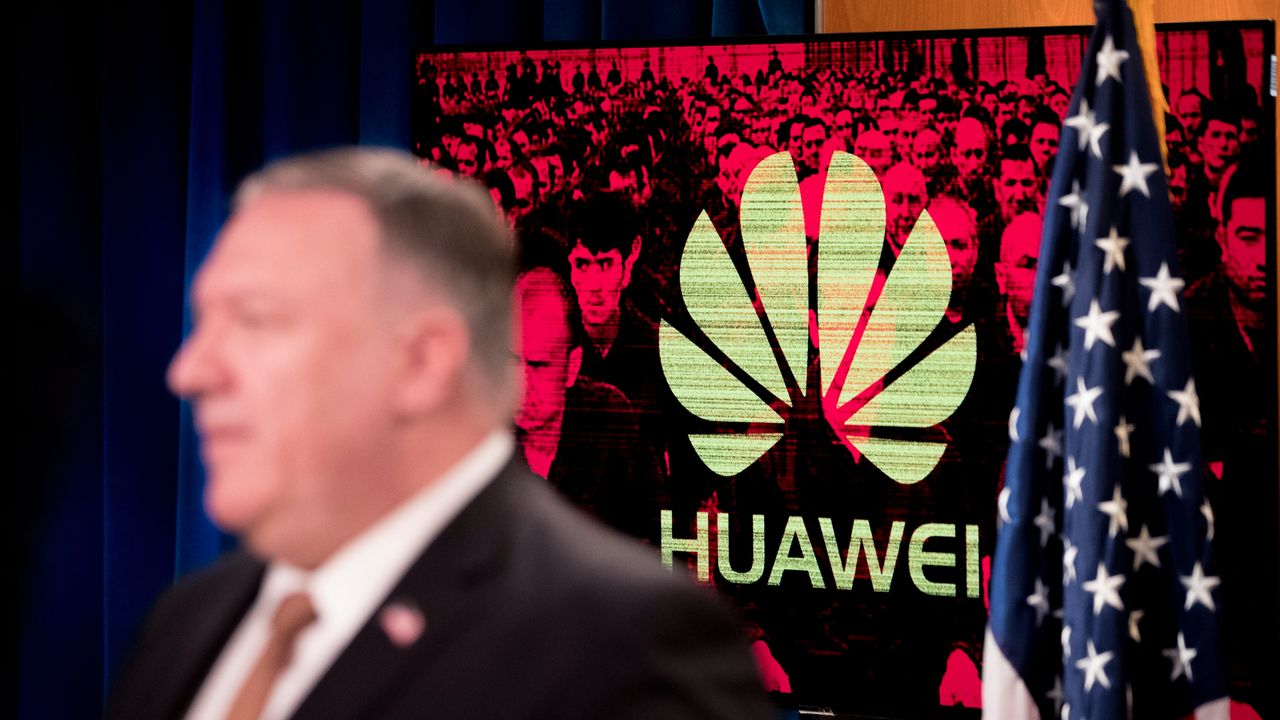
US semiconductor sanctions were meant to isolate China from the most advanced AI technologies. Instead, they are producing a parallel market. The headline is just a fragment, but the signal is clear: every new tightening — followed by extensions, exemptions, or revisions — fuels the incentive for Beijing and Moscow to formalize a commercial chip alliance. This is not political fiction; it is the rational response to an export regime that changes direction faster than hardware design cycles.
For anyone running self-hosted LLMs, the stakes are the inference and training hardware. High-VRAM GPUs remain concentrated in US hands; every additional restriction, even just floated, triggers hoarding and speculation, distorting prices and extending procurement lead times. The effect is not merely temporary: if the Western bloc proves an unreliable supplier, the entire Asian ecosystem is pushed to develop its own alternatives, even at the cost of starting from less efficient manufacturing nodes.
The real game is played on Total Cost of Ownership. On-premise architectures thrive on predictability: compute capacity, power consumption, lifecycle. The dual track — formal restrictions alongside commercial flirtations — erases that predictability. A data center planning accelerator purchases for inference today must factor in not only scarcity but the possibility that certain models or vendors become inaccessible overnight. It is the ideal environment to shift demand toward Chinese or Russian-made chips, even if they do not match Western specifications today.
Here is the structural thesis: US regulatory uncertainty is not slowing Chinese progress, it is diverting it onto more independent tracks. Russia, with its processor design expertise and a protected internal market, becomes a complementary partner. The goal is not to chase Moore’s law but to build an alternative stack that guarantees operational continuity. For those evaluating on-premise deployment, this scenario multiplies the trade-offs: on one side, the traditional NVIDIA and AMD offering, with a mature ecosystem but exposed to political blocks; on the other, a nascent Sino-Russian ecosystem, currently lower-performing but sanctions-proof.
The alliance, if it solidifies, will redraw the AI supply geography. Major Western vendors could lose the Chinese market not because of bans but because of strategic distrust. And local manufacturers, freed from the need to compete immediately on peak performance, will focus on volume and resilience, lowering the entry barrier for hardware destined for on-premise LLMs in contexts where data sovereignty is paramount. The outcome is not predetermined, but the process is already underway. Every Washington flip-flop strengthens the argument for those who want to avoid dependency on a single supply chain.






💬 Comments (0)
🔒 Log in or register to comment on articles.
No comments yet. Be the first to comment!