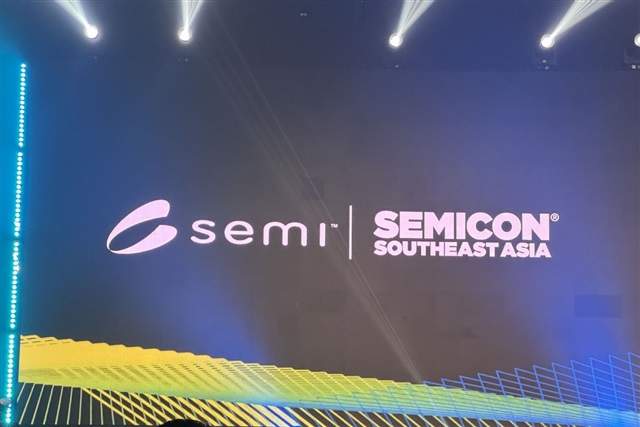
Southeast Asia and the New Frontier of AI Semiconductors
The semiconductor industry in Southeast Asia (SEA) is undergoing a profound transformation, with an increasingly strong orientation towards the production of components essential for artificial intelligence. This evolution is not merely a change of course for regional economies; it represents a crucial strategic factor for the entire global AI hardware supply chain, a rapidly expanding sector of vital importance for the development and deployment of Large Language Models (LLMs) and other AI applications.
The region, long a pillar in electronics manufacturing, is now capitalizing on its manufacturing and logistical capabilities to become a strategic hub. This positioning is fundamental to meet the growing demand for specialized silicon, necessary to power the wave of AI innovation, and to ensure greater resilience and diversification of global supply chains.
The Strategic Role of Silicon for AI
Silicon is the foundation upon which the entire artificial intelligence infrastructure is built. From high-performance GPUs, indispensable for training and Inference of complex LLMs, to specialized chips for edge computing, the availability and reliability of these components are critical factors. SEA's transition towards an AI focus signifies increased production capacity for these vital elements.
For companies evaluating on-premise LLM deployments, the stability and diversification of the semiconductor supply chain are significant considerations. The availability of specific hardware, such as GPUs with high VRAM and computing power, directly impacts the Total Cost of Ownership (TCO) and the feasibility of self-hosted, air-gapped, or hybrid solutions. A strategic hub in SEA can help mitigate risks associated with production concentration and offer more robust alternatives.
Implications for On-Premise Deployments and Data Sovereignty
Southeast Asia's growing importance as an AI semiconductor hub has direct implications for enterprise deployment strategies, particularly for those prioritizing on-premise solutions. The ability to access a broader and more diversified supply chain can translate into greater hardware availability and, potentially, more competitive costs for the infrastructure required for LLM training and Inference.
For CTOs, DevOps leads, and infrastructure architects, the choice between cloud and self-hosted is often driven by data sovereignty, compliance, and TCO considerations. A more robust and distributed silicon supply chain supports the creation of local AI environments, where control over data and infrastructure is maximized. AI-RADAR, for instance, offers analytical frameworks on /llm-onpremise to evaluate the trade-offs between these different strategies, highlighting how hardware availability is a fundamental pillar for deployment decisions.
Future Prospects and Supply Chain Resilience
Southeast Asia's positioning as a strategic hub for AI semiconductors is a clear signal of the increasing globalization and specialization of the technology industry. This evolution not only strengthens the world's production capacity for AI components but also contributes to building greater resilience in supply chains, a crucial aspect in a constantly evolving geopolitical and macroeconomic context.
For companies investing in AI infrastructure, understanding these dynamics is essential for long-term planning. Diversifying silicon sourcing can reduce dependence on single regions or suppliers, ensuring greater stability and predictability for investments in AI hardware, both for training and Inference, and supporting the vision of a more distributed and locally controlled AI.






💬 Comments (0)
🔒 Log in or register to comment on articles.
No comments yet. Be the first to comment!