
The Acceleration of AI in Chinese Automotive
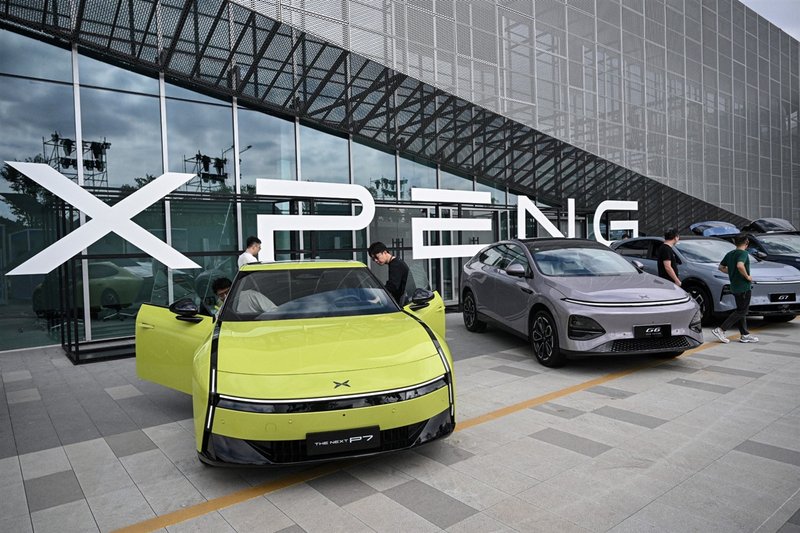
China's automotive industry is demonstrating a clear push towards the integration of advanced technologies, with a particular focus on robotaxis and artificial intelligence. This trend was clearly visible at the recent Beijing Auto Show, where numerous industry players presented their visions and progress in this field. The adoption of AI systems is not limited to autonomous vehicles but extends to advanced driver-assistance systems (ADAS), performance optimization, and user experience personalization.
This evolution marks a turning point for the sector, which now faces the increasing complexity of the software and hardware systems required to support such innovations. The ability to process large volumes of data in real-time and make autonomous decisions demands a robust and high-performing infrastructure, extending far beyond traditional automotive IT paradigms.
Computational Demands of Autonomous Systems
Autonomous driving systems and robotaxis rely on Large Language Models (LLM) and other artificial intelligence models that require significant computational power. The inference of these models, especially in real-time scenarios, necessitates specialized hardware, such as high-performance GPUs with ample VRAM and high throughput capabilities. Latency is a critical factor: rapid decisions are fundamental for the safety and efficiency of autonomous vehicles.
The deployment of these models can occur on-board the vehicle (edge computing), in centralized data centers, or in a hybrid architecture. Each approach presents specific trade-offs in terms of cost, performance, and management. For instance, edge computing reduces latency but is limited by locally available computing power, while data centers offer greater scalability but can introduce communication delays. The choice of deployment architecture is a strategic decision that directly impacts the feasibility and effectiveness of AI solutions in automotive.
Data Sovereignty and TCO Considerations
Managing data generated by autonomous vehicles raises significant issues regarding sovereignty, privacy, and regulatory compliance. Driving data, passenger information, and environmental data are often sensitive and subject to stringent regulations, which can vary across jurisdictions. This makes self-hosted or air-gapped solutions particularly attractive for companies wishing to maintain full control over their information assets.
From an economic perspective, the Total Cost of Ownership (TCO) of AI infrastructures is a decisive factor. While cloud solutions may offer initial flexibility, long-term operational costs for intensive AI workloads can become prohibitive. On-premise deployment, while requiring a higher initial investment (CapEx) in hardware such as GPUs and specialized silicon, can offer a lower TCO over time, greater control, and the ability to optimize resource utilization. For those evaluating on-premise deployment, significant trade-offs exist between initial and operational costs, scalability, and data control. AI-RADAR offers analytical frameworks on /llm-onpremise to support these strategic decisions, providing a clear view of constraints and opportunities.
Strategic Outlook for AI Infrastructure
The automotive industry's evolution towards AI and robotaxis compels companies to rethink their infrastructure strategies. The ability to efficiently and securely develop, train, and deploy complex AI models will be a key success factor. This requires not only investments in hardware and software but also in developing internal expertise for managing advanced technology stacks.
Deployment decisions, whether on-premise, cloud, or hybrid, must be guided by a thorough analysis of the specific requirements of each use case, considering factors such as data sensitivity, performance needs, and growth projections. The goal is to build an infrastructure that not only supports current innovations but is also scalable and resilient to address the future challenges of automotive AI.








💬 Comments (0)
🔒 Log in or register to comment on articles.
No comments yet. Be the first to comment!