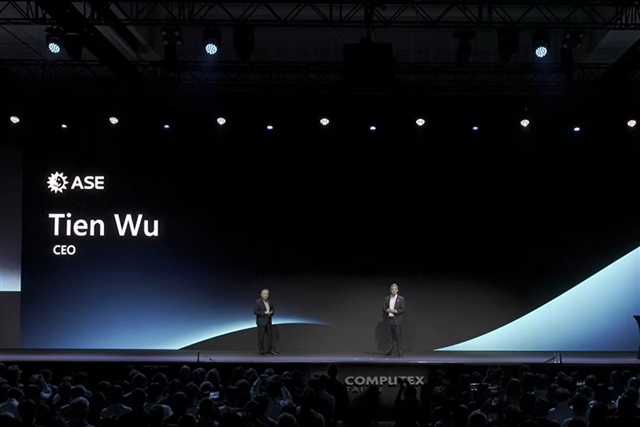
The Taiwanese Ecosystem: A Decades-Long Competitive Advantage
The statement from the CEO of Advanced Semiconductor Engineering (ASE), a leading player in semiconductor assembly and testing, highlights the maturity and complexity of Taiwan's industry. An ecosystem built over four decades represents a significant competitive advantage, but also a point of potential vulnerability for the global supply chain. This perspective is crucial for anyone involved in technology infrastructure, especially in the context of artificial intelligence and Large Language Models (LLM).
Taiwan's ability to produce cutting-edge silicon is the result of massive investments, specialized expertise, and an intricate network of suppliers and partners. This makes the region an irreplaceable pillar for global technological innovation, with direct repercussions on the availability and cost of essential AI hardware.
The Heart of Innovation and Replication Challenges
The Taiwanese ecosystem is not merely a matter of chip factories, but an intricate network of specialized expertise, research and development, material suppliers, equipment, and services. This vertical and horizontal integration, refined over decades, makes its reproduction elsewhere extremely challenging. It's not just about building new foundries, but about recreating an entire industrial and academic fabric that supports continuous innovation.
For companies aiming to build LLM training and inference capabilities, access to state-of-the-art silicon is fundamental. Reliance on such a specific ecosystem can influence the availability of GPUs and other accelerators, directly impacting expansion plans and computational capacities. The rarity of certain components or the concentration of production can create significant bottlenecks.
Implications for On-Premise Deployment
For CTOs, DevOps leads, and infrastructure architects evaluating on-premise deployments for their AI/LLM workloads, the stability and accessibility of the semiconductor supply chain are critical factors. The difficulty in replicating the Taiwanese ecosystem means companies must carefully consider risks related to hardware supply. This translates into increased attention to Total Cost of Ownership (TCO), which includes not only the initial CapEx but also supply chain resilience and the ability to scale over time.
Data sovereignty and compliance, often drivers for on-premise choices and air-gapped environments, must contend with the reality of concentrated hardware dependency. Ensuring operational autonomy requires not only self-hosted infrastructures but also a robust strategy for procuring key components. AI-RADAR, at /llm-onpremise, offers analytical frameworks to evaluate these complex trade-offs, helping companies balance performance, costs, and supply chain risks.
Future Prospects and Corporate Strategies
Awareness of this concentration has prompted many global players to explore strategies for diversifying and regionalizing semiconductor production. However, as the ASE CEO emphasized, these efforts will take years to mature and cannot fully replicate the complexity and efficiency of the existing ecosystem in the short term. The creation of new production pipelines and the attraction of skilled talent are lengthy and costly processes.
Companies must therefore adopt a strategic approach to AI infrastructure planning, balancing innovation with supply chain resilience and long-term risk management. This could include evaluating alternative suppliers, designing more flexible hardware architectures, or investing in solutions that optimize the use of available resources, such as advanced quantization techniques to reduce VRAM requirements.








💬 Comments (0)
🔒 Log in or register to comment on articles.
No comments yet. Be the first to comment!