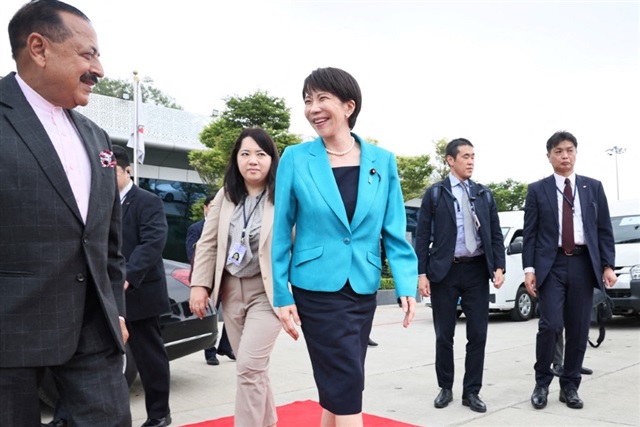
For years, the center of gravity of Indian electronics manufacturing remained anchored in the South and West of the country, with states like Karnataka, Tamil Nadu, and Maharashtra dominating. Now the Northeast, traditionally in the shadows, is taking concrete steps to carve out a role in the supply chain — and the signal is of keen interest to those who design computing infrastructures for artificial intelligence.
The region, comprising eight states bordering Bhutan, China, Myanmar, and Bangladesh, has started attracting investments in components and device assembly. The push comes from Delhi's industrial policies, determined to decentralize production to reduce dependence on a few congested areas and foreign suppliers.
For an ecosystem still dominated by Asian silicon giants — TSMC, Samsung, Foxconn — the emergence of India's Northeast does not reshuffle hierarchies overnight. But it introduces an element of geographic diversification that anyone evaluating on-premise stacks should watch closely. The availability of assembly and test nodes closer to South Asian markets can shorten supply chains for servers, edge appliances, and inference systems. Less distance means leaner logistics and a potential reduction in Total Cost of Ownership (TCO) for organizations that choose to keep data in-house.
It is not just a matter of cost. In a scenario where digital sovereignty becomes a strategic asset, knowing that hardware can be assembled in a territory with data residency guarantees and regulations aligned with one's own needs counts as much as raw compute power. Banks, public agencies, and companies handling sensitive information know this well: a server configured locally is preferable to a cloud rental managed from a third jurisdiction. And here the Northeast could play an interesting card: offering hardware for self-hosting LLMs that does not suffer the long import times and customs duties typical of traditional channels.
Admittedly, structural uncertainties remain. The power grid in some states of the region is fragile, advanced packaging skills cannot be improvised, and internal logistics — made of mountain passes, monsoons, and few industrial corridors — can slow deliveries. Yet incentive programs (such as the Production Linked Incentive scheme) are pushing companies to put down roots where labor costs are lower and competition for space is less fierce.
For those who have already adopted or are considering a shift to self-hosted inference infrastructures, the Northeast's move is a thermometer of a broader trend: the production hub for AI hardware is decentralizing, and this creates options. Today the bulk of LLM systems still travels on transpacific routes; tomorrow much shorter routes could exist. It does not mean that a GPU assembled in Guwahati will unseat an A100 from Taiwan, but that the supply chain is widening and offering alternatives to those who want more control over their infrastructure.
From this perspective, analyzing the trade-offs between cloud and on-premise can no longer ignore manufacturing geography. For those scouring the market for training or inference hardware, the question is no longer just “how much does a GPU cost?” but “where was it produced, how long will it take to arrive, and with what implications for regulatory compliance?”. India's Northeast, from a bit player, could become an answer.





💬 Comments (0)
🔒 Log in or register to comment on articles.
No comments yet. Be the first to comment!