Beyond Prompts: Nvidia's Vision for AI
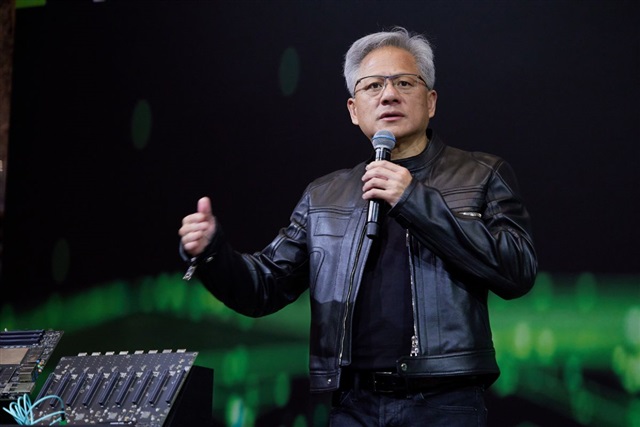
Jensen Huang, CEO of Nvidia, recently outlined a bold perspective for the future of artificial intelligence, suggesting that the era of prompt engineering, while foundational, is giving way to a more advanced paradigm: "loop engineering." This vision is not merely a change in terminology but foreshadows a profound evolution in how Large Language Models (LLMs) and other AI systems will interact with the real world and users.
From Prompt to Continuous Cycle: What "Loop Engineering" Implies
While prompt engineering focuses on optimizing initial instructions to obtain specific responses, "loop engineering" suggests an iterative and dynamic approach. Imagine AI systems that don't just respond to a single query but operate in continuous cycles of observation, decision, action, and learning. This implies that AI not only generates output but also evaluates the impact of its own actions, gathers feedback from the environment (or other systems), and adapts its behavior or models in real-time. Such a framework requires an intrinsic capacity for self-correction and evolution, shifting the focus from a single interaction to a process of continuous improvement.
Implications for On-Premise Deployments and Data Sovereignty
For organizations evaluating LLM and AI deployments in self-hosted or hybrid environments, the transition to "loop engineering" introduces critical new considerations. An AI system that continuously learns and adapts generates and consumes significant data volumes, making data sovereignty and compliance even more central. Maintaining the entire learning and inference cycle within one's on-premise perimeter becomes essential to ensure control over sensitive data and to comply with regulations like GDPR. This approach demands robust local infrastructure, capable of handling intensive computational workloads for continuous fine-tuning and low-latency inference, without relying on costly and potentially risky transfers to the cloud.
TCO and the Required Infrastructure
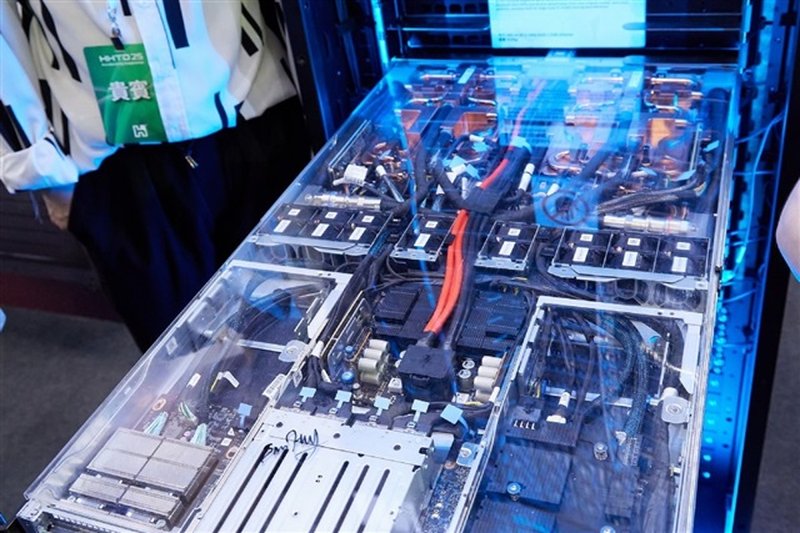
Implementing large-scale "loop engineering" architectures necessitates a thorough consideration of Total Cost of Ownership (TCO). While the initial investment in dedicated hardware (GPUs with high VRAM, powerful servers) may seem significant, it helps avoid the recurring and often unpredictable operational costs associated with intensive cloud resource usage for continuous learning and inference cycles. The ability to manage the entire pipeline locally, from data collection to training and deployment, offers greater cost predictability and granular control over performance. For those evaluating these strategies, AI-RADAR offers analytical frameworks on /llm-onpremise to compare CapEx and OpEx trade-offs and optimize infrastructure decisions.
Towards More Autonomous and Controlled AI
Jensen Huang's vision of "loop engineering" marks a step forward towards more autonomous and sophisticated AI systems. For businesses, this means the possibility of developing AI applications that not only respond but actively evolve and adapt to their operational contexts. The challenge will be to build the appropriate infrastructural foundations to support these continuous cycles of learning and action, while ensuring security, data sovereignty, and a sustainable TCO, especially in on-premise deployment scenarios where control is paramount.





💬 Comments (0)
🔒 Log in or register to comment on articles.
No comments yet. Be the first to comment!