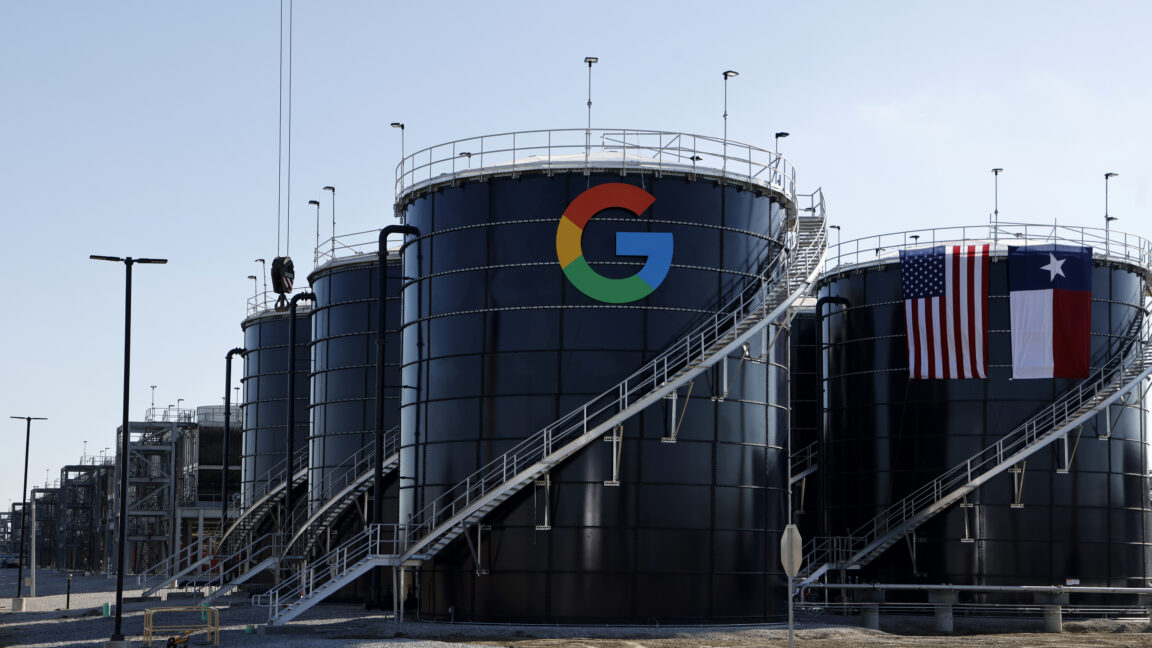
Google's annual electricity consumption surged by 37% in 2025, the largest jump in the company's history. The figure, disclosed in its latest sustainability report, is the latest chapter in a steep upward trend: since 2019, the tech giant's total energy use has climbed more than 250%. The demand is driven by the ongoing expansion of Google Cloud, YouTube streaming, and—above all—the construction and operation of data centers powering AI products and services.
The acceleration is stark. In 2024, the increase was already 27%, but this year's leap marks a turning point that Google itself calls unprecedented. The report states that "the path to achieving our climate ambitions will not be linear, given our AI infrastructure buildout is currently accelerating faster than the grid is decarbonizing." Google emphasizes that it kept operational carbon emissions in check by continuing to purchase massive amounts of clean energy.
The tension between the electricity appetite of cloud infrastructure and environmental goals is nothing new, but the scale of the phenomenon is beginning to weigh on the strategies of those deciding where to run AI workloads. On one hand, hyperscalers can negotiate global-scale renewable power purchase agreements (PPAs); on the other, concentrating demand in their data centers raises questions about transparency and the real additionality of the clean power procured.
For organizations evaluating on-premise or self-hosted deployments, Google's report offers a concrete reference point. Managing infrastructure directly gives a company tight control over energy sources and efficiency strategies, from adiabatic cooling to on-site solar integration. Yet replicating the procurement capability and resilience of a cloud provider demands in-house expertise and hardware investments that may not immediately repay themselves in TCO terms. The rise in consumption also signals that large-scale inference and training could become increasingly expensive from an energy standpoint, pushing toward optimization techniques such as quantization or leaner serving frameworks.
The core issue remains the speed at which AI devours resources. A 37% single-year increase, after already robust growth, indicates that the industry has entered a phase where sustainability can no longer be an afterthought but must drive architectural choices from the very start. Those building on-premise solutions have an opportunity to natively integrate consumption monitoring and energy balancing, while those staying in the cloud will need to press vendors on whether claimed green energy is truly additional to the grid mix.
For its part, Google reiterates its focus on "scaling abundant and affordable clean power globally" and on advancing technological innovations to reduce emissions across the industry. The energy chronicle of 2025 makes that commitment more urgent than ever.






💬 Comments (0)
🔒 Log in or register to comment on articles.
No comments yet. Be the first to comment!