The Rise of ARM Processors in the Data Center
The server processor landscape has undergone significant evolution over the last decade, with the ARM architecture establishing itself as a viable alternative to traditional solutions. Once considered a niche for mobile devices and embedded systems, ARM has demonstrated increasing maturity and capability to compete even in the most demanding data center workloads. This transition has been driven by continuous investment in research and development, leading to substantial improvements in performance and energy efficiency.
A recent benchmark conducted by Phoronix, celebrating 22 years of Linux hardware reviews, highlighted this progression. The tests compared the performance of ARM server processors, starting from the Ampere eMAG of September 2018 up to the latest solutions, including the innovative NVIDIA Vera CPU. The results offer a clear perspective on how far ARM hardware has advanced in a relatively short period, solidifying its position in the server segment.
NVIDIA Vera: A New Performance Benchmark
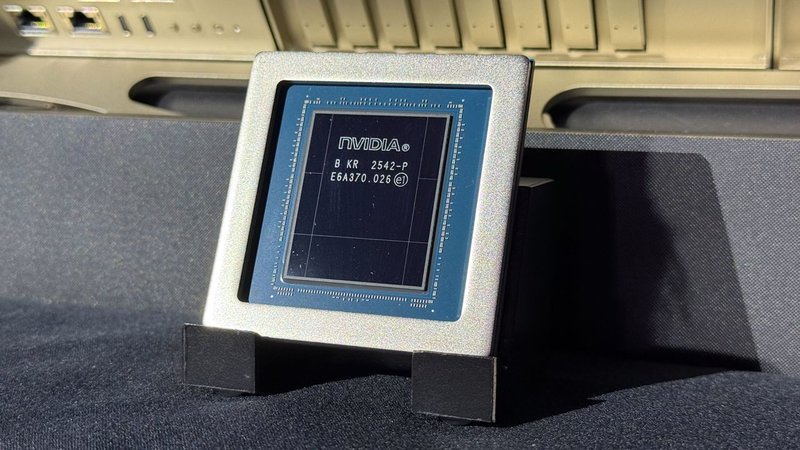
NVIDIA Vera CPU stands out for achieving unprecedented performance levels within the ARM context. Benchmark data indicates that, considering hardware evolution alone, ARM server CPU performance has increased by more than seven times (geometric mean) in eight years. This increase is even more pronounced in some specific workloads, where an improvement of nearly fifteen times was recorded.
It is crucial to emphasize that these figures reflect hardware advancements exclusively. They do not include the numerous software optimizations that, over the same period, have further contributed to improving the efficiency and speed of the entire technology stack. The direct comparison between the Ampere eMAG from 2018 and the current NVIDIA Vera highlights a significant generational leap, positioning Vera as a key player for infrastructures requiring high computing capabilities on the ARM architecture.
Implications for On-Premise Deployments and AI
The advancement in ARM server processor performance, as demonstrated by NVIDIA Vera, has profound implications for companies evaluating on-premise or hybrid deployment strategies. For CTOs, DevOps leads, and infrastructure architects, the availability of powerful and efficient hardware on the ARM architecture opens new opportunities for managing intensive workloads, including those related to artificial intelligence and Large Language Models (LLM).
An on-premise infrastructure based on advanced ARM processors can offer significant advantages in terms of Total Cost of Ownership (TCO), allowing greater control over operational and capital costs. Furthermore, for sectors with stringent data sovereignty requirements, regulatory compliance (such as GDPR), or the need for air-gapped environments, adopting self-hosted solutions with high-performance hardware becomes crucial. The ability to perform LLM inference and, in some cases, fine-tuning directly on-premises, without relying on external cloud services, ensures greater security, reduced latency, and full data ownership.
Future Prospects and the ARM Ecosystem
The ARM ecosystem continues to expand and mature, with a growing number of vendors offering hardware and software solutions optimized for servers. This trend suggests a future where the ARM architecture will be increasingly present in enterprise data centers, offering flexibility and performance for a wide range of applications, from general data processing to more specific AI workloads.
For organizations planning their AI infrastructure strategy, it is essential to consider the evolution of ARM CPUs as a determining factor. The choice between CPU-centric and GPU-centric architectures, or a hybrid combination, will depend on specific workload requirements, budget, and performance objectives. The emergence of processors like NVIDIA Vera strengthens the argument for a careful evaluation of on-premise options, providing the necessary hardware foundation to build robust and controlled AI solutions.




💬 Comments (0)
🔒 Log in or register to comment on articles.
No comments yet. Be the first to comment!