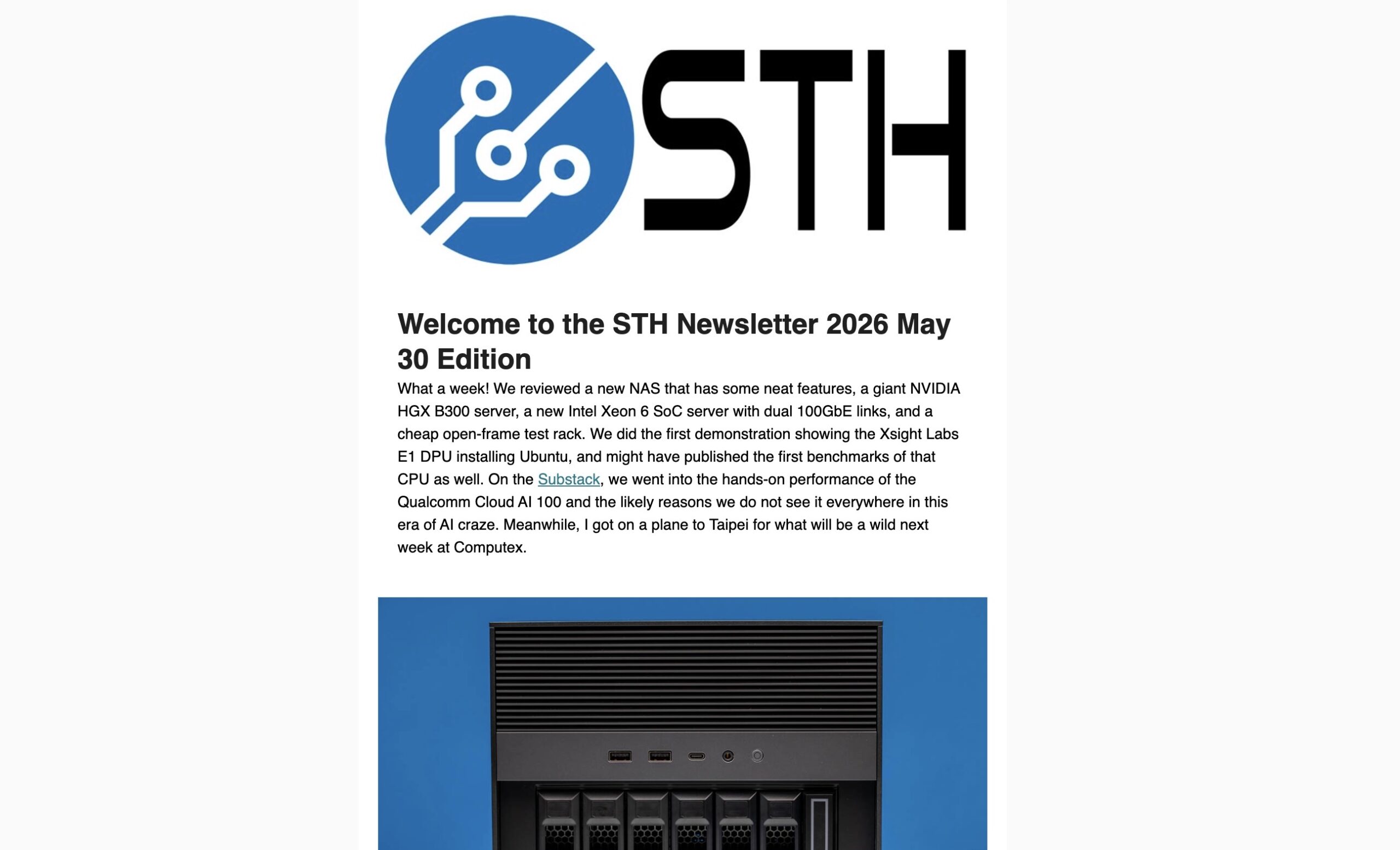
The Importance of Staying Updated in On-Premise AI
The artificial intelligence sector, particularly that of Large Language Models (LLM), is characterized by incessant innovation. For technical decision-makers, such as CTOs, DevOps leads, and infrastructure architects, keeping pace with the latest developments in hardware, software, and deployment strategies represents a constant yet fundamental challenge. In a context where technological choices directly impact performance, costs, and compliance, access to accurate and timely information is more critical than ever.
Specialized publications, like those promising to deliver updated reviews and coverage, play an essential role in this scenario. They offer a magnifying glass on emerging trends and practical solutions, helping companies navigate the complex AI ecosystem. Looking ahead to the second quarter of 2026, attention is already shifting towards the next generations of technologies and their implications for on-premise deployments.
The Technology Landscape for Local Deployments
Interest in self-hosted and on-premise LLM deployments is steadily growing, driven by needs for data sovereignty, regulatory compliance, and tighter control over Total Cost of Ownership (TCO). This choice entails a series of in-depth technical considerations, ranging from selecting the most suitable hardware, such as GPUs with high VRAM specifications and adequate compute capabilities, to designing a robust infrastructure.
Companies must carefully evaluate the trade-offs between the initial investment (CapEx) for purchasing bare metal servers and specific AI hardware, and the operational costs (OpEx) related to energy, cooling, and maintenance. Managing efficient training and inference pipelines, often with the aid of frameworks like Kubernetes for orchestration, requires a deep understanding of distributed architectures and optimization techniques, such as model Quantization to reduce memory requirements.
In-Depth Analysis and Strategic Implications
Detailed technical reviews and analyses are indispensable tools for those making strategic decisions. They allow for comparing the performance of different hardware solutions, for example, in terms of throughput (tokens/sec) or latency, and for evaluating the effectiveness of various software stacks for running LLMs. For air-gapped environments or those with stringent data residency requirements, the selection of components and solutions that guarantee maximum control and security is a priority.
Understanding technical specifications, such as GPU memory bandwidth or interconnection capabilities (e.g., NVLink), is crucial for correctly sizing the infrastructure and ensuring it can support anticipated workloads. Comparative analyses, often based on standardized benchmarks, provide an objective basis for evaluating available options and mitigating risks associated with significant technological investments.
Future Perspectives and Informed Decisions
The pace of innovation in AI shows no signs of slowing down, and decisions made today will have significant repercussions on an organization's future capabilities. For professionals operating in the sector, staying constantly informed through reliable and specialized sources is not just good practice, but a strategic necessity. This includes updating on new chip architectures, advancements in Open Source Large Language Models, and the most efficient deployment methodologies.
AI-RADAR, with its focus on on-premise deployments and the implications of sovereignty and TCO, offers analytical frameworks to evaluate these complex trade-offs. The goal is to provide decision-makers with the tools to navigate an ever-evolving landscape, ensuring their AI infrastructures are not only performant but also secure, compliant, and sustainable in the long term.









💬 Comments (0)
🔒 Log in or register to comment on articles.
No comments yet. Be the first to comment!