The Hidden Cost of the Artificial Intelligence Boom
The rapid advancement of artificial intelligence is leading to an exponential increase in energy demand, with significant environmental implications. Recent analyses, based on air permit documents examined by WIRED, reveal that just eleven data center campuses across the United States, powered by new natural gas projects, could annually generate over 129 million tons of greenhouse gases. This figure surpasses Morocco's total projected emissions for 2024, underscoring the scale of the ecological footprint associated with AI's expansion.
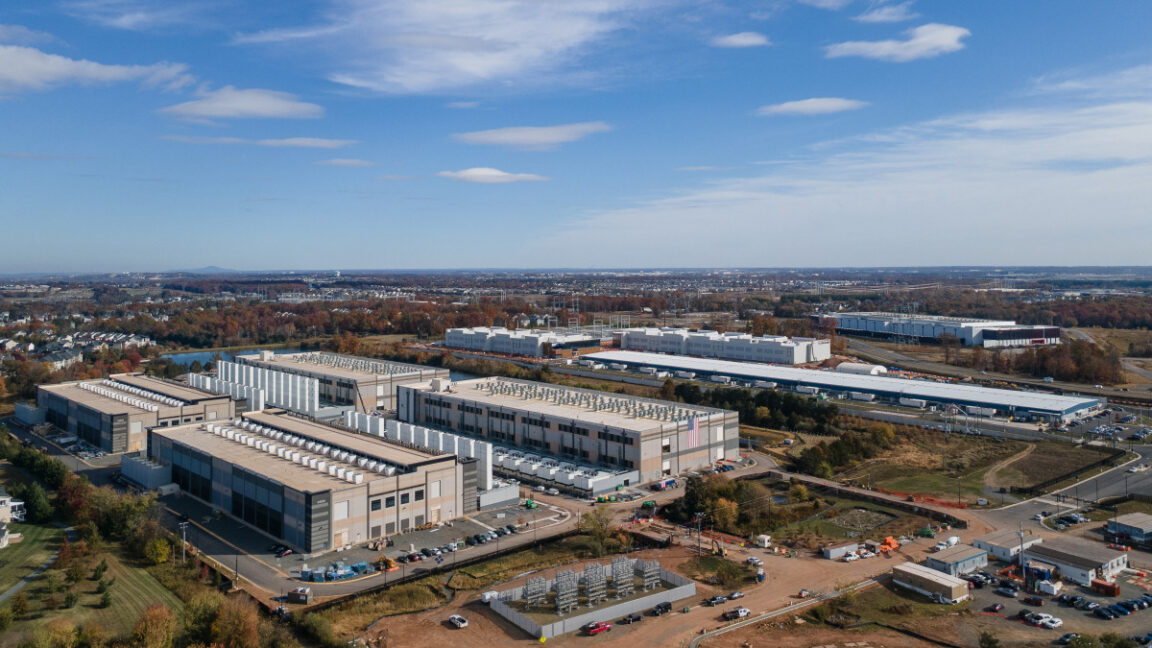
These massive infrastructural complexes are designed to support some of the largest companies active in the AI field, including OpenAI, Meta, Microsoft, and xAI. The race to secure vast power deals to build hundreds of data centers nationwide suggests that these projects represent merely the tip of the iceberg regarding the potential climate cost of the AI boom. The necessity to power increasingly intensive workloads, such as Large Language Model (LLM) Inference and training, drives energy demand to unprecedented levels.
"Behind-the-Meter" Energy Strategies for Data Centers
An emerging trend in this scenario is the development of energy infrastructures designed to bypass the traditional power grid, an approach known as "behind-the-meter power." These natural gas projects are conceived to provide power exclusively to data centers, ensuring a dedicated and independent supply. This strategy addresses several challenges faced by data center developers.
On one hand, there are long waits for connections to traditional utilities, slowing down deployment times and capacity expansion. On the other hand, growing public resistance to the possibility of higher energy bills pushes developers to seek alternative solutions. Self-generation of power is therefore becoming an increasingly popular option, with companies actively submitting air permit applications for projects already announced or under construction. While this approach offers greater control and predictability, it raises questions about long-term sustainability and the overall Total Cost of Ownership (TCO).
Implications for On-Premise Deployments and Data Sovereignty
The choice to implement "behind-the-meter" energy solutions has profound implications for companies evaluating on-premise deployments of AI workloads. While the primary goal might be data sovereignty, direct control over hardware, and reduced latency, energy availability and cost become critical factors in the TCO. The ability to generate power on-site can offer greater resilience and independence from the grid, crucial aspects for air-gapped environments or those with stringent compliance requirements.
However, this autonomy also brings the responsibility of managing the environmental impact and operational costs associated with energy production. For CTOs and infrastructure architects, planning an on-premise deployment for LLMs is no longer limited to selecting GPUs with sufficient VRAM or configuring efficient Inference pipelines; it must include a thorough analysis of energy sources and their sustainability. AI-RADAR offers analytical frameworks on /llm-onpremise to evaluate the trade-offs between performance, costs, and environmental impact in these complex contexts.
The Sustainability Challenge in the Age of AI
The current landscape highlights a growing tension between technological innovation in AI and the necessity to address climate challenges. The AI boom, with its insatiable hunger for computational power and, consequently, energy, is accelerating the construction of new energy infrastructures that, in many cases, still rely on fossil fuels. This dynamic poses a significant dilemma for the tech industry and policymakers alike.
The search for more sustainable solutions to power AI data centers, extending beyond simple natural gas self-generation, will become crucial. Optimizing the energy efficiency of algorithms, adopting more efficient hardware, and investing in renewable energy sources represent fundamental pathways to mitigate environmental impact. Without a holistic approach that integrates technological innovation and sustainability, the progress of AI could come at an increasingly high environmental cost, with global consequences.







💬 Comments (0)
🔒 Log in or register to comment on articles.
No comments yet. Be the first to comment!