The Critical Network Node in the AI Era
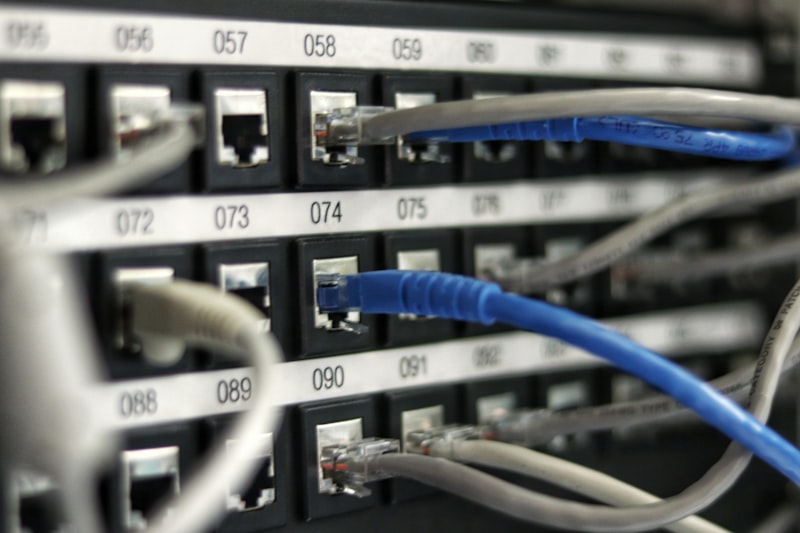
The relentless advance of artificial intelligence is redefining infrastructural priorities for companies across all sectors. While much attention focuses on the computational power required for training and Inference of Large Language Models (LLMs), a fundamental element risks being overlooked: network infrastructure. Industry experts are sounding a clear alarm: not all current networks are capable of handling the massive traffic and specific demands generated by AI workloads.
This gap does not only concern less structured organizations but also extends to various AI service providers, including the so-called "neocloud providers." Their offerings, though cutting-edge on the compute front, could prove vulnerable to bottlenecks related to data movement, compromising performance and scalability. The ability to efficiently move enormous volumes of information is as critical as the power of GPUs.
Beyond Compute Power: The Movement of Data
AI workloads, particularly those related to LLMs, impose radically different network requirements compared to traditional applications. It's no longer just about bandwidth, but about extremely low latency and high Throughput to manage data transfers between GPUs, between servers, and to storage. Training complex models, for instance, demands almost constant, high-speed inter-node communication to synchronize model weights and Embeddings.
Even for Inference, especially with high batch sizes or for applications requiring real-time responses, the network becomes a limiting factor. Transferring large contexts, managing millions of Tokens, and the need for rapid access to external knowledge databases (as in RAG systems) can quickly saturate unoptimized infrastructures. The challenge is not just the quantity of data, but its dynamics and the need for an uninterrupted, low-latency flow.
Implications for On-Premise and Hybrid Deployments
For organizations evaluating self-hosted or hybrid AI deployments, network infrastructure planning takes on even greater importance. Unlike cloud environments, where network management is delegated to the provider, in an on-premise context, responsibility falls entirely on the company. This includes selecting high-speed switches, implementing low-latency interconnects (such as InfiniBand or high-speed Ethernet), and configuring efficient data Pipelines.
The TCO of an on-premise AI infrastructure cannot disregard a thorough analysis of network costs and performance. Investing in latest-generation GPUs without adequately upgrading the network can lead to underutilization of computing resources, nullifying part of the investment. Data sovereignty and compliance, often key motivations for Air-gapped deployments, also require that data movement within the datacenter is robust and secure. AI-RADAR offers analytical Frameworks on /llm-onpremise to evaluate these complex trade-offs, supporting strategic decisions.
The Future Perspective: Planning Infrastructure
The experts' warning underscores a fundamental truth: AI is not just about chips and algorithms, but about a complete and interconnected infrastructural ecosystem. Ignoring network requirements means building a system with limited performance potential, regardless of the power of the installed GPUs. Companies must adopt a holistic approach, considering the network as a critical component and not merely an accessory.
Proactive planning, investment in cutting-edge network technologies, and collaboration between AI teams and network engineers will be essential to unlock the full potential of artificial intelligence. Only then will it be possible to ensure that data can move with the speed and efficiency required to power the next generation of LLM-based applications and services, preventing the network from becoming the true bottleneck of innovation.










💬 Comments (0)
🔒 Log in or register to comment on articles.
No comments yet. Be the first to comment!