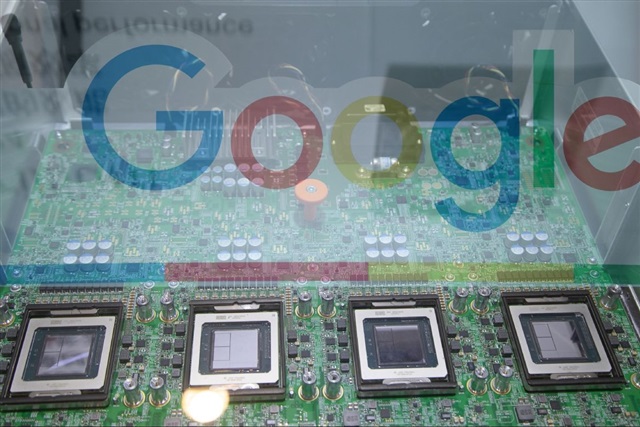
Google's TPU Shortage and the AI Landscape
News of a Tensor Processing Unit (TPU) shortage affecting Google, as reported by DIGITIMES, reveals significant tension in the AI infrastructure landscape. TPUs, processors specifically designed to accelerate machine learning workloads, are a fundamental component for Google's artificial intelligence operations, from training complex models to large-scale Inference. This situation is not merely an internal issue for the tech giant but highlights a broader and growing disparity in access to essential hardware resources for AI.
The availability of specialized hardware is becoming a critical factor determining companies' ability to innovate and compete in the artificial intelligence sector. Difficulty in obtaining these components can slow down the development of new Large Language Models (LLMs), hinder the Fine-tuning of existing models, and limit the capacity to scale AI services. This scenario prompts organizations to reconsider their deployment strategies and reliance on external providers for critical infrastructure.
The Crucial Role of Specialized Hardware in AI
The advancement of artificial intelligence, particularly with Large Language Models, is intrinsically linked to the availability of specialized computing power. Components like GPUs and TPUs are designed to handle the massive, parallel operations required for training and Inference of these models. Parameters such as VRAM, memory bandwidth, and compute capability are crucial for performance, directly impacting the throughput and latency of AI systems.
The shortage of these components not only affects a single player like Google's ability to maintain its operations but also raises questions about the resilience of the global supply chain for AI hardware. For companies developing AI solutions, guaranteed access to these resources is not a luxury but a strategic necessity. The ability to train models with billions of parameters or handle millions of Inference requests per second directly depends on the availability and configuration of this underlying infrastructure.
Deployment Implications: On-Premise vs. Cloud
The current situation amplifies the debate between adopting cloud-based AI solutions and Self-hosted or on-premise alternatives. Cloud platforms offer scalability and access to powerful hardware resources without high initial CapEx, but can lead to vendor lock-in and potential concerns related to data sovereignty and long-term TCO. A hardware shortage like the one Google is experiencing demonstrates that even cloud giants can face limitations, indirectly affecting their customers.
On the other hand, on-premise deployment offers complete control over data and infrastructure, which is essential for stringent compliance requirements or Air-gapped environments. However, it demands significant investment in hardware, expertise, and management. The difficulty in acquiring specialized hardware makes planning an on-premise infrastructure even more complex, requiring a long-term vision and proactive supply chain management. For those evaluating on-premise deployment, AI-RADAR offers analytical frameworks on /llm-onpremise to assess the trade-offs between costs, performance, and control.
Future Outlook and AI Infrastructure Strategies
The widening "AI infrastructure edge" highlighted by Google's TPU shortage underscores the strategic importance of robust planning for AI infrastructure. Companies must consider not only immediate performance but also supply chain resilience, architectural flexibility, and the ability to adapt to varying hardware availability scenarios. Diversifying suppliers and exploring alternative hardware architectures could become standard practices to mitigate risks.
In a context where AI is increasingly central to business strategies, the ability to effectively access and manage underlying hardware will be a distinguishing factor. Whether investing in proprietary Bare metal infrastructure or negotiating strategic agreements with cloud providers, the decision on AI infrastructure has never been more critical. The lesson from the TPU shortage is clear: access to foundational hardware is key to unlocking the full potential of artificial intelligence and maintaining a competitive advantage in the long run.







💬 Comments (0)
🔒 Log in or register to comment on articles.
No comments yet. Be the first to comment!