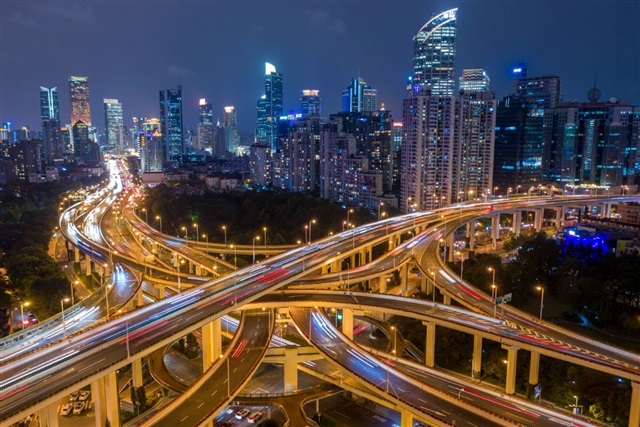
Beijing has decided: energy for artificial intelligence becomes a strategic pillar of the country. The new five-year energy plan places the power supply for AI workloads among national security objectives. From the perspective of those running Large Language Models in-house, this move goes far beyond rhetoric.
Why electricity is the real bottleneck
Training and inference of ever-larger models consume massive amounts of power. A cluster of modern GPUs can draw tens of kilowatt-hours in a few hours of work, and in an on-premise scenario the electricity bill becomes a primary component of TCO (Total Cost of Ownership). While cloud providers pass costs to customers through consumption-based pricing, companies that choose self-hosted deployment must size power and cooling with the same attention they give to GPU selection.
China's decision acknowledges this reality: without an electrical grid capable of sustaining the wave of AI-dedicated datacenters, competitive advantage dissolves. It’s not just about having the fastest chips, but about being able to keep them running without interruptions.
From digital sovereignty to energy sovereignty
The Beijing announcement is part of a broader push for technological autonomy. On-premise AI, both in China and in Europe, is driven by data sovereignty demands and regulatory compliance. But sovereignty also needs cables, substations, and generation capacity. The energy plan thus becomes an essential piece for anyone planning to run LLMs locally, because it ties hardware investments to a long-range energy policy.
For enterprise decision-makers, this means deployment evaluations can’t stop at VRAM specifications or token-per-second throughput. They must include the stability of electricity supply at the chosen datacenter location, the ability to access low-cost, low-environmental-impact energy, and regulatory predictability. In essence, the Chinese plan makes explicit a factor often overlooked in cloud vs. on-premise comparisons: energy is a political variable.
What changes for those building on-premise stacks
In an ecosystem where inference is pushed onto edge and self-managed servers, the guarantee of stable energy is a reliability multiplier. Anyone evaluating a GPU cluster for fine-tuning or for serving models in production must note that China, with this announcement, is paving the way for a generation of power-hungry AI infrastructure. This is not an isolated case: in the West there is growing discussion about the pressure datacenters will place on grids, but here we have a state intervention that raises the bar.
From AI-RADAR’s viewpoint, this news is a reminder that deployment choices are shaped by factors beyond pure computing. For the on-premise path, energy sourcing enters the risk matrix alongside licensing, support, and internal skills.
The signal beyond borders
The Chinese five-year plan is a market signal: artificial intelligence is no longer just an algorithm race, but a competition over physical resources. Energy becomes a geo-political asset. For the rest of the world, ignoring this linkage means ending up with cutting-edge hardware powered down for lack of watts. And for those choosing to bring models in-house, the question will no longer be just «how much VRAM do I need?», but «do I have enough megawatts to run it?».








💬 Comments (0)
🔒 Log in or register to comment on articles.
No comments yet. Be the first to comment!