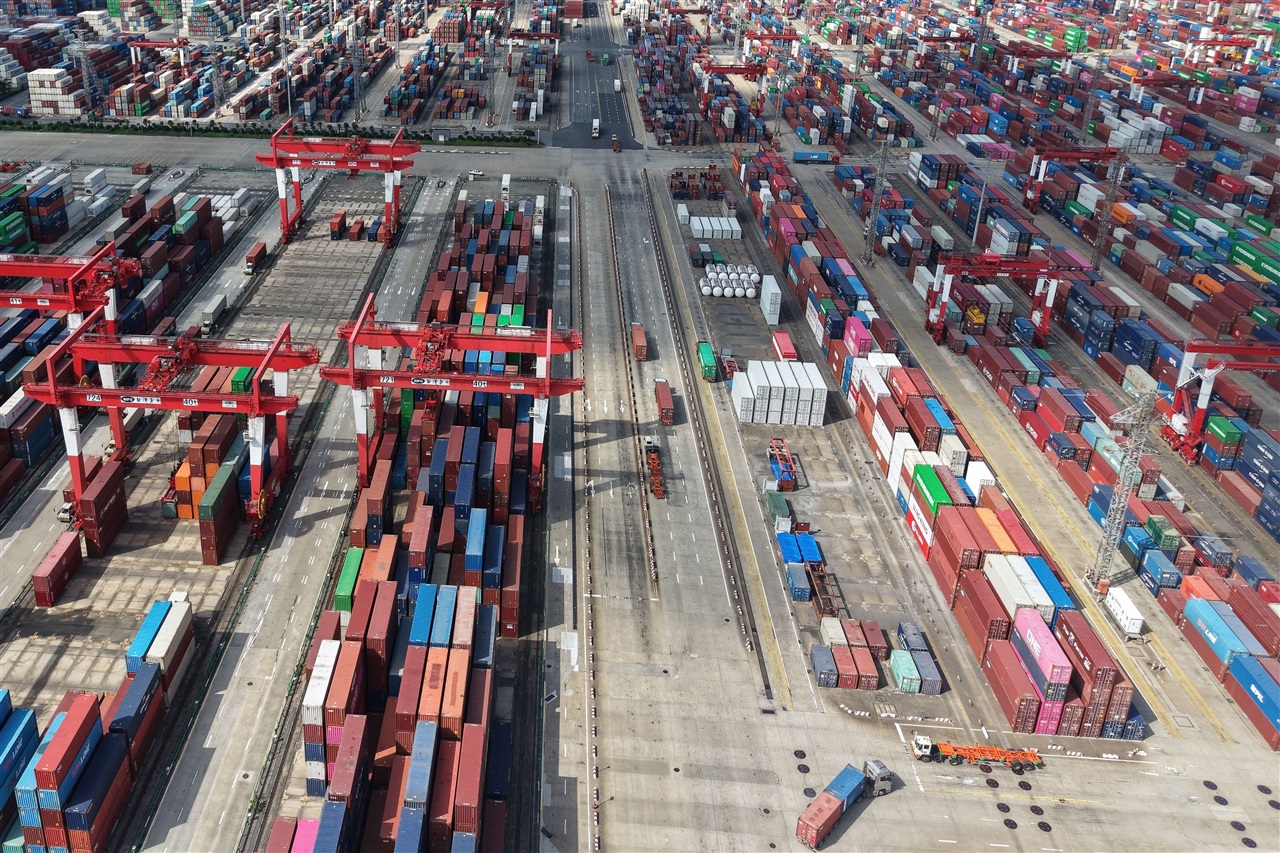
China Strengthens Control Over Global Supply Chains
The People's Republic of China has recently announced a tightening of regulations aimed at countering the decoupling of supply chains by foreign actors. This initiative, although not detailed in specific terms in the source, is part of a broader geopolitical context where economic security and technological sovereignty have become absolute priorities for many nations. China's move suggests a desire to consolidate its role within global supply chains, making it more complex for foreign companies to diversify or relocate the production of key components.
For the technology sector, and particularly for infrastructure dedicated to artificial intelligence and Large Language Models (LLMs), such decisions carry significant weight. Dependence on specific markets for advanced silicio, high-performance GPUs, and other essential components is a critical factor in deployment planning. The tightening of rules could translate into greater logistical complexities, potential cost increases, and reduced flexibility for companies seeking to build or expand their AI capabilities.
Implications for Hardware and On-Premise Deployments
Geopolitical decisions regarding supply chains have a direct impact on the availability and Total Cost of Ownership (TCO) of the hardware infrastructure required for LLM inference and training. For organizations prioritizing on-premise deployments, supply chain stability and predictability are paramount. Access to latest-generation GPUs, such as the NVIDIA H100 or AMD Instinct MI300X series, with their specific VRAM and throughput capabilities, is often a bottleneck. Any restriction or additional complexity in procuring these components can delay projects, increase capital expenditures (CapEx), and affect the ability to scale AI operations.
In an environment where data sovereignty and control over infrastructure are priorities, companies often choose self-hosted or air-gapped solutions. These architectures require careful hardware planning and a robust supply chain. Geopolitical uncertainty can push companies to explore supplier diversification options or consider alternative hardware architectures, even if this may involve trade-offs in terms of performance or initial costs. Supply chain resilience thus becomes a key factor in evaluating deployment strategies.
Data Sovereignty and Strategic Resilience
The push for supply chain control by nations like China aligns with the growing global interest in data sovereignty and national security. Companies operating in regulated sectors, such as finance or healthcare, are often subject to stringent regulations (e.g., GDPR in Europe) that impose specific requirements on data localization and processing. The ability to keep data and AI workloads within national borders or on controlled infrastructure is a primary driver for on-premise deployments.
However, the realization of a fully sovereign and resilient AI infrastructure heavily depends on the availability of hardware components. If global supply chains become more fragmented or subject to restrictions, building bare metal data centers or LLM clusters could face significant challenges. This scenario highlights the need for CTOs and infrastructure architects to adopt a holistic view, considering not only the technical specifications of the hardware but also geopolitical risks and long-term supply chain resilience.
Future Outlook and Mitigation Strategies
Facing an evolving geopolitical landscape, companies must reconsider their procurement and deployment strategies for AI workloads. Supplier diversification, investment in local production capabilities (where feasible), or the evaluation of hardware architectures less dependent on a single geographical origin could become standard practices. TCO analysis will need to include not only direct purchase and operational costs but also risks associated with supply chain disruptions.
For those evaluating on-premise deployments, AI-RADAR offers analytical frameworks on /llm-onpremise to assess the trade-offs between control, performance, and costs in contexts of uncertainty. The choice between cloud and self-hosted solutions has never been more complex, and future decisions will require a deep understanding of global market dynamics, in addition to technical specifications. The ability to anticipate and mitigate supply chain-related risks will be a distinguishing factor for the resilience and success of enterprise AI strategies.






💬 Comments (0)
🔒 Log in or register to comment on articles.
No comments yet. Be the first to comment!