For an outside observer, the AI hardware race in China looks like a puzzle where every piece tells a story of forced self-reliance. After US export restrictions on the most advanced chips, Beijing accelerated the development of domestic alternatives, with Huawei leading the way with its Ascend processors. Yet, quietly, the fabric of China's AI industry—from research labs to companies running on-premise workloads—is converging on a new gravitational center: Nvidia's H200 GPUs.
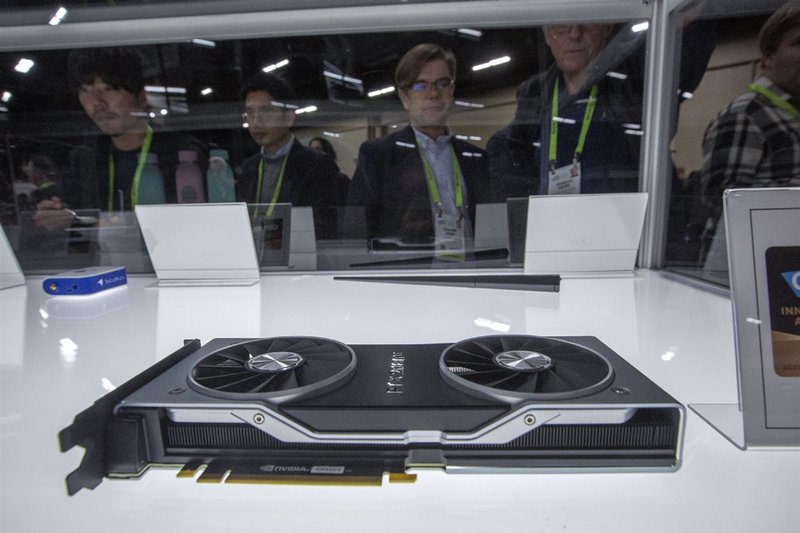
This move is not just an admission of dependency, but a powerful lesson in how software rules hardware. The H200, the direct successor to the H100, boasts impressive technical specs: 141GB of HBM3e memory and memory bandwidth on the order of 4.8 TB/s. These numbers matter, but they alone don't explain the pivot. The real engine of attraction is CUDA, the parallel computing platform that Nvidia has built, layer by layer, for over fifteen years.
CUDA is not simply a set of libraries: it's a deep ecosystem that includes compilers, kernel-level optimizations, frameworks like cuDNN and TensorRT, and a range of tools that have become the lingua franca of AI development. Thousands of models have been written, trained, and optimized on CUDA, and the cost of porting to other platforms—whether AMD's ROCm or Chinese chips—is prohibitive not just in money, but in time and expertise. And in an industry where time-to-market is critical, software lock-in becomes the most powerful of competitive moats.
The Chinese case is emblematic. Huawei's Ascend chips have improved considerably in recent years, and some Chinese companies have started building clusters based on them, especially in large-scale inference scenarios. But when it comes to training complex models or hybrid workloads requiring flexibility, the software gap becomes evident. Developers must re-implement significant portions of code, adapt to less mature toolchains, and face a scarcity of documentation and community support. It's no surprise, then, that as soon as H200s became available through parallel channels—despite uncertainty about export licenses—demand surged.
For outside observers, particularly organizations in Europe or elsewhere evaluating on-premise AI infrastructure, this dynamic offers a clear lesson: hardware independence is a noble goal, but without a comparable software ecosystem, it risks remaining a theoretical exercise. It's not enough to have fast transistors; it takes years of iteration on compilers, profilers, and workload-specific optimizations. And even when the silicon is there—as with Cerebras, Graphcore, or Ascend—the cost of migrating from the CUDA world can easily outweigh the savings on chips.
There's another layer to consider, touching on data sovereignty. In China, using Nvidia hardware in local data centers is never geopolitically neutral. GPUs are US products, subject to control regimes that can change overnight. Yet pragmatism prevails: the need to stay competitive in AI pushes Chinese companies to choose CUDA even at the expense of true autonomy. This tension is not Beijing's alone: in many regulated European sectors, dependence on a foreign provider of critical technology raises similar questions, even if the legal context differs.
Ultimately, China's pivot to the H200 is not just a story about chip geopolitics. It is a symptom of a structural truth in contemporary AI: Nvidia's competitive advantage has largely shifted from silicon to software, and CUDA is now an asset harder to replicate than any 4-nanometer process node. Anyone designing the future of on-premise AI, in China or elsewhere, will have to reckon with this reality.





💬 Comments (0)
🔒 Log in or register to comment on articles.
No comments yet. Be the first to comment!