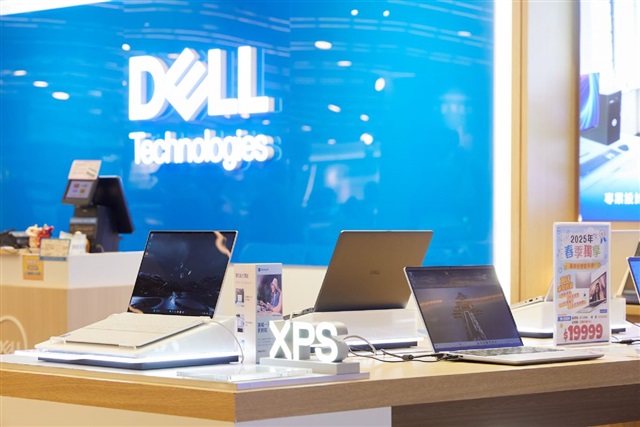
The headline DIGITIMES is flagging is one analysts have tracked for years: China is closing in on Taiwan’s notebook manufacturing crown. While detailed numbers remain behind the paywall, the trajectory is unmistakable—Chinese ODMs like Huaqin, Longcheer, and Lenovo’s joint‑venture units are chipping away at the share of Taiwanese giants Quanta, Compal, Wistron, and Pegatron. It’s not an entirely new story, but the pace of the pursuit, as the publication reports, warrants a look beyond the laptop aisle.
The ODM ecosystem beyond the notebook
The battle for notebook supremacy masks a broader industrial reality: the same groups that assemble laptops are critical hardware suppliers for data centers. Quanta and Wistron, for instance, manufacture a massive share of servers for major cloud providers and for on‑premise appliances sold by Dell, HPE, and Lenovo. The scale achieved through notebook volumes—tens of millions of units a year—helps amortize R&D, production lines, and supply chains that also serve server lines, where margins may be higher but unit numbers smaller.
When Beijing talks tech self‑sufficiency and pushes its ODMs to compete globally, the immediate effect is on cost: Chinese manufacturers pressure prices, drawing on an increasingly localized component ecosystem. But the real game is longer‑term: once they consolidate notebook leadership, those same ODMs become natural candidates to supply servers and storage systems, segments where Taiwanese players still hold a technical and relationship edge with major Western brands.
A shift that repositions the on‑prem hardware supply chain
Those evaluating on‑premise deployments for AI workloads—from language models to local inference systems—are already acquainted with the trade‑offs between total cost of ownership (TCO), performance, and data control. Less discussed is the risk of manufacturing concentration. Today, virtually all x86 servers and GPU‑accelerated systems for AI come out of Asian factories, with Taiwan playing a central role. A retreat in the highest‑volume segment—notebooks—could weaken the investment capacity of its ODMs for next‑generation enterprise technologies, while Chinese firms, buoyed by rising margins, might accelerate their entry into AI server platforms.
This intersects with debates on data sovereignty and infrastructure resilience. For a European organization looking to keep its LLMs on‑premise, hardware provenance is not neutral: depending on a supply chain increasingly tilted toward a single country introduces geopolitical vulnerabilities and potential bottlenecks. Competition can certainly keep prices in check, but the recent history of semiconductors shows that a hyper‑concentrated supply chain amplifies risks in times of crisis.
The scenario is by no means deterministic: major Taiwanese ODMs are diversifying production across Vietnam, India, and Mexico, and China itself may face technological barriers in tackling the most sophisticated server tier. Still, the near‑crown status in notebooks is a signal that the hardware industry’s structure is changing, with consequences reaching far beyond the choice of the next corporate laptop.







💬 Comments (0)
🔒 Log in or register to comment on articles.
No comments yet. Be the first to comment!