The Squeeze on Indium Phosphide: A Signal for AI Infrastructure
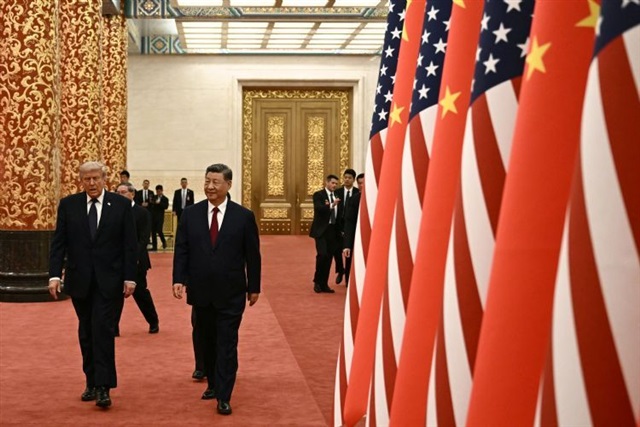
Geopolitical dynamics continue to shape the global technological landscape, and China's latest move regarding Indium Phosphide (InP) is a clear illustration. This restriction is generating waves of concern along the complex optical supply chain linking the United States and Taiwan, a critical hub for the global electronics industry. InP, while less known to the general public than silicon, is fundamental for the production of advanced optoelectronic components.
For professionals dealing with AI infrastructures, such as CTOs, DevOps leads, and system architects, this news is not a marginal detail. The availability and cost of strategic materials like InP can directly impact the ability to build and maintain high-performance data centers, which are essential for training and Inference of Large Language Models. Reliance on single sources for critical raw materials exposes organizations to risks that extend far beyond simple logistics.
The Key Role of InP in High-Speed Connectivity
Indium Phosphide is a compound semiconductor used in the fabrication of lasers, photodiodes, modulators, and other photonic devices. These components are the beating heart of optical transceivers and high-speed interconnects, indispensable for modern network architectures within data centers. In an era where AI workloads demand massive bandwidth and extremely low latency for communication between GPUs, VRAM, and storage systems, the reliability of these connections is of primary importance.
Without a stable supply of InP, the production of these optical modules could slow down or incur cost increases, impacting the expansion and upgrading of AI-dedicated infrastructures. The ability to scale GPU clusters for LLM training or to optimize large-scale Inference directly depends on the quality and availability of in-data center connectivity that meets the challenges posed by the latest models.
Implications for Data Sovereignty and TCO
Disruptions in the supply chain of critical materials like InP raise important questions for data sovereignty and the Total Cost of Ownership (TCO) of AI infrastructures. Companies aiming for on-premise deployments or air-gapped environments to maintain full control over their data and comply with stringent regulatory requirements must consider the resilience of their supply chain. Dependence on external suppliers for essential components can undermine efforts to ensure operational autonomy and security.
Furthermore, price volatility and component scarcity can significantly alter TCO projections. An unexpected increase in hardware costs, due to bottlenecks in the production of optical modules or other InP-based components, can complicate financial planning and capital allocation for AI infrastructure investments. For those evaluating on-premise deployments, complex trade-offs exist between initial CapEx, long-term operational costs, and managing supply chain risk. AI-RADAR offers analytical frameworks on /llm-onpremise to evaluate these trade-offs in a structured manner.
Strategies for a Resilient Infrastructure Future
In the face of these challenges, strategic planning becomes crucial for organizations investing in AI capabilities. Understanding the entire value chain, from raw materials to finished chips, is essential for mitigating risks. This includes evaluating alternative suppliers, diversifying sources, and considering hardware designs that can offer greater flexibility in case of shortages.
For technical decision-makers, the ability to anticipate and react to these market dynamics is fundamental to ensuring operational continuity and competitiveness. The emphasis on infrastructure resilience, data sovereignty, and careful TCO analysis has never been more relevant, especially in a rapidly evolving sector like artificial intelligence. Geopolitical moves on critical materials serve as a constant reminder of the need for a holistic view in the design and management of AI architectures.







💬 Comments (0)
🔒 Log in or register to comment on articles.
No comments yet. Be the first to comment!