
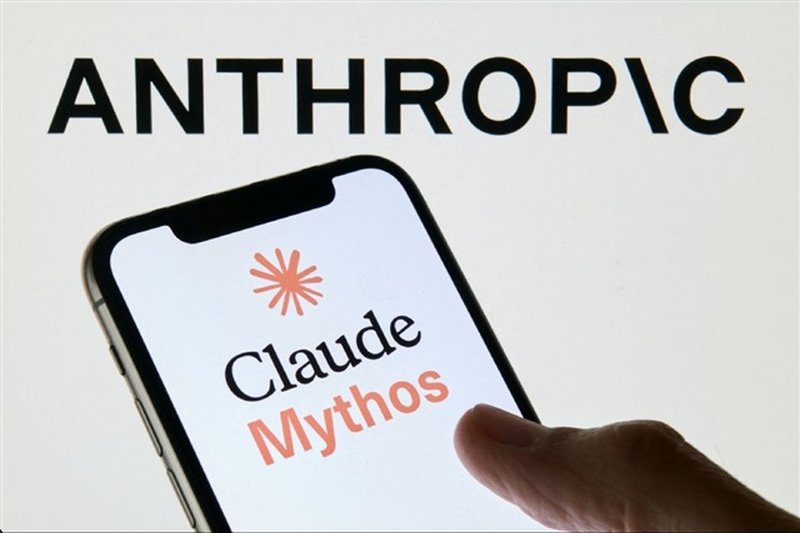
The US Cybersecurity and Infrastructure Security Agency is turning an attack-grade AI model against its own government’s code. According to three confidential sources cited by The Next Web, CISA is using Mythos, a Large Language Model developed by Anthropic and described as “private, offensive-grade,” to hunt for bugs and vulnerabilities in federal software. The operation is shrouded in secrecy, with almost nothing confirmed on the record, but the very fact that a national cybersecurity agency has adopted such a tool marks a turning point for military and government AI.
We are no longer in the realm of developer copilots or internal chatbots. Here, an LLM is deployed in an active penetration-testing and offensive code-review role, with potentially direct access to the most sensitive digital assets of the public administration. The stakes are enormous: any error, data leak, or model manipulation could turn a defensive tool into an inadvertent backdoor. That makes the technology choices and operational safeguards anything but a minor detail.
Although hardware and infrastructure specifics remain undisclosed, the most plausible assumption is that Mythos runs in a self-hosted, Internet-isolated environment, possibly on air-gapped systems. In such contexts, data sovereignty is non-negotiable: government source code cannot leave national borders or pass through public clouds subject to foreign jurisdictions. Deploying an LLM on-premise is thus not an architectural preference but an operational and legal necessity. The model’s offensive nature adds further governance concerns: who controls exactly what the model does, what payloads it generates, and how scan results are handled.
Structurally, CISA’s move signals that the market for national-security AI is entering a phase of bespoke procurement. Anthropic isn’t simply providing an API or a generalist model; it is crafting a system tailored for a controlled-attack mission, likely with dedicated fine-tuning and safety policies adapted to the government domain. This sets a precedent that could accelerate demand for LLMs suited to classified operational tasks — from exploit analysis to firmware verification — pushing other vendors to build “offensive” variants of their own models.
The winners are primarily those in the supplier ecosystem that can deliver verifiable on-premise solutions, complete with audit trails, maintenance contracts, and alignment guarantees. The losers include transparency: the fact that the entire program remains off-the-record prevents civil society from evaluating risks, biases, or incidents. The divide between public AI and secret AI deepens, and with it the need for accountability frameworks that can function even when technical details are kept classified. For those evaluating on-premise LLM deployments in security contexts, the Mythos case is a powerful reminder that the choice between control and trust has never been more tangible.







💬 Comments (0)
🔒 Log in or register to comment on articles.
No comments yet. Be the first to comment!