
The Resilience of the DGX Spark Community in the Face of Hardware Criticism
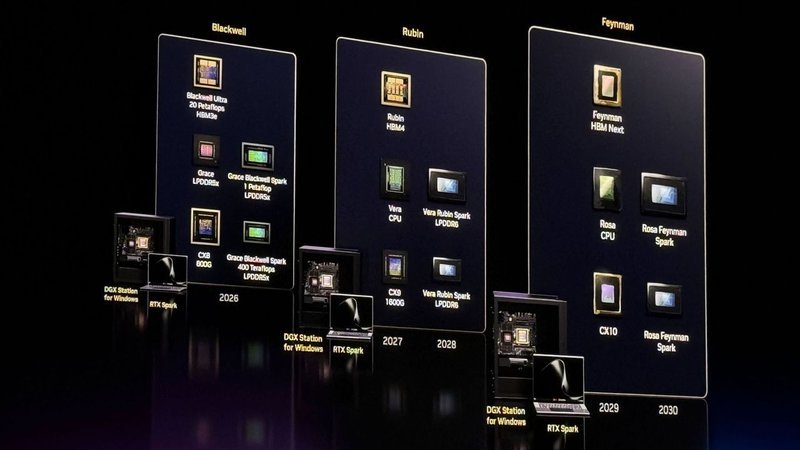
The artificial intelligence landscape is constantly evolving, with the introduction of new hardware solutions promising to accelerate the development and deployment of Large Language Models (LLMs). Among these, NVIDIA DGX Spark platforms have sparked intense debate since their release. Many industry professionals expressed skepticism, pointing to what were perceived as inherent limitations, particularly memory bandwidth and the nature of the SM-121 chip, often described as a “second-class” version of the Blackwell architecture.
These criticisms, while valid from a pure specification standpoint, initially led to disappointment among early adopters who expected superior inference performance and a more mature software stack. However, an interesting phenomenon is emerging: the official DGX Spark development community, hosted by NVIDIA, is demonstrating an extraordinary capacity for resilience and innovation, transforming challenges into opportunities for deep optimization.
Deep Optimization: Overcoming Limitations Through Collaboration
The driving force behind this shift is the collective commitment of the developers. The common goal is clear: to squeeze every last drop of performance from the DGX Spark hardware. This approach is particularly relevant in the context of on-premise deployment, where maximizing the efficiency of existing hardware is crucial for Total Cost of Ownership (TCO) and data sovereignty. The community focuses on optimizing inference and training pipelines, addressing perceived shortcomings through ingenious software solutions.
Within the forum, the atmosphere is one of collaboration and mutual support. Members actively share benchmarks, code snippets, and “recipes” for using Frameworks like vLLM, a high-performance LLM inference runtime. This synergy allows for more efficient tackling of complex problems, leveraging collective experience to overcome technical obstacles and improve the system's overall efficiency.
Innovative Projects and the Advantage of Hardware Uniformity
The community's commitment translates into a series of innovative projects aimed at expanding the capabilities of the DGX Spark. These include initiatives such as Sparkrun, PrismaQuant, Spark Lesderboard, and eugr vLLM. These projects not only demonstrate the hardware's untapped potential but also create an ecosystem of tools and solutions that benefit the entire user base. Quantization, for example, is a primary area of interest, as it allows for reduced memory requirements and improved inference Throughput on hardware with limited resources.
A significant advantage for these developers lies in the uniformity of the hardware and operating system across all DGX Spark units. This standardization eliminates complexities related to compatibility and fragmentation, allowing developers to create solutions that perform predictably on any Spark device. This consistency is a powerful enabler for a unified community with a common goal, accelerating the development and sharing of best practices.
Implications for On-Premise Deployment and the AI-RADAR Perspective
The story of the DGX Spark community offers important insights for companies evaluating on-premise deployment strategies for their AI/LLM workloads. It demonstrates how hardware, even if initially perceived by some as “limited” or “compromised,” can achieve success through the ingenuity and dedication of a developer community. This is a critical factor for CTOs, DevOps leads, and infrastructure architects who must balance CapEx, OpEx, data sovereignty, and performance requirements.
For those considering on-premise deployment, there are significant trade-offs between the initial hardware investment and the potential for long-term optimization. A community's ability to extend a system's lifespan and performance through software innovation can drastically impact TCO. AI-RADAR focuses precisely on these aspects, offering analytical frameworks on /llm-onpremise to evaluate the constraints and opportunities related to local stacks, hardware for inference and training, and deployment decisions that prioritize control and data sovereignty. The DGX Spark case highlights how a platform's value lies not only in its launch specifications but also in the vitality and ingenuity of its user base.





💬 Comments (0)
🔒 Log in or register to comment on articles.
No comments yet. Be the first to comment!