South Korea and the "Memory-Led" AI Strategy
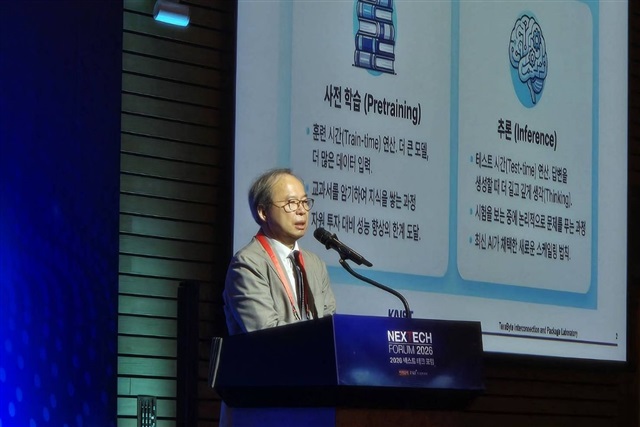
According to a DIGITIMES report, South Korea is reportedly considering a strategic approach to artificial intelligence that places memory at its core. This initiative, termed "memory-led AI order," positions itself as a potential response or alternative to Nvidia's current dominance in the AI hardware sector. The news suggests a growing interest among nations in diversifying their technological capabilities and reducing reliance on a single vendor, especially in a strategic field like artificial intelligence.
The primary implication is that South Korea might aim to leverage its established leadership in the memory sector, such as HBM (High Bandwidth Memory), to create a distinctive AI ecosystem. This could lead to the development of hardware and software solutions optimized to best utilize memory capabilities, rather than exclusively relying on the dominant GPU architecture.
The Crucial Role of Memory in the AI Ecosystem
Memory, particularly VRAM (Video RAM) and its bandwidth, represents a critical factor for the performance of Large Language Models (LLMs) and other complex AI workloads. Increasingly large models require substantial amounts of VRAM to be loaded and to manage extended context windows, directly impacting the throughput and latency of Inference operations. The architecture of modern GPUs, such as those produced by Nvidia, tightly integrates computing power with high-speed HBM modules, making memory an inseparable component of processing capability.
A "memory-led" approach could mean investing in new memory architectures, such as in-package memory or near-memory logic, which reduce the distance between data and processing units. This could unlock new efficiencies and performance, especially for data-intensive models that benefit from extremely fast and low-latency memory access.
Implications of a Distinctive Strategy
A memory-centric strategy could have several implications. For South Korea, it would mean strengthening its technological sovereignty and supply chain resilience, reducing reliance on foreign chips for critical AI components. It could also stimulate internal innovation, leading to the creation of new Frameworks and toolchains optimized for these architectures.
Globally, such a development could introduce greater competition in the AI hardware market, offering alternatives to current GPU solutions. This does not necessarily mean replacing GPUs but rather complementing them or creating market niches where "memory-led" architectures excel, for example, in specific on-premise Deployment scenarios where TCO and energy efficiency are priorities. The diversification of hardware architectures is a trend that could benefit the entire industry, pushing towards more efficient and specialized solutions.
Prospects for On-Premise Deployment
For CTOs, DevOps leads, and infrastructure architects evaluating on-premise LLM Deployment, the emergence of "memory-led" strategies introduces new variables. The choice of hardware for Inference and Fine-tuning of Self-hosted LLMs is already complex, balancing CapEx, OpEx, VRAM requirements, throughput, and latency. Architectures that optimize memory usage could offer significant advantages in terms of energy efficiency and compute density per gigabyte of VRAM.
It is crucial to analyze the trade-offs between different solutions. A "memory-led" system might require specific software integration and model Fine-tuning, but it could also promise a lower long-term TCO for certain workloads, especially those with large models or extended context windows. For those evaluating on-premise deployments, AI-RADAR offers analytical frameworks on /llm-onpremise to assess these trade-offs, helping to make informed decisions based on specific constraints of data sovereignty, compliance, and performance. The ability to control the entire hardware-software pipeline becomes a strategic asset.





💬 Comments (0)
🔒 Log in or register to comment on articles.
No comments yet. Be the first to comment!