
Artificial intelligence demand continues to pull system and networking hardware along with it, and Taiwanese connector makers are on the front line. Industry sources indicate that island-based companies are gearing up for a growth-driven second half of 2026, buoyed by AI investments. Yet the glass is only half full: rising costs and supply constraints risk turning the opportunity into an obstacle course.
The invisible role of connectors in AI infrastructure
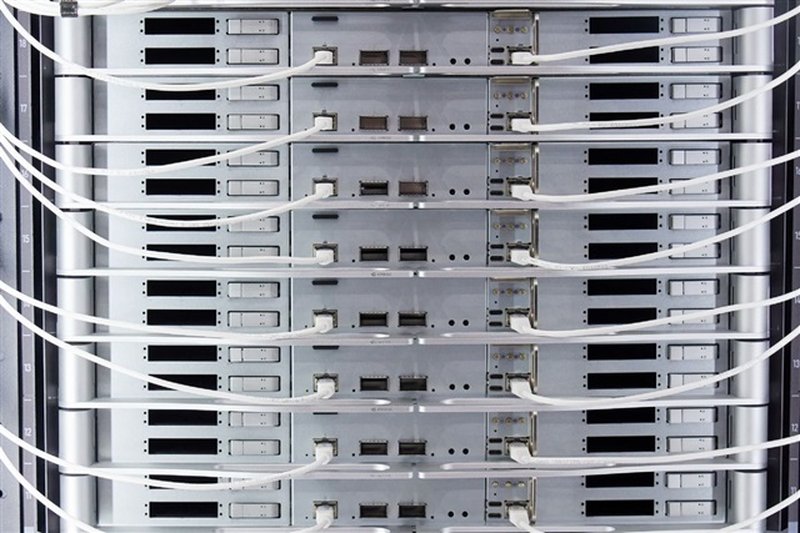
When discussing LLM infrastructure, attention immediately turns to GPUs, VRAM, memory bandwidth, and cooling. But every AI server is a maze of high-speed signals traveling through hundreds of connectors: from NVLink modules that link GPUs together to PCIe 5.0 backplanes, interposers, and optical cables. Without reliable, low-latency connectors, even the most powerful silicon loses effectiveness. It is no coincidence that Taiwanese manufacturers have historically been the backbone of this ecosystem, serving both large OEMs and companies that assemble bare-metal systems for on-premise infrastructure.
Rising costs and a stressed supply chain
Increasing raw material costs, combined with global logistical tensions, are squeezing connector makers’ margins and lengthening lead times. For those planning on-premise deployments, this translates into hard-to-control variables: an order for high-density servers, already scheduled for a given quarter, could slip because the right connectors are missing, directly impacting AI adoption strategy. In a context where Total Cost of Ownership (TCO) is under scrutiny, every month of delay and every component price increase undermines the cost-benefit calculations versus the cloud.
Implications for self-hosting LLMs
The push toward self-hosting Large Language Models, driven by data sovereignty and control requirements, rests on a hardware ecosystem that remains fragile in its least visible links. The connector case shows how dependency on specialized suppliers can become a risk factor. Enterprises currently evaluating on-premise clusters for inference or fine-tuning should include an explicit buffer for interconnect components in their procurement models: not just GPUs and CPUs, but also the scaffolding that holds them together. It is a classic trade-off between immediate availability and medium-term planning, one that AI-RADAR observes in its evaluation frameworks for local infrastructure.
2026 as a watershed
If connector tensions persist, the second half of 2026 could become a moment of truth for the entire on-premise AI supply chain. Taiwanese manufacturers remain optimistic, but their very caution signals that explosive demand growth does not equal a problem-free environment. For IT decision-makers, the message is clear: in a market where hardware is contested at every level, the ability to build self-hosted systems will also depend on the resilience of the supply chain for the most humble components.







💬 Comments (0)
🔒 Log in or register to comment on articles.
No comments yet. Be the first to comment!