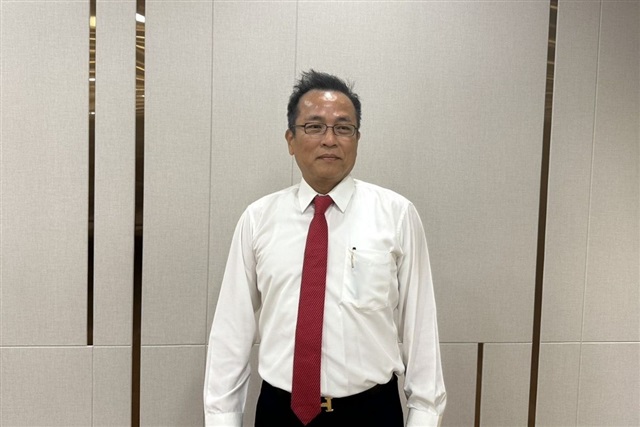
When a materials supplier like ThinTech Material Technology sets its sights on Fan-Out Panel Level Packaging, it is not just declaring growth ambitions. It is framing a segment of the supply chain that, downstream, will redefine the cost and density of LLM accelerators. The raw data is thin: the company aims to gain share in FOPLP and grow its BNCT (Boron Neutron Capture Therapy) business through 2028. But it is the first of those two fronts that casts a long shadow over the hardware infrastructure for anyone evaluating on-premise deployment of ever-larger models.
FOPLP is the evolution of fan-out packaging on a panel, a technique that replaces traditional substrates with large-format panels to encapsulate multiple chips in a single module. The goal is to increase interconnect density, reduce thermal resistance, and lower cost per unit area compared to wafer-level packaging. For AI accelerators — GPUs, FPGAs, dedicated ASICs — this translates into a potential path to integrate far more VRAM close to the compute die, with wider buses and lower energy consumption per transferred bit. At a time when LLMs push memory footprints to hundreds of gigabytes, packaging quality becomes as critical as lithographic nodes.
ThinTech, as a materials specialist, fits into this juncture by supplying substrates, dielectric films, or conductive adhesives — the physico-chemical ecosystem that makes FOPLP possible. Its bet signals that the market is shifting from a niche phase, dominated by foundry giants with proprietary solutions (such as TSMC's CoWoS), to a more fragmented landscape where materials suppliers can carve out margins if panel volumes take off. And volume will only take off if AI chip manufacturers, facing wafer-capacity bottlenecks, adopt panel-level packaging to boost per-square-meter productivity.
The other segment, BNCT, is an oncology therapy that uses neutrons and boron to destroy cancer cells. Here ThinTech would provide materials for neutron targets or shielding. The interest confirms a diversification strategy in very long-cycle markets, but its immediate relevance for AI is nil — except as a signal of a company comfortable navigating high-barrier technological frontiers.
Beyond silicon: the structural impact on AI hardware
For those installing on-premise servers dedicated to LLM inference, the question is not whether FOPLP will arrive, but how quickly it will affect total cost of ownership (TCO). Today a critical bottleneck is memory density per socket: more compact packages allow multiple VRAM modules to be placed side by side, reducing trace length and thus power dissipation. If panel-level packaging suppliers — pushed by companies like ThinTech — manage to scale volumes, we might see accelerators with a more favorable price/performance ratio for long-token inference workloads, precisely the Achilles' heel of current self-hosted deployments.
There is a second, less visible but more structural implication. FOPLP could democratize access to advanced packaging technologies, breaking the vertical integration of foundries. If a larger number of fabless designers gain access to competitive packaging without being tied to a single manufacturer, the space will open for more specialized accelerator boards, perhaps optimized for specific serving frameworks such as vLLM or TensorRT-LLM. In an on-premise environment, where hardware freedom is part of a data sovereignty strategy, this plurality becomes an asset.
Of course, the road is paved with technical challenges: managing mechanical stress on large panels, contact yield, material uniformity. ThinTech does not sell chips, but its materials are an ingredient. Its announcement should not be read as a sudden discontinuity, but as a signal that the supply chain is gearing up for a leap in scale. For the enterprise planning its next AI hardware refresh, tracking packaging evolution means anticipating the marginal cost of an on-premise teraflop two or three years ahead. And in a sector where every watt saved multiplies the return on investment, ignoring materials chemistry would be a luxury no CTO can afford.





💬 Comments (0)
🔒 Log in or register to comment on articles.
No comments yet. Be the first to comment!